Protection of Rand Water Servitudes – an Assurance to Uninterrupted Water Supply to All Customers


This article has been supplied.
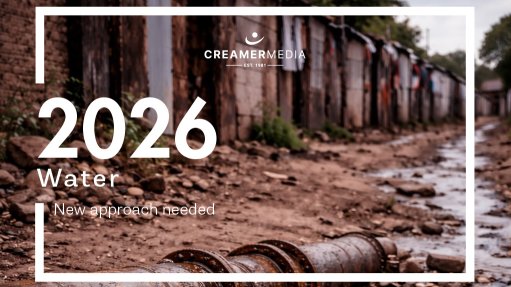
South Africa’s water security relies on the protection of strategic infrastructure that transports clean drinking water to millions of people. At the centre of this network is Rand Water - Africa’s largest bulk potable water supplier. It operates an extensive and complex bulk potable water supply network and systems.
Through a vast network of more than 3 450 kilometres of high-pressure operating pipelines, 58 reservoirs and associated infrastructure, Rand Water supplies water to municipalities, industries, mines and some farms across the provinces of Gauteng, parts of Mpumalanga, North-West and the Free State.
Yet one of the greatest threats to the sustainability of water supply infrastructure, is not always drought or climate change. It is quite evident that the challenge lies in the encroachment on Rand Water servitudes. This is a growing phenomenon that undermines infrastructure integrity, disrupts infrastructure maintenance, exposes communities to danger, and contributes to vandalism and theft of water.
As urbanisation accelerates and land pressures intensify, the encroachment of both formal and informal structures on Rand Water pipeline servitudes has become a critical matter requiring urgent, coordinated intervention from government, communities, developers and civil society.
Understanding Rand Water Servitudes
A servitude is a limited real right that allows Rand Water to install, operate and maintain bulk water pipelines and related infrastructure on land owned by third parties. These servitudes are essential because they provide protected corridors through which bulk water pipelines can safely transport water and be accessed for maintenance and emergency repairs.
To identify these protected areas, Rand Water uses visible markers including white concrete beacons, blue cathodic protection structures and valve chambers. These beacons are intended to warn the public and developers that underground strategic infrastructure exists and that construction activities are prohibited within the servitude zone.
However, one of the growing threats to this critical infrastructure is the increasing encroachment on Rand Water servitudes and its bulk water supply networks. Encroachment occurs when individuals, communities, businesses or developers build structures too close to or directly within the water pipelines and servitudes. These encroachments can be either formal or informal.
Formal Encroachments
Formal encroachments occur when developers, property owners or businesses construct permanent infrastructure within or too close to Rand Water servitudes. These may include houses, boundary walls, commercial developments, shopping centres, roads, parking areas, cables or other built structures.
In many cases, developers either fail to submit plans to Rand Water for approval and illegally proceed with the construction contrary to approved development conditions. These developments may appear legitimate because they are formally built, yet they directly compromise pipeline safety and accessibility.
Formal encroachments are especially concerning because they are often expensive and difficult to reverse once completed. Demolition or relocation processes may involve lengthy litigation and financial disputes.
Informal Encroachments
Informal encroachments involve the unlawful occupation of servitude land through the erection of informal settlements, shacks or makeshift dwellings. These structures are typically built from corrugated iron, timber or plastic materials without municipal approval.
The rapid expansion of informal settlements near economic opportunities and transport corridors has increased pressure on strategically located servitude land. In many cases, vulnerable communities settle unknowingly on top of high-pressure bulk water pipelines.
Addressing informal encroachments is particularly complex because it intersects with broader socio-economic realities such as housing shortages, unemployment and urban migration.
Legal frameworks governing unlawful occupation require due process and relocation arrangements before evictions can occur. This creates a delicate balance between protecting critical infrastructure and respecting constitutional and humanitarian obligations.
The dangers associated with encroachment are significant and far-reaching. Rand Water’s bulk pipelines transport enormous volumes of high-pressured water. If these pipelines are damaged due to construction activities, illegal connections or structural pressure from developments above them, the consequences can be catastrophic. A burst pipeline can release large volumes of water within seconds, causing severe flooding, destruction of property, injuries and even loss of life.
Communities living directly above these pipelines are particularly vulnerable. In the event of a major pipeline failure, homes and structures may collapse or be swept away by fast-moving water. In densely populated informal settlements, emergency evacuation can become extremely difficult, and this may place many lives at risk.
Encroachment also severely hampers Rand Water’s ability to perform essential maintenance and emergency repairs. Servitudes are intended to provide unrestricted access to underground infrastructure so that technicians can inspect, maintain and repair pipelines efficiently. When structures are built on top of servitudes, maintenance teams may be unable to reach damaged pipelines without demolishing buildings or relocating residents. This delays critical repairs and can result in prolonged water supply interruptions affecting entire municipalities and communities.
Since illegal occupation of any piece of land is not authorised, encroached servitudes often become hotspots for illegal activities such as illegal tampering with pipelines valves, vandalism and theft of water. These weaken water pressure systems and contributes to substantial water losses. In a country already facing water scarcity and growing demand, such losses place additional strain on available water resources.
Rand Water has implemented measures to protect its infrastructure, including the installation of visible beacons and servitude markers to warn communities and developers of underground pipelines. Public awareness campaigns and stakeholder engagements are also conducted to educate communities about the dangers of encroachment and the importance of protecting strategic bulk potable water supply infrastructure.
Preventing encroachment is therefore essential for ensuring public safety, operational efficiency and long-term water security. Municipalities, developers, communities and law enforcement agencies all have a role to play in safeguarding servitudes and preventing unlawful construction of homes or business structures. Effective urban planning, stronger enforcement of land-use regulations and greater public awareness are critical to addressing encroachment on bulk water supply infrastructure.
How servitude encroachments Impede maintenance
Servitudes are designed to remain clear and accessible at all times so that maintenance teams can inspect, repair and efficiently upgrade the infrastructure. Encroachments fundamentally undermine this operational requirement. Where structures are built over pipelines, Rand Water technicians are often unable to access underground infrastructure without demolishing homes, walls or other developments. This delays maintenance work and emergency response times during leaks or bursts.
The implications extend far beyond the immediate area. Since the organisation operates a highly interconnected bulk potable water distribution systems, damage or delayed repairs on one section of pipeline can negatively affect water supply to multiple customers. Encroachments on the organisation’s servitudes also compromise routine inspections. Pipeline systems require constant monitoring to detect leaks, corrosion, pressure irregularities and structural weaknesses. Restricted access prevents proactive maintenance and increases the likelihood of catastrophic failures.
It is important to highlight that in some cases, heavy construction activities above servitudes exert additional pressure on underground pipelines. Vibrations, excavations and structural loading can weaken the infrastructure integrity over time. The result is an escalating cycle of infrastructure deterioration, costly repairs and service interruptions. Protecting Rand Water’s bulk water infrastructure is not only about preserving pipelines beneath the ground. It is about protecting lives, ensuring reliable water supply, preventing costly infrastructure damage and securing South Africa’s future water sustainability.
Efforts to Protect Servitudes
Recognising the scale of the challenge, Rand Water has intensified awareness campaigns, stakeholder engagement and infrastructure protection measures. In addition, the organisation has also undertaken public awareness campaigns aimed at educating communities about the risks associated with encroachment. These campaigns emphasise the dangers of pipeline bursts, the importance of maintaining access corridors, and the broader impact of encroachments on water supply reliability.
Importantly, the utility engages with municipalities, councillors, landowners and affected communities to address encroachment issues collaboratively. Where necessary, legal proceedings are pursued to obtain court orders for the removal of unlawful structures.
Article Enquiry
Email Article
Save Article
Feedback
To advertise email advertising@creamermedia.co.za or click here

Projects

Latest Multimedia


Latest News

Showroom

At Airshrink - CiP, we surpass customer expectations with innovative MV and LV cable accessories, including heat shrink joints, terminations,...
VISIT SHOWROOM
ECG provides specialised electrical engineering services to the Mining, Utilities, Materials Handling and Industrial industries, with extensive and...
VISIT SHOWROOM


Press Office
Announcements
What's On
Subscribe to improve your user experience...
Option 1 (equivalent of R125 a month):
Receive a weekly copy of Creamer Media's Engineering News & Mining Weekly magazine
(print copy for those in South Africa and e-magazine for those outside of South Africa)
Receive daily email newsletters
Access to full search results
Access archive of magazine back copies
Access to Projects in Progress
Access to ONE Research Report of your choice in PDF format
Option 2 (equivalent of R375 a month):
All benefits from Option 1
PLUS
Access to Creamer Media's Research Channel Africa for ALL Research Reports, in PDF format, on various industrial and mining sectors
including Electricity; Water; Energy Transition; Hydrogen; Roads, Rail and Ports; Coal; Gold; Platinum; Battery Metals; etc.
Already a subscriber?
Forgotten your password?
Receive weekly copy of Creamer Media's Engineering News & Mining Weekly magazine (print copy for those in South Africa and e-magazine for those outside of South Africa)
➕
Recieve daily email newsletters
➕
Access to full search results
➕
Access archive of magazine back copies
➕
Access to Projects in Progress
➕
Access to ONE Research Report of your choice in PDF format
RESEARCH CHANNEL AFRICA
R4500 (equivalent of R375 a month)
SUBSCRIBEAll benefits from Option 1
➕
Access to Creamer Media's Research Channel Africa for ALL Research Reports on various industrial and mining sectors, in PDF format, including on:
Electricity
➕
Water
➕
Energy Transition
➕
Hydrogen
➕
Roads, Rail and Ports
➕
Coal
➕
Gold
➕
Platinum
➕
Battery Metals
➕
etc.
Receive all benefits from Option 1 or Option 2 delivered to numerous people at your company
➕
Multiple User names and Passwords for simultaneous log-ins
➕
Intranet integration access to all in your organisation