Importance of natural diamond comeback highlighted

Dr John Bristow interviewed by Mining Weekly's Martin Creamer. Video: Darlene Creamer.
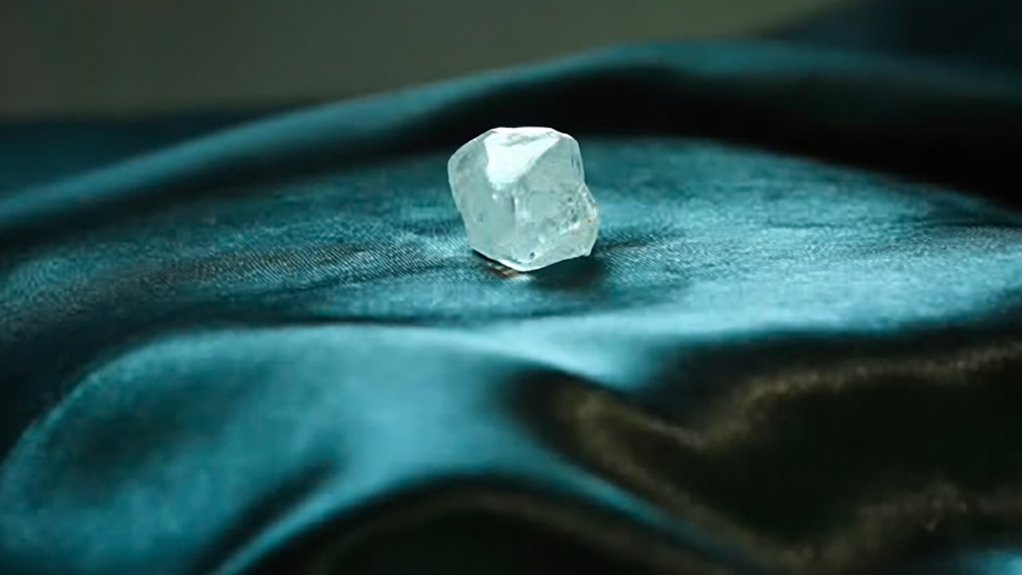
The 176 carat white diamond.



JOHANNESBURG (miningweekly.com) – South Africa needs to find ways to build and sustain its alluvial diamond sector in particular, given this country’s “incredible” alluvial sector which hosts “exceptional” diamonds.
Accompanying these comments to Mining Weekly by diamond luminary Dr John Bristow was a picture of a 176 ct white diamond probably carried down the Orange river from Lesotho and recovered by Namdeb in the offshore setting on the Namibian side of the West Coast. (Also watch attached Creamer Media video.)
The diamond is the largest of its kind discovered at the Southern Coastal Mine in Oranjemund in the past two decades.
However, the chances of South Africans recovering such diamonds on their way through South Africa have diminished significantly as only about 22 alluvial diamond operators are active on our diamond-carrying rivers compared with ten times that number not that long ago.
Bristow emphasised the importance of a natural diamond business comeback and the need to realise that it is a marketing business, amid the diamond business being huge, particularly in synthetics, and continuing to change and to grow.
“Going back to the period that I joined De Beers and worked for De Beers back in the 1980s and 1990s, De Beers's marketing was just incredible,” Bristow recalled.
Bristow is credited with developing a unique micro-mineral (perovskite) age-dating technique at the Research School of Earth Sciences (RSES) of the Australian National University in Canberra.
He did this development with Hugh Allsopp of the Bernard Price Institute of the University of the Witwatersrand (Wits), and also Bill Compston of the RSES. This took place in the 1980s, and it was carried out courtesy of De Beers.
“You're now starting to see marketing becoming much more aggressive, much more in tune with young people, and certainly, in spite of all the doom and gloom, we’re starting to see an uptick in diamond prices, particularly for better quality diamonds,” Bristow pointed out.
“The big stones and quality stones are doing quite well. The diamond business has been out there 2 000 years. It's not going to go away in a hurry, and it's seen lots of challenges in the past, from great depressions, the global financial crash, and now this somewhat more severe downturn.
“But it's adaptable. We're seeing that already. It'll come back. I'll be a different business, but it'll be a solid business again,” Bristow forecast in a Zoom interview with Mining Weekly.
CUTTING, POLISHING ADVANCE
“When you have a natural diamond, no matter how big or small, you look to maximise the number of diamonds that you can cut off.
“In the previous decades, in the early stage of the diamond business, you would work exclusively on a lap, and you would cut the diamond into a shape, and then you would use a polishing lap, and end up with a lot of very fine powder in producing a gemstone diamond for a piece of jewellery.
“Now, there's been huge innovation in cutting and polishing and one of these days, when you have time, go to Melrose Arch and visit Greg Katz and see the amazing cutting and polishing of diamonds being done on mostly exceptional diamonds from South Africa’s West Coast, our Orange river, the Vaal river, and so on. The great thing about diamonds, whether it's synthetic or whether it's natural diamonds, innovation is the norm, and that process is ongoing,” Bristow reported.
“We should just bear in mind that synthetic diamonds or lab-grown diamonds, have been around since 1954, when General Electric started producing them for industrial uses and shortly after that, De Beers followed and also started producing synthetic diamonds for a whole lot of industrial applications.
“You will remember the big factory buildings De Beers had on the East Rand, and can recall the institute at Wits was also involved in that synthetic diamond process and development. Then, those factories that were on the East Rand eventually moved to Shannon in Ireland for, I think, tax purposes.
“We tend to forget synthetic diamonds have been out there for a long, long time, and they have an immense number of uses. So, selling them down at the corner cafe or selling them cheap is not a surprise and ironically synthetic diamonds, lab-grown diamonds, are being sold in jewellery at many of our jewellers around Johannesburg; down here in the Cape, they're quite common,” Bristow added.
What other advances are likely in the fast-changing diamond business?
It’s an important question, and let's just go and look at it. One of the things that De Beers and other diamond producers have spent a tremendous amount of time on is traceability of diamonds, and more and more provenance, or being able to trace where your diamond came from, is critical to the business, and again, I'm talking natural diamonds. It's also very important that we should be distinguishing, in a positive sense, between lab-grown diamonds or synthetics, and natural diamonds, and so for that reason, De Beers has spent a huge amount of time and dollars in traceability. In 2023, we had a wonderful Kimberley International Diamond Symposium in Kimberley, and we got Paul Zimnisky, who's one of the world's leading analysts, to come out and talk to us and tell us about how he saw the diamond market. We then went to Cullinan, Debswana and the Diamond Trading Company (DTC) and KGK, one of the big Indian diamond factories set up in Botswana. While we were in the DTC and talking to the De Beers side of the business, we were fortunate enough to see some of the work that they were doing on traceability, the process of being able to almost fingerprint diamonds, and offer people a diamond with a provenance. Where that diamond came from is an extremely important factor in marketing real diamonds today, and there are many other applications. Never forget that synthetic diamonds were initially used for abrasives and cutting blades and polishing. Today, synthetic diamonds are used in medical applications. Speak to any good surgeon, they love scalpels made out of sharp-edged diamonds because they last forever. Nano diamonds are used extensively in moving cancer drugs around your body, diamond being an inert substance, and talk to the young ladies who buy expensive facial applications to make themselves look pretty. Many of those bling applications have very fine synthetic diamonds in them, so the list of applications for diamonds is extensive, particularly the synthetic diamonds.
Article Enquiry
Email Article
Save Article
Feedback
To advertise email advertising@creamermedia.co.za or click here
Research Reports


Projects
Latest Multimedia

Latest News
Showroom

Established in 1933, EKATO is the world leader in agitation technology, supplying agitators for processes and applications such as chemicals and...
VISIT SHOWROOM
SABAT Batteries is a renowned brand in the battery industry, manufacturing a wide range of batteries at its state-of-the-art production facility in...
VISIT SHOWROOM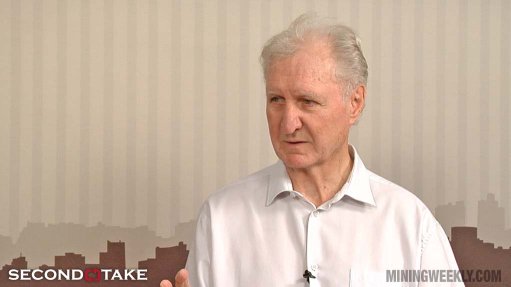


Press Office
Announcements
What's On
Subscribe to improve your user experience...
Option 1 (equivalent of R125 a month):
Receive a weekly copy of Creamer Media's Engineering News & Mining Weekly magazine
(print copy for those in South Africa and e-magazine for those outside of South Africa)
Receive daily email newsletters
Access to full search results
Access archive of magazine back copies
Access to Projects in Progress
Access to ONE Research Report of your choice in PDF format
Option 2 (equivalent of R375 a month):
All benefits from Option 1
PLUS
Access to Creamer Media's Research Channel Africa for ALL Research Reports, in PDF format, on various industrial and mining sectors
including Electricity; Water; Energy Transition; Hydrogen; Roads, Rail and Ports; Coal; Gold; Platinum; Battery Metals; etc.
Already a subscriber?
Forgotten your password?
Receive weekly copy of Creamer Media's Engineering News & Mining Weekly magazine (print copy for those in South Africa and e-magazine for those outside of South Africa)
➕
Recieve daily email newsletters
➕
Access to full search results
➕
Access archive of magazine back copies
➕
Access to Projects in Progress
➕
Access to ONE Research Report of your choice in PDF format
RESEARCH CHANNEL AFRICA
R4500 (equivalent of R375 a month)
SUBSCRIBEAll benefits from Option 1
➕
Access to Creamer Media's Research Channel Africa for ALL Research Reports on various industrial and mining sectors, in PDF format, including on:
Electricity
➕
Water
➕
Energy Transition
➕
Hydrogen
➕
Roads, Rail and Ports
➕
Coal
➕
Gold
➕
Platinum
➕
Battery Metals
➕
etc.
Receive all benefits from Option 1 or Option 2 delivered to numerous people at your company
➕
Multiple User names and Passwords for simultaneous log-ins
➕
Intranet integration access to all in your organisation