Local circulating fluidised bed adoption lags international trends

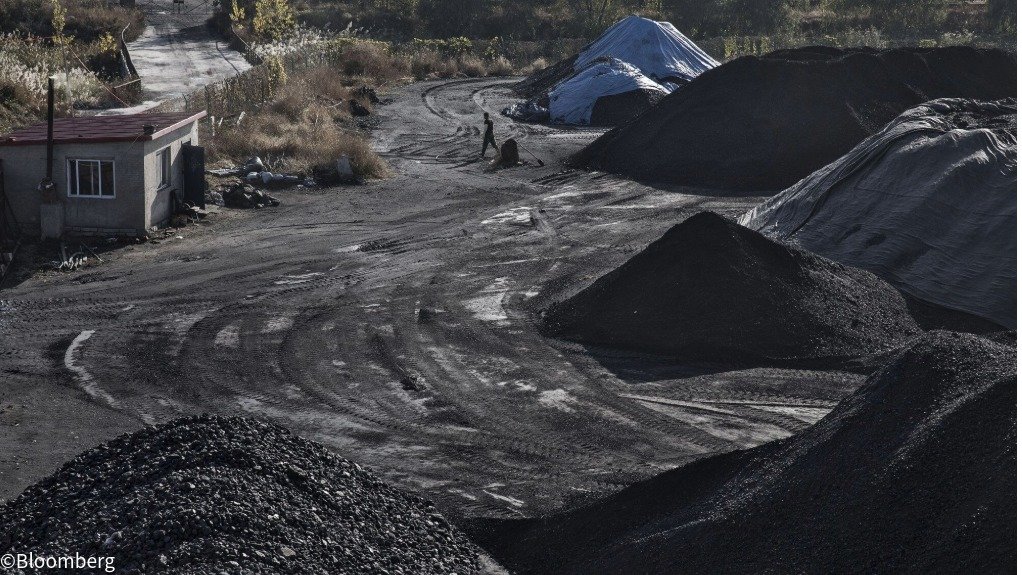
FLEXIBLE SOLUTION Circulating fluidised bed coal solutions negate the need to finely crush coal, are able to use poor-grade discard coal and can co-fire biomass and other waste products


Power plants using circulating fluidised bed (CFB) technology have not gained momentum in South Africa’s power generation landscape, despite experiencing increased uptake internationally and “demonstrating various benefits”, says coal advocacy organisation FFF Carbon director Professor emeritus Rosemary Falcon.
While CFB technology was available prior to the development of State-owned power utility Eskom’s Medupi power station in Limpopo and Kusile power station in Mpumalanga – construction of which started in May 2007 and April 2008, respectively – CFB technology was not selected as a combustion technology largely owing to CFB units being considered too small for Eskom’s required boiler size, says University of the Witwatersrand senior researcher Professor Samson Bada.
In addition, FFF Carbon chairperson Tumi Kgomo adds that, at the time, Eskom only adopted technologies with an established market track record.
Given that technology adoption approval processes and waiting for peer power utilities to prove a technology can take many years, Kgomo points out that Eskom is typically significantly behind other technology adopters, effectively adopting a technology at a point at which it is almost obsolete and at a time when power station developers have already likely moved on to a second generation of suitable applicable technologies.
Apart from Eskom, Falcon explains that there have been attempts by South African mining, metallurgical and manufacturing operators to introduce industrial-sized CFB-enabled boilers. However, she notes that these attempts were blocked by environmental legal challenges.
One such example, she points out, is a thermal coal business unit of a major mining company in South Africa, whereby a 150 MW CFB-enabled three-boiler power station was proposed, with the miner being the sole off-taker for all the electricity produced by the power plant.
The miner intended to carry the power purchase agreement on its balance sheet as a $1-billion finance lease. However, the project encountered financial and legal challenges.
Falcon explains that, at the time of industry’s attempts to roll out CFB technology, it was difficult to demonstrate that CFB technology can be a “clean” coal technology “without local proof, despite ample proof shown in other countries”.
While South Africa has lagged in adopting CFB technology in its power stations, Falcon points out that CFB installations have gained “strong momentum” globally, such as in China, India and Indonesia, alongside new CFB-enabled plants being built in Botswana, Zimbabwe, Mozambique and Zambia.
By doing so, these countries can use all grades of coal as a fuel-to-power source in a more efficient and “cleaner” manner which, in turn, is able to support economic growth and ensure stable energy supply, says Falcon.
Leveraging CFB Technology
While Falcon acknowledges that CFB solutions are marginally more expensive to build, she says the technology has proved to be cheaper to operate.
CFB technolgy benefits include negating the need to crush coal as fine as that required by pulverised power stations, being able to use poor-grade discard coal and to co-fire biomass and other waste products.
Further, Falcon notes that the technology produces low nitrogen oxide emissions and embedded sulphur oxide (SOx) capture which avoids the need for large back-end nitrogen oxides (NOx) and SOx scrubbers. These benefits, she adds, are all achieved through low-temperature combustion.
Kgomo adds the CFB solutions also enable by-product creation. Rather than sequestering captured SOx, SOx can be converted into sulphuric acid through a relatively simple process, he says.
“Sequestering a portion and converting another portion into usable products solves a disposal problem and creates a resource at the same time,” says Kgomo, noting that South Africa typically imports about one-million tonnes of sulphuric acid a year for metallurgical, defence and agricultural uses, while Eskom itself uses about 250 000 t a year to demineralise boiler water.
While acknowledging that the yield of sulfuric acid depends on the elemental composition of the coal used, which is specified by the boiler operator, Kgomo proposes that adopting CFB technology would enable Eskom to offset some of its sulfuric acid demand by capturing SOx internally.
He adds that NOx can be used to provide fertilisers while carbon dioxide can be targeted in for high value carbon products including carbon nanotubes, carbon fibre and activated carbon.
Article Enquiry
Email Article
Save Article
Feedback
To advertise email advertising@creamermedia.co.za or click here
Research Reports
Latest Multimedia

Latest News
Showroom
Electrifying the world in a safe, smart, and sustainable way, ABB Electrification is a global technology leader in electrical distribution and...
VISIT SHOWROOM
AxFlow AQS Liquid Transfer (Pty) Ltd is an Importer and Distributor of Pumps in Southern Africa
VISIT SHOWROOM


Press Office
Announcements
What's On
Subscribe to improve your user experience...
Option 1 (equivalent of R125 a month):
Receive a weekly copy of Creamer Media's Engineering News & Mining Weekly magazine
(print copy for those in South Africa and e-magazine for those outside of South Africa)
Receive daily email newsletters
Access to full search results
Access archive of magazine back copies
Access to Projects in Progress
Access to ONE Research Report of your choice in PDF format
Option 2 (equivalent of R375 a month):
All benefits from Option 1
PLUS
Access to Creamer Media's Research Channel Africa for ALL Research Reports, in PDF format, on various industrial and mining sectors
including Electricity; Water; Energy Transition; Hydrogen; Roads, Rail and Ports; Coal; Gold; Platinum; Battery Metals; etc.
Already a subscriber?
Forgotten your password?
Receive weekly copy of Creamer Media's Engineering News & Mining Weekly magazine (print copy for those in South Africa and e-magazine for those outside of South Africa)
➕
Recieve daily email newsletters
➕
Access to full search results
➕
Access archive of magazine back copies
➕
Access to Projects in Progress
➕
Access to ONE Research Report of your choice in PDF format
RESEARCH CHANNEL AFRICA
R4500 (equivalent of R375 a month)
SUBSCRIBEAll benefits from Option 1
➕
Access to Creamer Media's Research Channel Africa for ALL Research Reports on various industrial and mining sectors, in PDF format, including on:
Electricity
➕
Water
➕
Energy Transition
➕
Hydrogen
➕
Roads, Rail and Ports
➕
Coal
➕
Gold
➕
Platinum
➕
Battery Metals
➕
etc.
Receive all benefits from Option 1 or Option 2 delivered to numerous people at your company
➕
Multiple User names and Passwords for simultaneous log-ins
➕
Intranet integration access to all in your organisation