Mine hydropower extolled at Minerals Council climate event

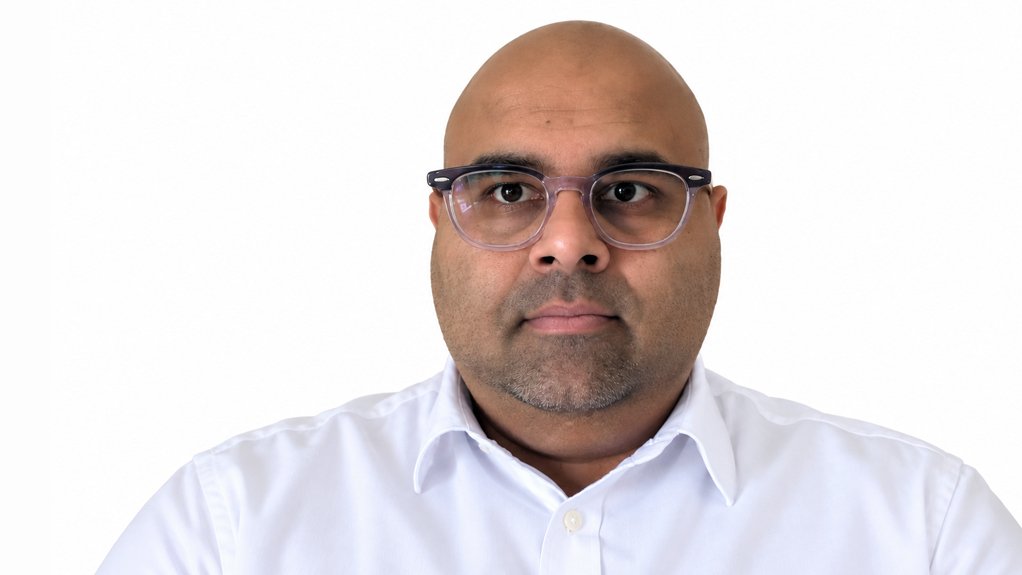



JOHANNESBURG (miningweekly.com) – By converting excess water pressure into renewable electricity, emissions are reduced, energy efficiency is uplifted and additional value is created from existing mining infrastructure, Harmony Gold strategic lead for climate and integration Mohammed Asmaljee spelt out emphatically at the launch Minerals Council South Africa’s inaugural Climate Change Day of Learning, attended by public sector and private sector climate mitigation protagonists.
By capturing pressure from chilled water used in underground mining, the Johannesburg Stock Exchange-listed Harmony generates renewable electricity amid the water that travels thousands of metres underground building up pressure naturally for conversion into electricity through hydroelectric turbines.
Importantly, this process recovers energy from existing mine infrastructure without additional water consumption.
Such energy recovery systems are deployed at Harmony’s underground Kusasalethu, Moab Khotsong and Mponeng gold mines, with water continuing through the mine reticulation network ensuring uninterrupted operational use after passing through the turbines.
Four Pelton wheel turbines, for example, are supplying electricity directly to Kusasalethu, where a multi-phase hydropower rehabilitation programme has been implemented to improve reliability, performance and monitoring. A Pelton wheel turbine, a type of impulse water turbine invented by Lester Allan Pelton in the 1870s, converts the kinetic energy of moving water into mechanical and electrical power.
Seventy gigawatt hours of renewable electricity have been generated since financial year 2024 and 73 000 t of CO2-equivalent (CO₂e) Scope 2 emissions have been avoided, which has improved energy efficiency by recovering otherwise wasted pressure energy. Water temperatures have also been reduced by 1 °C, which has uplifted underground cooling efficiency and lowered cooling demand.
“For us, decarbonisation is fundamentally a business challenge. How do we continue to grow our business in both gold and copper while still reducing our emissions,” is the question Asmaljee posed, within the context of South Africa advancing towards net zero greenhouse gas (GHG) emissions under the auspices of the Paris Agreement – a stance being taken ahead of COP31, the thirty-first United Nations Climate Change Conference, which is taking place this month in Antalya, Türkiye, from November 9 to 20.
“It affects how we think about energy, costs, competitiveness, regulation, and ultimately the long-term resilience of our operations. We are learning as we navigate this complex transition,” Asmaljee explained at the event covered by Mining Weekly.
Harmony’s carbon challenge is driven largely by Scope 2 emissions from electricity bought from State-owned power utility Eskom, and this is a common challenge for deep-level mining in South Africa, where significant electricity is needed for ventilation, cooling, pumping, hoisting, and processing.
Though Harmony’s Scope 1 emissions are considerably smaller, there are still tremendous opportunities to reduce them through diesel efficiency and other fossil fuel efficiency projects, improved fleet performance, and future electrification.
Business growth and portfolio expansion are also influencing the overall emissions of the gold and copper mining company, which owns CSA Copper and Eva Copper in Australia, assets that increase the company’s exposure to the critical minerals needed for the green energy transition.
Emphasis was placed on growth and decarbonisation needing to happen together. The challenge is to grow while progressively reducing GHG emissions.
Up to 2026, Harmony’s emissions have remained relatively stable, but from here on, the emissions trajectory is poised to decrease significantly through the uptake of renewable energy, especially in South Africa.
Harmony has a validated science based targets initiative (SBTi) target of 63% Scope 1 and Scope 2 emission reduction by financial year 2036, with SBTi being a GHG emission reduction goal that is grounded in climate science and aligned with Paris Agreement goals to limit global warming.
Pointed out is that climate change at Harmony is viewed through a broader strategic lens than emissions reduction alone.
“The energy transition creates risks and opportunities for mining companies, and decarbonisation does not happen in isolation. It is increasingly about how we think from a mining perspective and industry at large about energy security, climate resilience, access to finance and capital, and ultimately growing the mining industry," Asmaljee outlined.
“Renewable energy, in particular, is very important to Harmony, as it can help us reduce our emissions while also giving us certainty of cost and supply. At the same time, our growth in copper and other transition-enabling commodities creates opportunities for us, but it changes the shape of our business. So ultimately, we’re trying to build a more resilient, competitive, and future business economy.
“Our roadmap is about turning ambition into climate action. For some of us, setting targets and putting it down on paper and reporting it in our reports is the easy part.
“The challenge and what we've learned is translating it into practical projects, investment decisions, and accountability, both internally and externally.
“As we evolve, our decarbonisation roadmap needs to evolve while we keep focus on our net zero emission,” Asmaljee explained.
Harmony established its SBTi in 2023, based on its 2021 data for Scope 1 and Scope 2 emissions. Since then, Harmony has changed, its portfolio has grown, its life-of-mine assumptions have evolved, and the quality of its emissions data has improved.
This means that its decarbonisation also needs to evolve, and where there are reduction opportunities, these need to be taken.
The next step is therefore about painting a fuller Scope 3 picture across organisation, assessing envisaged future portfolio changes, and advancing decarbonisation initiatives that are aligned with the business the company is transforming towards.
“As new projects and new operations push emissions up, we really need the initiatives that bring them down, and we have to redesign our business,” said Asmaljee.
The biggest lever, especially in the South African setting, remains renewable electricity, supported by the foundational elements of energy efficiency and electrification.
“There is no single solution that will get us where we are or where we need to be, that is towards a net zero emission, and it will take a combination of actions, progressively implemented, and it might change over the years until we settle towards recognition. Our decarbonisation efforts need to outpace our emissions growth from the business and ultimately contribute to a low-carbon economy.
“Many of us in this room are tired about energy efficiency. But I think energy efficiency is one of the simplest levers in our decarbonisation journey. In simple terms, every unit of energy we save or avoid reduces cost and reduces our GHG emissions, and this and energy efficiency still remains a fundamental alongside our renewable-energy programme,” he said.
Having recently joined Harmony from Anglo American, Asmaljee has been impressed by the manner in which Harmony’s energy efficiency and innovation work hand-in-hand to contribute to decarbonisation amid the company’s deep-level mines that sometimes run three to four kilometres underground offering hydropower through the pressure build-up of megalitres of chilled water.
But more broadly, Harmony’s energy efficiency programme has delivered more than R3-billion in direct savings, and nearly three million tons of CO2e emissions.
Emphasised was the need for energy efficiency projects and initiatives to be sustained to ensure that the savings are ongoing.
What energy efficiency projects and initiatives also highlight is that decarbonisation is not always about new infrastructure. Sometimes it is just getting value out of what is already constructed.
SUN AND WIND ENERGY
But having said that, Harmony’s major investment in renewable energy remains its biggest decarbonisation lever. Again, it's not just about reducing emissions but also about cost certainty, energy supply security, and supporting the long-term resilience of operations, including employee safety.
Harmony initiated renewable power in financial year 2024 with the moderately sized 30 MW Sungazer 1 project. By the beginning of next year, Harmony’s 100 MW Sungazer 2 will be up and running, while total planned behind-the-meter and wheeled electricity capacity is in the region of 900 MW.
Benefits of the energy programme are the R3.64-billion cumulative savings from the energy efficiency programme; 2.95-million-tonne CO2e-associated GHG emissions reduction in Scope 2 and Scope 3.
Estimated annual savings from Sungazer 1 and Sungazer 2, once operational, is R470-million a year.
Renewable-energy requirements grow as the business grows, and assets and mine lives evolve and what is set in place is not only about carbon reduction but also the provision of business performance and business security well into the future.
Harmony’s strategy is to use energy efficiently, progressively replace the high-carbon electricity from Eskom with renewables, and continue scaling that up as the group grows.
Importantly, what Harmony has come to recognise is that decarbonisation cannot be achieved as one isolated function or by one team within an organisation.
What is needed is the right capability, open leadership, collaboration across the business.
As a result, Harmony has established the Harmony Climate Community of Practice to bring colleagues together across the operations and for regions to create a shared understanding of the energy transition and what it means to the business.
The focus is turning into action the business strategy-linked climate strategy, which includes developing the roadmap, reducing Scope 3 emissions, continuing to sustain the energy efficiency programme, understanding the climate risks and opportunities, being conscious of the value that needs to be taken from that risk, strengthening overall governance and progressing together with the growth of the business.
One of the most valuable outcomes has been creating stronger alignment around where climate mitigation is heading, the priorities, and who needs to be involved across the operational regions.
“Climate action cannot be driven only by the sustainability ESG team. Operational leaders at our mine sites and operations, engineers, our finance teams, our procurement teams, our management, all have a role to play.
“Ultimately, we as Harmony want the transition to be successful, and it has to become part of how the broader business thinks, acts, plans, invests, and makes decisions.
“So, this is really what Harmony Climate Community of Practice is helping us to achieve, connecting the climate strategies with the people who will deliver this across Harmony,” Asmaljee explained.
Decarbonisation is ultimately about preparing the business for the changing reality in how business grows, in the energy that is utilised, and the regulatory and disclosure landscape that is continuously evolving and maturing.
The focus is practical: energy efficiency, renewable energy, and the energy ecosystems that surround that.
Progress will require collaboration across industry, government, and investors, as well as technology providers and other stakeholders.
Consistency and practicality is needed so that the actions taken today will enable Harmony to be net zero by 2045.
A growing and investable mining sector is essential to mobilise the capital required for decarbonisation and climate resilience, while continuing to support jobs, communities and economic development.
This aligns with the Minerals Council’s wider Investment and Growth Strategy and its work through the Government-Business Partnership for Growth and Jobs, where mining is a priority growth sector to revitalise South Africa’s economy. Working with government and business, the sector is supporting efforts to strengthen competitiveness and increase investor confidence and investment in mining for the benefit of all South Africans.
Article Enquiry
Email Article
Save Article
Feedback
To advertise email advertising@creamermedia.co.za or click here
Research Reports
Projects

Latest Multimedia

Latest News
Showroom
Axiom Hydraulics is a trusted leader in South Africa’s hydraulic industry, delivering world-class components, systems, and engineering expertise...
VISIT SHOWROOM
Rentech provides renewable energy products and services to the local and selected African markets. Supplying inverters, lithium and lead-acid...
VISIT SHOWROOM
Announcements
What's On
Subscribe to improve your user experience...
Option 1 (equivalent of R125 a month):
Receive a weekly copy of Creamer Media's Engineering News & Mining Weekly magazine
(print copy for those in South Africa and e-magazine for those outside of South Africa)
Receive daily email newsletters
Access to full search results
Access archive of magazine back copies
Access to Projects in Progress
Access to ONE Research Report of your choice in PDF format
Option 2 (equivalent of R375 a month):
All benefits from Option 1
PLUS
Access to Creamer Media's Research Channel Africa for ALL Research Reports, in PDF format, on various industrial and mining sectors
including Electricity; Water; Energy Transition; Hydrogen; Roads, Rail and Ports; Coal; Gold; Platinum; Battery Metals; etc.
Already a subscriber?
Forgotten your password?
Receive weekly copy of Creamer Media's Engineering News & Mining Weekly magazine (print copy for those in South Africa and e-magazine for those outside of South Africa)
➕
Recieve daily email newsletters
➕
Access to full search results
➕
Access archive of magazine back copies
➕
Access to Projects in Progress
➕
Access to ONE Research Report of your choice in PDF format
RESEARCH CHANNEL AFRICA
R4500 (equivalent of R375 a month)
SUBSCRIBEAll benefits from Option 1
➕
Access to Creamer Media's Research Channel Africa for ALL Research Reports on various industrial and mining sectors, in PDF format, including on:
Electricity
➕
Water
➕
Energy Transition
➕
Hydrogen
➕
Roads, Rail and Ports
➕
Coal
➕
Gold
➕
Platinum
➕
Battery Metals
➕
etc.
Receive all benefits from Option 1 or Option 2 delivered to numerous people at your company
➕
Multiple User names and Passwords for simultaneous log-ins
➕
Intranet integration access to all in your organisation