The three questions every CFO should ask before signing off an energy investment


For more than a decade, South African businesses made energy decisions under pressure. Load-shedding drove significant capital into private generation, PPAs and self-supply arrangements, often with one overriding business objective: keep the business running.
While the conditions that necessitated those decisions have since eased, the financial exposure embedded in crisis-era contracts remains, and the landscape underpinning them continues to evolve.
In 2026, Eskom's direct-customer tariff rose 8.76%, with a further 8.83% increase approved for 2027. The structure of the bill itself is changing too, with a growing share of every invoice fixed rather than usage-linked, undercutting the business case to “use less, pay less”.
The energy line on an income statement has become considerably harder to predict than it was five years ago. But some of the greatest financial risk lies below the surface, in the obligations and drift that no one watches between board packs.
The quality of an energy investment is often determined by the questions asked before a contract is signed, and for CFOs, these are the three worth asking.
What will the next decade cost me?
A PPA is not a fixed number, but a set of obligations that recalculate every month over what’s typically a 10-year term. Left unchecked, generation that underperforms against what was modelled at commissioning goes uncaught for years.
Margin leaks out a fraction of a percent at a time, easy to dismiss until five or six years in, when somebody finally adds it up and the number is too large to explain away. By then it isn't a modelling error, but money that's gone.
The question for a CFO is therefore whether their organisation can verify, throughout the life of the contract, that the return approved is the return actually received.
What happens if I do nothing?
Doing nothing doesn't feel like a decision, but that’s precisely what makes it dangerous. No one signs off on the risk, so no one owns it until it's unavoidable. Meanwhile, tariffs keep rising on a schedule you don't control, ageing infrastructure becomes more expensive and obligations accumulate.
The financial case for an energy investment thus needs to be measured against the cost of maintaining the status quo. A decision not to invest is still a capital allocation decision. CFOs should expect the same level of evidence behind it.
What will SAWEM’s impact be?
SAWEM will require large energy users to submit accurate daily demand forecasts or face financial penalties for getting it wrong. The market will charge you, immediately, for the gap between what you forecast and what you use. A new investment made now either has this built in from day one, or it's one more thing your team is scrambling to fix once the rules take effect.
And the questions don’t stop there.
If your team is trying to manage multi-billion-rand energy costs across Eskom, municipal suppliers, embedded PPAs and wheeling agreements in a spreadsheet, each with its own tariff structure, billing cycle and contractual terms, are you certain every line is billed correctly? Can the carbon impact of those investments survive an audit, or will somebody be reconstructing the numbers the week the disclosure is due?
Energy used to be an engineering decision with a financial line item attached. For the companies asking these questions, it's now the reverse: energy has become a financial and commercial decision that happens to involve engineering. That shift, more than any market reform, is the one CFOs should be paying attention to.
Article Enquiry
Email Article
Save Article
Feedback
To advertise email advertising@creamermedia.co.za or click here

Projects

Latest News
Showroom

Sika South Africa is a trusted partner for the nation’s infrastructure, commercial, residential, and industrial sectors.
VISIT SHOWROOM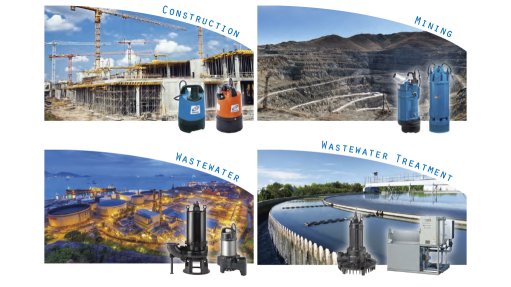
Tsurumi Pumps Africa is a specialist supplier of Japanese-engineered submersible pumping solutions, serving customers across the African continent.
VISIT SHOWROOM

Announcements
What's On
Subscribe to improve your user experience...
Option 1 (equivalent of R125 a month):
Receive a weekly copy of Creamer Media's Engineering News & Mining Weekly magazine
(print copy for those in South Africa and e-magazine for those outside of South Africa)
Receive daily email newsletters
Access to full search results
Access archive of magazine back copies
Access to Projects in Progress
Access to ONE Research Report of your choice in PDF format
Option 2 (equivalent of R375 a month):
All benefits from Option 1
PLUS
Access to Creamer Media's Research Channel Africa for ALL Research Reports, in PDF format, on various industrial and mining sectors
including Electricity; Water; Energy Transition; Hydrogen; Roads, Rail and Ports; Coal; Gold; Platinum; Battery Metals; etc.
Already a subscriber?
Forgotten your password?
Receive weekly copy of Creamer Media's Engineering News & Mining Weekly magazine (print copy for those in South Africa and e-magazine for those outside of South Africa)
➕
Recieve daily email newsletters
➕
Access to full search results
➕
Access archive of magazine back copies
➕
Access to Projects in Progress
➕
Access to ONE Research Report of your choice in PDF format
RESEARCH CHANNEL AFRICA
R4500 (equivalent of R375 a month)
SUBSCRIBEAll benefits from Option 1
➕
Access to Creamer Media's Research Channel Africa for ALL Research Reports on various industrial and mining sectors, in PDF format, including on:
Electricity
➕
Water
➕
Energy Transition
➕
Hydrogen
➕
Roads, Rail and Ports
➕
Coal
➕
Gold
➕
Platinum
➕
Battery Metals
➕
etc.
Receive all benefits from Option 1 or Option 2 delivered to numerous people at your company
➕
Multiple User names and Passwords for simultaneous log-ins
➕
Intranet integration access to all in your organisation