Storing more data is only useful if you can recover it





This article has been supplied and will be available for a limited time only on this website.
Zander Brewis, Technical Alignment Manager at IPT
Businesses are producing and retaining more data every year, often across a growing mix of systems, cloud platforms, email environments, and shared repositories. That creates an obvious storage challenge, but storage capacity is only part of the problem.
Many organisations assume they are protected because data is being copied somewhere. That can create confidence without proof. A backup may have been configured years ago and left largely unattended, or a job may have stopped because the available storage filled up. The data may also be copied successfully without anyone ever testing whether it can be restored.
That is why I regard recovery testing as the real measure of a backup strategy. A backup that has never been restored remains unproven, regardless of how reassuring the reporting dashboard may look.
Storage should follow business priorities
As data volumes grow, organisations need to become more deliberate about what they protect and how quickly they need it back. Not every dataset carries the same operational consequence, and recovery planning should reflect that.
Every business should understand how much data it can afford to lose and how long it can continue without a critical system. These are business decisions because they affect service delivery, productivity, and the organisation’s ability to continue operating.
A business that backs up once a day accepts the possibility of losing many hours of work. More frequent protection reduces that exposure, although the right schedule will depend on how the organisation operates and what the data supports.
The same principle applies to downtime. Recovering a limited set of files may be relatively quick, while rebuilding a failed server can take much longer if the organisation has not prepared for it.
A recovery plan should therefore define what comes back first, who takes responsibility, and how people will continue working while systems are restored. It should also be tested often enough to confirm that the assumptions behind it remain realistic. Without this planning, backup becomes a technical activity disconnected from the outcome the business actually needs.
Protecting the copy that protects the business
Growing volumes of data also create a larger protection burden. Keeping one copy in one location is rarely enough, particularly when ransomware can reach both production systems and connected backups.
Attackers understand that a usable backup reduces the pressure to pay. They therefore look for backup systems and try to encrypt or destroy them as part of the same incident.
Separation is one of the strongest controls available. Businesses should keep multiple copies of critical data in more than one location, with at least one copy kept offline, immutable, or otherwise beyond the reach of someone who has compromised the live environment.
Access to backup systems also needs to be restricted. Strong authentication, limited privileges, and proper monitoring can reduce the chance that an attacker gains the same level of control over both production data and the systems intended to restore it.
Recovery testing remains important here too. A backup may appear protected until the organisation attempts to use it. Testing confirms whether the data is still usable and whether the people responsible for recovery can access it when required.
Using AI without losing discipline
AI can improve the way backup environments are monitored and reviewed, particularly as data volumes become harder for teams to assess manually.
It can help identify failed backup jobs, unusual behaviour, or changes in data volume that deserve attention. It can also support decision-making by highlighting where protection may need to be strengthened based on business impact or the sensitivity of the information involved.
Reporting can become more useful as well. Instead of simply confirming that a backup ran, AI-assisted analysis may help teams see whether recovery objectives are being met and where policy changes may be needed. None of this replaces the fundamentals. AI cannot compensate for poor separation, weak access controls, unclear recovery targets, or a restore process that has never been tested.
The value of stored data is ultimately determined by whether the business can retrieve it when disruption occurs. As volumes continue to grow, organisations need to move beyond asking whether they have enough storage and start proving that their backup and recovery arrangements can support the way the business operates.
Article Enquiry
Email Article
Save Article
Feedback
To advertise email advertising@creamermedia.co.za or click here


Latest Multimedia


Latest News

Showroom

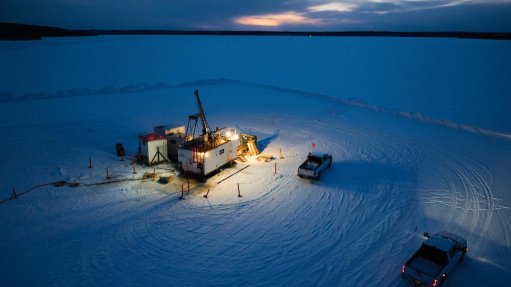
We at Hawk High Pressure Pumps specialise in industrial pumps and pumping systems. Our high pressure washing equipment is locally manufactured and...
VISIT SHOWROOM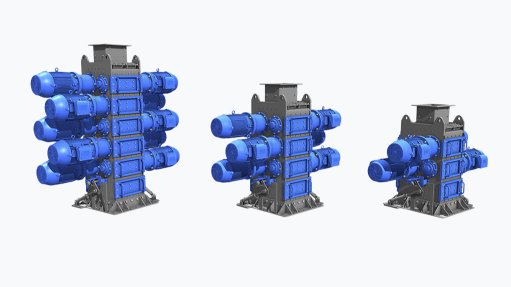
Energy and Densification Systems (EDS) has developed equipment for crushing, milling, blending and densifying products. Based on its globally...
VISIT SHOWROOM



Announcements
What's On
Subscribe to improve your user experience...
Option 1 (equivalent of R125 a month):
Receive a weekly copy of Creamer Media's Engineering News & Mining Weekly magazine
(print copy for those in South Africa and e-magazine for those outside of South Africa)
Receive daily email newsletters
Access to full search results
Access archive of magazine back copies
Access to Projects in Progress
Access to ONE Research Report of your choice in PDF format
Option 2 (equivalent of R375 a month):
All benefits from Option 1
PLUS
Access to Creamer Media's Research Channel Africa for ALL Research Reports, in PDF format, on various industrial and mining sectors
including Electricity; Water; Energy Transition; Hydrogen; Roads, Rail and Ports; Coal; Gold; Platinum; Battery Metals; etc.
Already a subscriber?
Forgotten your password?
Receive weekly copy of Creamer Media's Engineering News & Mining Weekly magazine (print copy for those in South Africa and e-magazine for those outside of South Africa)
➕
Recieve daily email newsletters
➕
Access to full search results
➕
Access archive of magazine back copies
➕
Access to Projects in Progress
➕
Access to ONE Research Report of your choice in PDF format
RESEARCH CHANNEL AFRICA
R4500 (equivalent of R375 a month)
SUBSCRIBEAll benefits from Option 1
➕
Access to Creamer Media's Research Channel Africa for ALL Research Reports on various industrial and mining sectors, in PDF format, including on:
Electricity
➕
Water
➕
Energy Transition
➕
Hydrogen
➕
Roads, Rail and Ports
➕
Coal
➕
Gold
➕
Platinum
➕
Battery Metals
➕
etc.
Receive all benefits from Option 1 or Option 2 delivered to numerous people at your company
➕
Multiple User names and Passwords for simultaneous log-ins
➕
Intranet integration access to all in your organisation