Mobility Is Economic Policy In An Engineering Hard Hat




This article has been supplied.
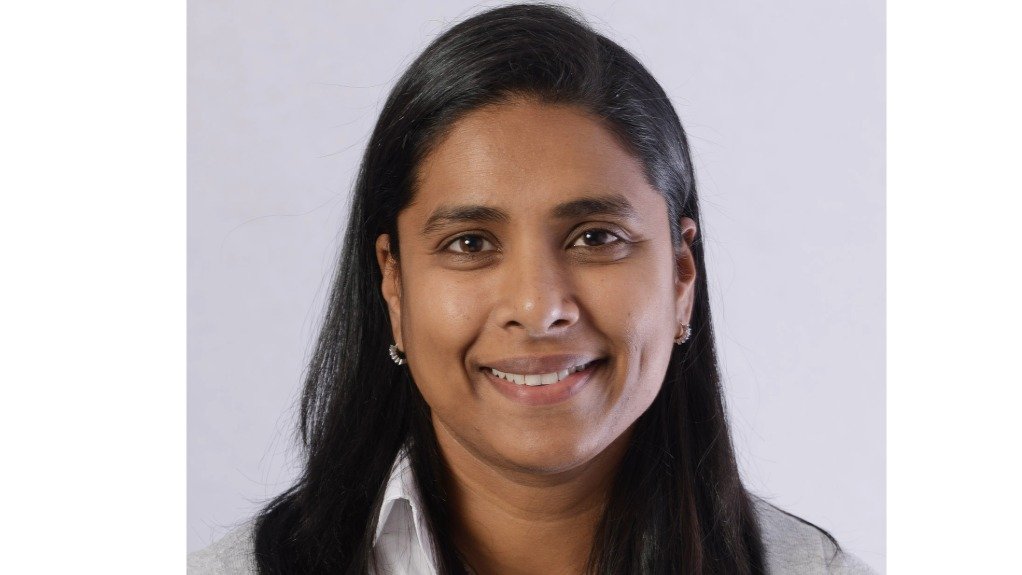
For GIBB’s Pravanya Pillay, engineering is not simply about building infrastructure. It is about understanding the systems, decisions and human behaviour that determine whether infrastructure creates lasting value.
A strategist by instinct and an engineer by training, she says she was never interested in infrastructure simply for the sake of infrastructure. “What fascinated me was cause and effect: why one intervention can unlock an entire area or economy, while another can become a very expensive asset looking for a purpose.”
Transportation took her fascination to another level because it sits at the intersection of engineering, economics, human behaviour, land use, politics and social development.
“A road, railway, bus route or taxi operation is never just a transport intervention. It influences where people can work, where businesses invest, how cities grow and, ultimately, the choices people have in their lives.”
Her return to GIBB after a 10-year hiatus was less about returning to somewhere familiar and more about returning with a completely different lens. “I have since had the opportunity to sit on several sides of the transport table – as a technical specialist, within local government, as a consultant and eventually in executive leadership. You see the industry differently once you have been both the client, buying professional services, and the consultant responsible for delivering them.”
Today, as Business Unit Leader for Transport South and National Market Sector Coordinator for Transportation, she describes her role as having “one foot in delivery and one foot in the future”. One side is focused on building strong teams and delivering excellent work today; the other asks where GIBB should be playing tomorrow and what capabilities clients will need five or ten years from now.
This forward-looking approach is particularly relevant to South Africa’s transportation challenges. She says the country’s biggest problem is not simply an infrastructure deficit, but an “integration and execution deficit”. People experience transport as one journey, while institutions often manage roads, rail, buses, taxis, walking, freight, land use and funding as separate pieces.
The solution, she suggests, requires moving beyond the physical asset. Engineering must be combined with economics, technology, institutional design, commercial thinking and sophisticated stakeholder management. This is particularly important when considering the minibus taxi industry, which she believes should be recognised as an integral part of South Africa’s transport system and progressively integrated, incentivised and professionalised rather than simply viewed as something to be replaced.
She is sceptical of the idea that a megaproject alone will solve the country’s mobility challenges. “I think we need a fundamental shift in how we approach transport. We need to move from thinking about assets to systems, from capital expenditure to whole-life outcomes, and from consultation to genuine co-design with operators and communities.
“We also need to be far more disciplined about what success looks like. Kilometres built are easy to measure, but the real questions are: Has travel time reduced? Is the service reliable and affordable? Is it safer? And does it meaningfully improve access to jobs and opportunity? Are goods moving more efficiently through the economy?”
Some of the most important transport infrastructure of the next decade, she believes, may not be physical at all. Better institutions, contracts, data, incentives and accountability, and the political will to sustain long-term decisions, are just as critical.
Her philosophy can be summed up in one line: “Mobility is economic policy wearing an engineering hard hat.”
Looking ahead, her focus is broader than traditional roads and transport infrastructure. She sees growing opportunities in integrated mobility planning, public transport reform, operational advisory, asset management, data-led decision-making, transport economics and emerging markets across Africa.
For her, this is also where the value of diversity becomes clear. Women do not need to bring a uniquely “female” quality to engineering to justify their place at the table. Technical competence is not gendered. What matters is diversity of perspective.
Transport systems are experienced differently according to gender, age, income, disability, geography and personal circumstances. “Teams with different lived experiences are more likely to identify blind spots and ask better questions.
“Many women who have progressed through traditionally male-dominated industries have had to become exceptionally good at reading complex environments, building coalitions, influencing stakeholders and establishing credibility,” she adds.
On developing women in the industry, she says mentorship matters, but real development comes from access to real responsibility. “This means putting women into decision-making rooms, client-facing roles and positions where commercial and technical judgement is tested.
“Give them complex projects, budgets, negotiation exposure and leadership responsibility early on; and allow space to learn through experience without penalising growth.
“I am intentional about ensuring women understand the commercial side of engineering. Leadership in our sector requires more than technical skill; it requires understanding markets, clients, risk and value creation.
“Ultimately, the goal is not to shape women into existing leadership models, but to expand the profession so that different leadership styles can succeed,” she concludes.
Article Enquiry
Email Article
Save Article
Feedback
To advertise email advertising@creamermedia.co.za or click here
Research Reports



Latest Multimedia
Latest News

Showroom

AirNox (Pty) Ltd is a level 1 BBBEE manufacturer of complete AdBlue® solutions for operators of SCR diesel engines and AUS40 across South Africa...
VISIT SHOWROOM
For over 60 years, VEGA has provided industry-leading products for the measurement of level, density, weight and pressure. As the inventor of the...
VISIT SHOWROOM


Announcements
What's On
Subscribe to improve your user experience...
Option 1 (equivalent of R125 a month):
Receive a weekly copy of Creamer Media's Engineering News & Mining Weekly magazine
(print copy for those in South Africa and e-magazine for those outside of South Africa)
Receive daily email newsletters
Access to full search results
Access archive of magazine back copies
Access to Projects in Progress
Access to ONE Research Report of your choice in PDF format
Option 2 (equivalent of R375 a month):
All benefits from Option 1
PLUS
Access to Creamer Media's Research Channel Africa for ALL Research Reports, in PDF format, on various industrial and mining sectors
including Electricity; Water; Energy Transition; Hydrogen; Roads, Rail and Ports; Coal; Gold; Platinum; Battery Metals; etc.
Already a subscriber?
Forgotten your password?
Receive weekly copy of Creamer Media's Engineering News & Mining Weekly magazine (print copy for those in South Africa and e-magazine for those outside of South Africa)
➕
Recieve daily email newsletters
➕
Access to full search results
➕
Access archive of magazine back copies
➕
Access to Projects in Progress
➕
Access to ONE Research Report of your choice in PDF format
RESEARCH CHANNEL AFRICA
R4500 (equivalent of R375 a month)
SUBSCRIBEAll benefits from Option 1
➕
Access to Creamer Media's Research Channel Africa for ALL Research Reports on various industrial and mining sectors, in PDF format, including on:
Electricity
➕
Water
➕
Energy Transition
➕
Hydrogen
➕
Roads, Rail and Ports
➕
Coal
➕
Gold
➕
Platinum
➕
Battery Metals
➕
etc.
Receive all benefits from Option 1 or Option 2 delivered to numerous people at your company
➕
Multiple User names and Passwords for simultaneous log-ins
➕
Intranet integration access to all in your organisation