South Africa's mining industry needs an empowerment regime that welcomes investors


Investors, and especially specialist mining investors, are knowledgeable about and understand South Africa's mining methods and orebodies, but need consistency and finality in regulations that govern the industry to substantiate new investments, mining professionals noted during a conference on October 7.
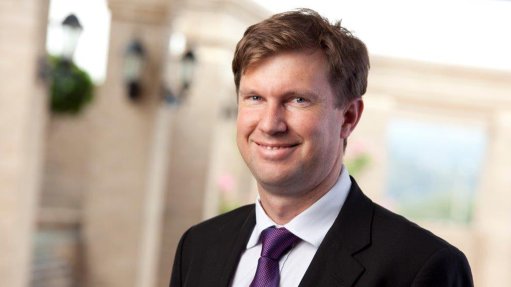
“We need finality to our legislation, and need a legislative backdrop that is acceptable to the needs of the country in terms of economic transformation and participation in the economy, but which is also acceptable to the investor community. This can be done,” said mining industry organisation Minerals Council South Africa president and platinum group metals producer Northam Platinum CEO Paul Dunne.
He noted that the industry had been shocked by the release of the draft Mineral Resources Development (MRD) Bill in May 2025, saying it was viewed as not encouraging or sustaining growth and investment in the mining industry.
The draft legislation had, among other changes, proposed that the sitting Mineral and Petroleum Resources Minister would have to give permission for changes in beneficial ownership of mines, which the industry felt would discourage investment.
“We are pleased that the engagements around that piece of legislation have been fruitful and consultations have moved into the National Economic Development and Labour Council (Nedlac) processes.
“While the work is confidential, on the whole, this is a working piece of legislation that we can guide through Nedlac and Parliament to deliver a law that the industry needs,” said Dunne.
Investors understood South Africa and its need for transformation. However, their biggest concern was inconsistency. The Department of Mineral and Petroleum Resources (DMPR) had one view of how empowerment should be effected, and the Department of Trade, Industry and Competition had another, both of which the mining sector must conform with, Minerals Council South Africa CEO Mzila Mthenjane pointed out.
“We must address this inconsistency between the empowerment regulations of different departments. The biggest concern of investors is certainty of transformation policy. We should rather have one law that all sectors abide by,” he said.
Further, South Africa should redesign its transformation laws and regulations, especially to ensure transformation cascades to the bottom of the economy.
“Not every member of a community must have a share in a local mining company; rather empowerment rules should find ways to change people's lives.
“Several infrastructure and municipal services duties have already been delegated to the mining industry to deliver. This fact is not lost on the industry and we do it well. We need laws and regulations that balance South Africa's needs with the commercial realities of mining,” he said.
A critical pillar of the DMPR's 2030 Strategic Plan was to improve predictability. The department worked with the departments of Water and Sanitation and Forestry, Fisheries and the Environment to align licensing timelines across the departments, said DMPR Mining, Mineral and Policy Development deputy director-general Ntokozo Nzimande.
“Talks about transformation are often reduced to equity, although the mining sector performs well in terms of social and labour plans. We acknowledge the fragmentation across departments and are working to pull together,” she said.
Mthenjane quoted US businessperson Larry Fink as saying that investors had a fiduciary duty, which was exercised through the nature of the investments they made.
Investors require line of sight to a return on investment horizon. The regulatory process must provide security of tenure that would support a stable view of the return on investment horizon.
South Africa's policy must demonstrate that the country understood the needs of investors, and how policy and capital could come together in an effective partnership, Mthenjane explained.
Further, coordination is needed across all sectors of the economy and between government and the private sector, as the Medium Term Development Plan 2024 to 2029 requires the whole of government to coordinate to achieve 3.5% economic growth.
This lack of coordination across government was seen as a key weakness that needed to be addressed to support investment, he said.
Meanwhile, South Africa's business and government partnership, established to help the country deal with the economic impact of the Covid-19 pandemic, has entered its third phase.
Coordinated through the Presidency, the first two phases focused on electricity supply security, and transport and logistics. The third phase is focusing on three specific sectors, namely agriculture, mining and tourism.
“Given that the current phase is sector-specific, it is the responsibility of the mining industry and the DMPR to coordinate on establishing objectives, structures and processes to achieve the goals of sustainable growth, investment and job creation,” Mthenjane said.
“I am confident that we will not only hear public announcements around this, but also simultaneous commitments to project teams to drive the initiative towards the desired outcomes,” he said.
South Africa must build on the momentum created by the success of the first two phases of the government and business partnership. In focusing on the three sectors, the work must maintain this momentum to transform the economy.
“We are not only fixing one thing at a time, but are fixing an ecosystem. [The Minerals Council's] investment study showed that getting the whole system to work efficiently and effectively is necessary to attract investment and drive growth,” Mthenjane said.
Article Enquiry
Email Article
Save Article
Feedback
To advertise email advertising@creamermedia.co.za or click here
Research Reports
Projects
Latest Multimedia

Showroom

Willard Batteries is one of the leading brands in automotive battery power products. With a rich history spanning over 70 years, Willard batteries...
VISIT SHOWROOM
ALBIS FLANGES — founded in 1965 — is a petro-chemical approved manufacturer of flanges and fittings in most grades of steel, listed with Sasol,...
VISIT SHOWROOM
Announcements
What's On
Subscribe to improve your user experience...
Option 1 (equivalent of R125 a month):
Receive a weekly copy of Creamer Media's Engineering News & Mining Weekly magazine
(print copy for those in South Africa and e-magazine for those outside of South Africa)
Receive daily email newsletters
Access to full search results
Access archive of magazine back copies
Access to Projects in Progress
Access to ONE Research Report of your choice in PDF format
Option 2 (equivalent of R375 a month):
All benefits from Option 1
PLUS
Access to Creamer Media's Research Channel Africa for ALL Research Reports, in PDF format, on various industrial and mining sectors
including Electricity; Water; Energy Transition; Hydrogen; Roads, Rail and Ports; Coal; Gold; Platinum; Battery Metals; etc.
Already a subscriber?
Forgotten your password?
Receive weekly copy of Creamer Media's Engineering News & Mining Weekly magazine (print copy for those in South Africa and e-magazine for those outside of South Africa)
➕
Recieve daily email newsletters
➕
Access to full search results
➕
Access archive of magazine back copies
➕
Access to Projects in Progress
➕
Access to ONE Research Report of your choice in PDF format
RESEARCH CHANNEL AFRICA
R4500 (equivalent of R375 a month)
SUBSCRIBEAll benefits from Option 1
➕
Access to Creamer Media's Research Channel Africa for ALL Research Reports on various industrial and mining sectors, in PDF format, including on:
Electricity
➕
Water
➕
Energy Transition
➕
Hydrogen
➕
Roads, Rail and Ports
➕
Coal
➕
Gold
➕
Platinum
➕
Battery Metals
➕
etc.
Receive all benefits from Option 1 or Option 2 delivered to numerous people at your company
➕
Multiple User names and Passwords for simultaneous log-ins
➕
Intranet integration access to all in your organisation