Reclaiming control over refurbished engineering assets

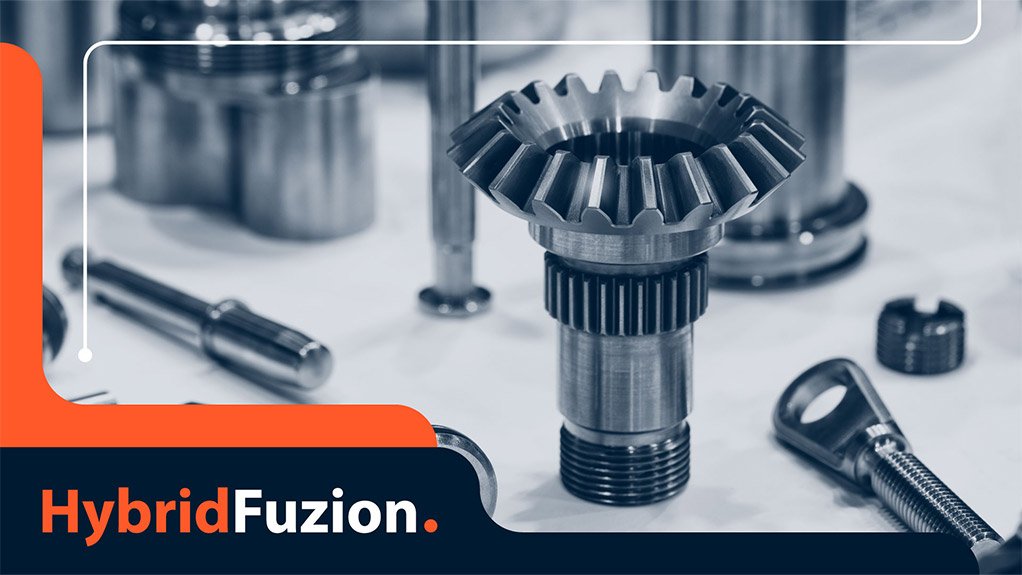



For asset-intensive industries, the rotables (or repairables) value stream should be an engine for significant financial value creation. When executed correctly, a robust refurbished spares programme considerably reduces input costs, retains liquid cash within the enterprise, and compresses parts availability lead times, dramatically accelerating the shift from unplanned maintenance back to beneficial operations.
Yet, across industry, this critical business process frequently devolves into an operational black hole. Industrial leaders are already battling infrastructure bottlenecks, margin compression, digital transformation bottlenecks, and working capital traps. Introducing a disorganised, unmanaged reverse-logistics process into this environment only accelerates margin erosion.
While the concept of repairing a component is not inherently complex, the rotables process adds a dense, cyclical layer of material flow on top of standard procurement and storage protocols. Moving a rotable item from the point of failure back into active service triggers exponentially more material movements within the SAP Enterprise Resource Planning (ERP) ecosystem than buying a new part.
Consider the operational mathematics of a large industrial operation. If an enterprise manages 10 000 material numbers, a standard repairable workflow typically requires at least ten unique, sequential steps (e.g., record damage, return to warehouse, dispatch to vendor, strip and quote, usage decision, repair execution, warehouse receipt, put away, and payment processing). If we assume 6 000 of these critical parts are circulating simultaneously through various phases of the repair cycle, we can calculate the sheer systemic volume. Let P represent the active rotable parts and S represent the unique process steps: Transactional Touchpoints T=P×S, T=6 000×10=60 000
This results in a staggering 60 000 concurrent transactional touchpoints that must be flawlessly mass-balanced across the value chain.
This scale of simultaneous execution creates severe process uncertainty. It exposes the organisation to substantial commercial risk owing to a lack of physical traceability, inevitably sparking constant cross-departmental conflict as maintenance, supply chain, and finance teams debate over missing inventory.
The reactive management response to this desperation is almost always detrimental; organisations begin heavily customising their SAP ERP rotables modules, attempting to force the software to accommodate broken physical processes. The compounding effect is a severely mutated digital architecture that no one fully understands. It creates continuous operational bottlenecks, inflates IT maintenance costs and, ultimately, drives risk-averse leadership to artificially limit the volume of spares subjected to the rotables cycle, precisely when they should be scaling it.
The complexity choking the repairables programme is entirely self-inflicted; it is not inherent to the process itself.
To reclaim control, executives must step back and zoom out on the end-to-end workflow. The critical success factor for any rotables transformation is the total harmonisation of physical material flow with transactional execution. By embedding mistake-proofing design principles directly into the workflow, you establish automated controls that prevent human error. When a system is unnecessarily difficult, personnel will inevitably engineer rogue workarounds. Therefore, the human workforce must act as the enablers of a streamlined process, not the manual decision-makers gating every transaction.
Supply chain and operations management specialists, HybridFuzion, developed the following strategic blueprint for enterprise leadership to achieve rotables excellence and unlock trapped enterprise value.
- Eradicate legacy SAP customisation: This is the single largest obstacle injecting unnecessary complexity into your operations. SAP possesses robust, standard functionality to manage the lifecycle of rotable materials and services. Keep custom code out of your SAP core. Targeted process improvements and better integration of ERP modules unlock latent factory productivity without requiring a costly "rip-and-replace" IT overhaul.
- Synchronise the real and the virtual: Superimpose your physical warehouse and transit movements directly over your transactional workflows. Map them concurrently to identify redundancies, simplify hand-offs, and automate data entry points.
- Deploy SMART tagging for automated traceability: Eliminate manual barcode scanning bottlenecks. Utilise advanced SMART tagging technology (such as IoT tracking) to create frictionless, automated visibility as the physical asset moves through each phase of the repair cycle.
- Centralise accountability: Ask the difficult organisational question: “Is rotables management a maintenance function, or is it a supply chain function?” Ambiguity breeds failure. Centralising end-to-end accountability under a single governance structure leads to tighter cost control and drives continuous improvement.
A well-executed repairables strategy is one of the most effective levers an enterprise can pull to defend its operating margins. Your strategic imperative must be to assertively increase your rotable inventory to drive down total cost of ownership. Stop making continuous, fragmented IT adaptations that only deepen the black hole. Cleanse your processes, strip away the custom code, and build a standardised, automated rotables engine that delivers absolute predictability to your plant floor.
Article Enquiry
Email Article
Save Article
Feedback
To advertise email advertising@creamermedia.co.za or click here


Projects


Latest Multimedia


Latest News

Showroom

At Airshrink - CiP, we surpass customer expectations with innovative MV and LV cable accessories, including heat shrink joints, terminations,...
VISIT SHOWROOM
Roytec Global is an international company specializing in liquid / solid and mineral separation technologies for the Mining and Industrial sectors.
VISIT SHOWROOM



Announcements
What's On
Subscribe to improve your user experience...
Option 1 (equivalent of R125 a month):
Receive a weekly copy of Creamer Media's Engineering News & Mining Weekly magazine
(print copy for those in South Africa and e-magazine for those outside of South Africa)
Receive daily email newsletters
Access to full search results
Access archive of magazine back copies
Access to Projects in Progress
Access to ONE Research Report of your choice in PDF format
Option 2 (equivalent of R375 a month):
All benefits from Option 1
PLUS
Access to Creamer Media's Research Channel Africa for ALL Research Reports, in PDF format, on various industrial and mining sectors
including Electricity; Water; Energy Transition; Hydrogen; Roads, Rail and Ports; Coal; Gold; Platinum; Battery Metals; etc.
Already a subscriber?
Forgotten your password?
Receive weekly copy of Creamer Media's Engineering News & Mining Weekly magazine (print copy for those in South Africa and e-magazine for those outside of South Africa)
➕
Recieve daily email newsletters
➕
Access to full search results
➕
Access archive of magazine back copies
➕
Access to Projects in Progress
➕
Access to ONE Research Report of your choice in PDF format
RESEARCH CHANNEL AFRICA
R4500 (equivalent of R375 a month)
SUBSCRIBEAll benefits from Option 1
➕
Access to Creamer Media's Research Channel Africa for ALL Research Reports on various industrial and mining sectors, in PDF format, including on:
Electricity
➕
Water
➕
Energy Transition
➕
Hydrogen
➕
Roads, Rail and Ports
➕
Coal
➕
Gold
➕
Platinum
➕
Battery Metals
➕
etc.
Receive all benefits from Option 1 or Option 2 delivered to numerous people at your company
➕
Multiple User names and Passwords for simultaneous log-ins
➕
Intranet integration access to all in your organisation