Mining industry focused on creating sustainable State capacity to drive development, Joburg Indaba hears

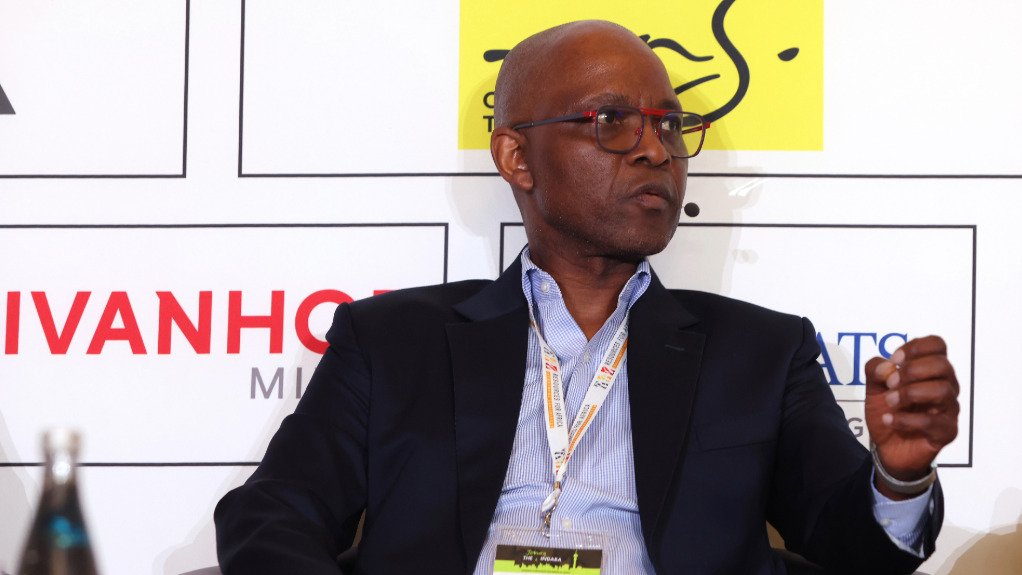


South Africa's mining industry, which has developed infrastructure to support mines and their surrounding communities, is working with government to ensure the civil service is reformed into a capable, competent and ethical part of society.
The national deficiencies dealt with through the partnership between business and government, including electricity, transport and logistics failures, can be replicated at a local scale to address the deficiencies in services in local municipalities, such as in the City of Johannesburg.
This was part of the message shared by mining, civil service and financial experts on the first day of the Joburg Indaba 2026 conference, on October 7.
Public leadership training nonprofit organisation Futurelect founder and CEO Lindiwe Mazibuko, who is also a former politician, predicted that South Africa would have more coalitions ruling its polities, including local municipalities.
“While there are concerns about government inconsistencies under coalitions, we have proof of unstable local governments even under single-party leadership. Coalitions are likely to be more durable if they have a plan of action.
“Instead of the parties negotiating for positions and departments within a coalition, they should develop a plan for what they want to achieve over the following five years,” she recommended.
She added that the competition for positions and the difficult transitions between political administrations had driven away skills and talent from municipalities.
Incoming municipal administrations must publicly commit to a series of priorities collectively as a group of parties, plan on how to achieve them, and account for progress or not towards achieving these priorities, she recommended.
Business organisation Business Unity South Africa president Mxolisi Mgojo stated that the mining sector had played a significant role in addressing the issues impacting on communities around mines to ensure its own ability to operate in these municipalities.
“It is not new for mining to be called on to deal with crises. It does not matter who wins the [local government] elections, because we have to work with the incoming administrations. The question, therefore, is: what comes next? How can we lay the foundations to ensure successful municipalities are present in the future?”
Additionally, the municipalities had to be willing partners that were committed to improving municipal operations and were prepared to make difficult decisions that would change local government operations, which would require support from the provincial and national government spheres, said Mgojo.
Platinum group metals producer Impala Platinum chairperson Thandi Orleyn said that, regardless of the outcome of the elections, the core concern was the provision of services.
“The mining industry needs to engage in an intentional manner; whether the challenge is unskilled municipal personnel or corrupt officials, we need to deal with these issues,” she said.
South Africa's government and business partnership was established to deal with the existential crisis facing the country caused by the impact of the Covid-19 pandemic.
The country learned that leveraging public and private skills and resources coordinated through a focused strategy could make a fundamental difference to outcomes, and helped to save lives and livelihoods, said business organisation Business For South Africa chairperson Martin Kingston.
“Capacity constraints are acute at municipal and local government level. Through a clear partnership and, with suitable regulatory guardrails, business can provide support and make available expert skills to local governments.
“However, for this to work, we need a willing counterparty to work with that respects the rule of law and has the requisite responsibility, authority and accountability to undertake the work needed,” he said.
The private sector could support local governments in the same way it supported national government. However, its role was to provide support and not create a permanent substitute for the State, he emphasised.
“We need to ensure the required capabilities are present in local governments, and there must be a pathway from the temporary process now to an effective civil service. [State-owned power utility] Eskom has done an amazing job with support from the [former] Department [of Mineral Resources and Energy (DMRE)] and business,” said Kingston.
The DMRE has since been split into the departments of Electricity and Energy, and Mineral and Petroleum Resources.
Deficiencies were present in local municipalities. For its own good, the mining industry had to play the long game by ensuring it lent support to municipalities in the areas that mining companies operated in, said Mgojo.
“Otherwise, mines' de facto role in delivering municipal services will be never-ending. The support of mines should be a crutch until the challenges are addressed. The mining sector's role should take a structured approach by identifying key projects that are needed in each community, which each have their own challenges, and then focus on delivering on these targets,” he said.
The role of mining should not be to create dependencies, but should be to support local municipalities by using all available public and private resources to develop skills and capacity.
“This is what is required to address the challenges. Helping to build capacity in municipalities will be good for business and for mining companies to extricate themselves from being the de facto municipalities in their areas of operation,” Mgojo said.
Article Enquiry
Email Article
Save Article
Feedback
To advertise email advertising@creamermedia.co.za or click here
Research Reports
Projects
Latest Multimedia

Latest News

Showroom
Columbus Stainless, based in Middelburg, Mpumalanga, is Africa’s only producer of stainless steel flat products. In addition, Columbus is the only...
VISIT SHOWROOM
The Steel Tube Export Association of South Africa was established to develop sustainable, internationally competitive carbon steel tube and pipe...
VISIT SHOWROOM
Press Office
Announcements
What's On
Subscribe to improve your user experience...
Option 1 (equivalent of R125 a month):
Receive a weekly copy of Creamer Media's Engineering News & Mining Weekly magazine
(print copy for those in South Africa and e-magazine for those outside of South Africa)
Receive daily email newsletters
Access to full search results
Access archive of magazine back copies
Access to Projects in Progress
Access to ONE Research Report of your choice in PDF format
Option 2 (equivalent of R375 a month):
All benefits from Option 1
PLUS
Access to Creamer Media's Research Channel Africa for ALL Research Reports, in PDF format, on various industrial and mining sectors
including Electricity; Water; Energy Transition; Hydrogen; Roads, Rail and Ports; Coal; Gold; Platinum; Battery Metals; etc.
Already a subscriber?
Forgotten your password?
Receive weekly copy of Creamer Media's Engineering News & Mining Weekly magazine (print copy for those in South Africa and e-magazine for those outside of South Africa)
➕
Recieve daily email newsletters
➕
Access to full search results
➕
Access archive of magazine back copies
➕
Access to Projects in Progress
➕
Access to ONE Research Report of your choice in PDF format
RESEARCH CHANNEL AFRICA
R4500 (equivalent of R375 a month)
SUBSCRIBEAll benefits from Option 1
➕
Access to Creamer Media's Research Channel Africa for ALL Research Reports on various industrial and mining sectors, in PDF format, including on:
Electricity
➕
Water
➕
Energy Transition
➕
Hydrogen
➕
Roads, Rail and Ports
➕
Coal
➕
Gold
➕
Platinum
➕
Battery Metals
➕
etc.
Receive all benefits from Option 1 or Option 2 delivered to numerous people at your company
➕
Multiple User names and Passwords for simultaneous log-ins
➕
Intranet integration access to all in your organisation