Namibia well-placed to attract large-scale renewables investment


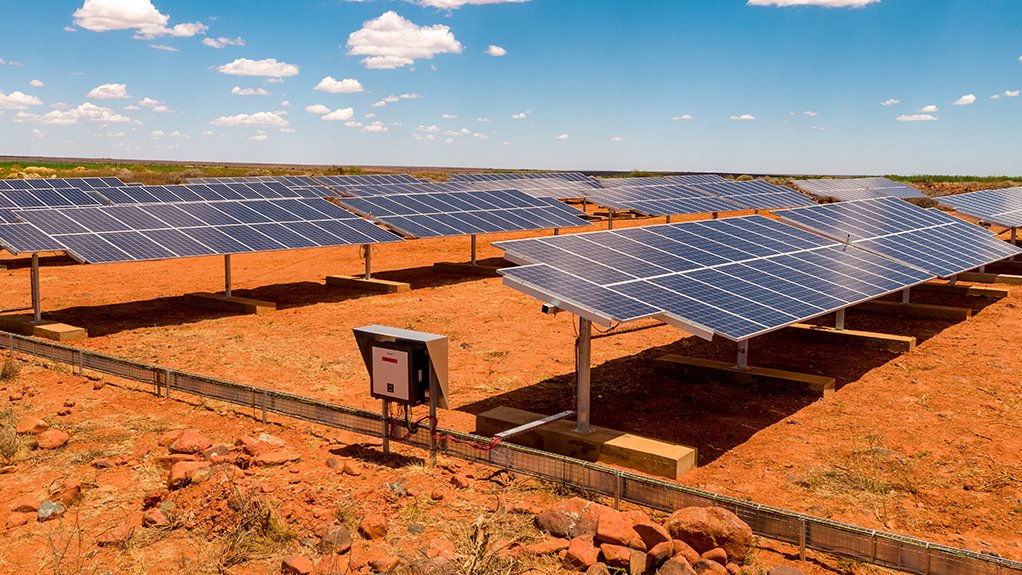



As global demand for reliable and sustainable energy continues to grow, Namibia has an opportunity to position itself as a competitive renewable-energy jurisdiction in Africa, provided that policymakers, regulators and the private sector work together to create the conditions that large-scale investment requires, says law firm Cliffe Dekker Hofmeyr (CDH) Namibia Banking, Finance & Projects practice director Magano Erkana.
Renewable energy presents an opportunity to leverage the Southern African country’s natural advantages in support of broader economic goals.
By expanding access to competitively priced power, the country can strengthen its ability to attract investment into productive sectors, support local enterprise development and increase economic participation. This aligns with the objectives of Namibia’s Sixth National Development Plan, which prioritises industrialisation, economic diversification, infrastructure development and private sector-led growth.
Further, the global transition towards lower-carbon economies is also creating growing demand for industries powered by clean energy.
Businesses with sustainability commitments and supply-chain decarbonisation targets increasingly seek production locations with access to verified renewable electricity.
Namibia’s resource base could support manufacturing, value-added mineral processing, green hydrogen production and digital infrastructure, provided that the necessary grid, regulatory and financing conditions are in place, says Erkana.
The country benefits from some of the highest solar irradiation levels globally, with large areas receiving sustained sunshine throughout most of the year. These conditions make the country particularly well suited for large-scale solar PV and concentrated solar power generation.
In addition, the country’s extensive coastline and certain inland corridors offer wind conditions that can support utility-scale wind energy projects. The complementary generation profiles of solar and wind can help diversify supply and reduce intermittency risk, says Erkana.
She cites Namibia’s vast tracts of available land as a further benefit, with significant space for the deployment of solar and wind infrastructure.
Taken together, these resource characteristics, combined with Namibia’s strategic access to regional and international markets through the Port of Walvis Bay and existing transport corridors, provide a credible foundation for renewable-energy investment.
Erkana notes, however, that large-scale energy, infrastructure and industrial projects require a predictable regulatory environment, efficient permitting processes, bankable project agreements, adequate transmission infrastructure and access to competitively priced financing.
In Namibia, renewable-energy projects involve a range of legal, commercial and regulatory considerations.
These include electricity generation licences issued under the Electricity Act; land access and tenure arrangements, which may involve communal, government or privately owned land; environmental clearance certificates under the Environmental Management Act; water abstraction permits, where relevant; grid connection and distribution connection agreements; and project financing structures that satisfy lender due diligence requirements.
The capacity and reach of the national transmission network and the timelines associated with grid upgrades are also material considerations for project bankability.
CDH Namibia advises developers, investors, lenders and public sector stakeholders on renewable-energy, infrastructure and industrial projects in Namibia and the broader region.
Its services include advice on project development and finance, regulatory and licensing compliance, land access and tenure, environmental approvals, commercial contracting and public-private partnerships.
Article Enquiry
Email Article
Save Article
Feedback
To advertise email advertising@creamermedia.co.za or click here
Research Reports

Projects

Latest Multimedia

Latest News
Showroom

Developed to exceed the latest EN 15964 standards for police breathalysers proving that it will remain accurate and reliable for many years to come.
VISIT SHOWROOM
Established on 1 March, 2000, by Barries Barnard, Advanced Fire Suppression Technologies (AFST) and the Advanced Group stands as Sub-Saharan...
VISIT SHOWROOM


Announcements
What's On
Subscribe to improve your user experience...
Option 1 (equivalent of R125 a month):
Receive a weekly copy of Creamer Media's Engineering News & Mining Weekly magazine
(print copy for those in South Africa and e-magazine for those outside of South Africa)
Receive daily email newsletters
Access to full search results
Access archive of magazine back copies
Access to Projects in Progress
Access to ONE Research Report of your choice in PDF format
Option 2 (equivalent of R375 a month):
All benefits from Option 1
PLUS
Access to Creamer Media's Research Channel Africa for ALL Research Reports, in PDF format, on various industrial and mining sectors
including Electricity; Water; Energy Transition; Hydrogen; Roads, Rail and Ports; Coal; Gold; Platinum; Battery Metals; etc.
Already a subscriber?
Forgotten your password?
Receive weekly copy of Creamer Media's Engineering News & Mining Weekly magazine (print copy for those in South Africa and e-magazine for those outside of South Africa)
➕
Recieve daily email newsletters
➕
Access to full search results
➕
Access archive of magazine back copies
➕
Access to Projects in Progress
➕
Access to ONE Research Report of your choice in PDF format
RESEARCH CHANNEL AFRICA
R4500 (equivalent of R375 a month)
SUBSCRIBEAll benefits from Option 1
➕
Access to Creamer Media's Research Channel Africa for ALL Research Reports on various industrial and mining sectors, in PDF format, including on:
Electricity
➕
Water
➕
Energy Transition
➕
Hydrogen
➕
Roads, Rail and Ports
➕
Coal
➕
Gold
➕
Platinum
➕
Battery Metals
➕
etc.
Receive all benefits from Option 1 or Option 2 delivered to numerous people at your company
➕
Multiple User names and Passwords for simultaneous log-ins
➕
Intranet integration access to all in your organisation