WMI seminar explores challenges to sustainably grasping opportunity-rich mining future

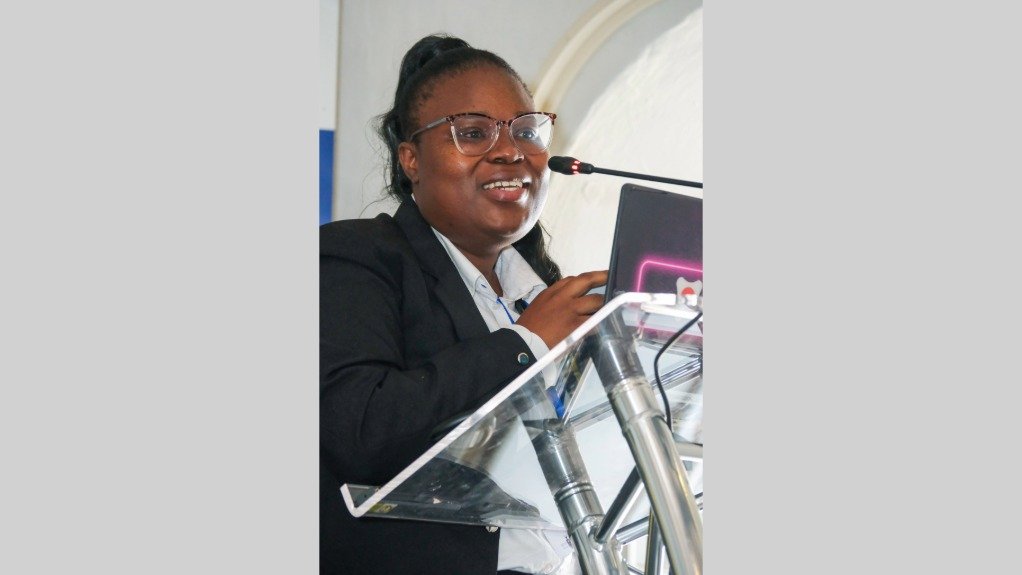


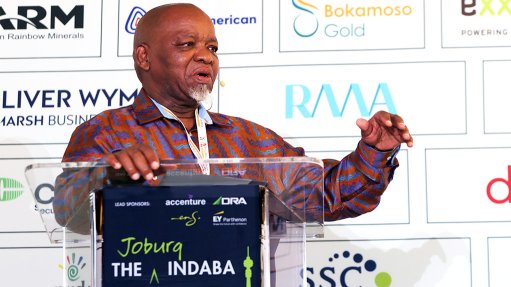
The Wits Mining Institute (WMI) held its annual industry seminar on October 8, titled “From legacy to leadership: shaping sustainable mining futures”. Industry leaders explored the key challenges facing the industry and the changes required to build a more sustainable and inclusive sector.
Wits Faculty of Engineering and the Built Environment Dean Professor Cuthbert Musingwini opened the seminar by emphasising the importance of collaboration, noting the support that the WMI received from mining groups Sibanye-Stillwater and South32 which enabled them to convene platforms that bring stakeholders together to unpack issues in the mining sector.
“Collaboration is essential, because no single university, no single technical discipline or country, can address all the technical challenges that our mining industry faces.”
The seminar comprised four pillars: legacy, mine closure and the social compact; technology, innovation and modernisation; skills, youth and the future of work; and critical minerals, investment and the just transition.
Musingwini pointed out that the last pillar aligned with one of the faculty’s research themes, the just energy transition.
In this vein, he pointed out that the faculty recently launched the ENERGISE Centre, an African-German Centre of Excellence for the just energy transition. The centre was funded by the German Academic Exchange Service, with €10-million allocated over five years, to support collaboration in education, research, innovation and capacity building to advance a just and sustainable energy transition.
Moreover, this was an epitome of the collaboration in the industry alluded to earlier, Musingwini averred, with the centre being a collaborative initiative.
The Wits flagship project would focus on peri-urban energy challenges and community electrification, including how decentralised energy systems could support income-generating activity in communities affected by energy poverty and the shift away from coal.
The project entails a Living Lab approach, offering real-world spaces where researchers, students, communities and external partners can test, adapt and learn from energy solutions in practice.
Living Lab pilot projects had already been established in Mpumalanga, Musingwini acclaimed, calling for similar outcomes to materialise from the seminar, effecting change and bringing benefits to communities.
Musingwini noted that, as a developmental State, South Africa was grappling with key challenges including poverty, unemployment and inequality. He stressed that the interplay of these issues highlighted why the mining sector stood at an important point where it must address historical challenges while positioning itself for future opportunities.
To do this required balancing competitiveness, sustainability, technological advancement and social responsibility; engaging in robust discussions around mine closure, community wellbeing, youth employment, future skills, innovation and critical minerals; and ensuring that the seminars' delegates participated in open and constructive dialogue, leading to practical solutions, Musingwini posited.
Building from the welcoming remarks by Musingwini, WMI director Professor Dr Pontsho Twala highlighted the legacy challenges that the sector needed to grapple with, including derelict and ownerless mines; acid mine drainage; illegal mining and rising safety risks; poverty and unemployment in host communities; skills mismatches and slow technology adoption; and energy, rail and logistics constraints.
Despite these challenges, significant opportunities existed, particularly the growing global demand for critical and green minerals, which South Africa was well positioned to leverage. According to Twala, the country possessed substantial mineral resources, emerging technological solutions that could enable safer and more productive mining operations, and a young generation of talent ready to contribute to the sector.
Therefore, she said the question should be how South Africa could transition from managing the legacy challenges alluded to, to leadership-driven solutions, and what changes were required to achieve targets.
Outcomes from the seminar would be used to shape the WMI’s programme of work. WMI would also use the platform to build a community in the mining sector that lasted beyond the day’s proceedings; and turned dialogue into evidence, partnerships and action that changed policy and practice, Twala said.
GOVERNMENT APPROACH, INITIATIVES
The first keynote by Department of Mineral and Petroleum Resources chief inspector of mines David Msiza outlined government’s position on the future of mining in South Africa.
He highlighted the importance of South Africa’s mining legacy in building up the country but cautioned that “legacy alone cannot secure the future”.
With the country still boasting considerable resources, the focus should now be on how to capitalise on these, Msiza averred.
“We know that South Africa has significant mineral resources, the more important question is what we do with that endowment. How do we combine our mineral wealth, more than a century of mining experience, our research and innovation capability, and most importantly, our people, to build a mining industry that remains competitive, safe, healthy, inclusive, and sustainable for generations to come? For me, that is what the transition from legacy to leadership is ultimately about,” Msiza noted.
He emphasised that government’s position was clear, that mining remained strategically important to the country’s future.
“Government’s position in one line is that mining remains a cornerstone of the economy, and further, policy is moving from planning to delivery,” Msiza said, pointing out that the total revenue from mining last year was R1.1-trillion, having doubled in the last decade, and underscoring the importance of the sector’s contribution to the economy.
However, the global mining landscape was changing rapidly, he noted, with the transition to lower-carbon economies, renewable energy, electric mobility, battery storage, green hydrogen, digitalisation, and advanced manufacturing shaping global demand for minerals.
Msiza acclaimed that South Africa was well positioned to participate in this change, with its endowment of platinum group metals (PGMs), manganese, vanadium and other minerals placing the country in a strategically important position within emerging global value chains.
He highlighted particularly that the country hosted about 80% of the world’s PGMs, and there had been considerable mining investment in the country, especially in the Bushveld Complex, as well as some lithium mines opening up, considerable coal resources still abounding, and announcements of copper revival.
“There’s still a future for mining contribution in South Africa. The opportunity is significant, but having mines underground does not automatically translate into economy development above ground,” Msiza pointed out.
He called for creating the conditions that encourage responsible exploration and investment, enabling efficient mining processing, and allowing the country to capture and create value from these resources.
In this vein, he said that government was implementing a strategy for exploration and mapping, with the Council for Geoscience’s onshore mapping coverage increasing from below 5% in 2019 to 20% in the 2025/26 period.
Moreover, the council launched its developing Virtual Core Library at this year’s Mining Indaba; and the Industrial Development Corporation, in partnership with the department and the council, had supported about 15 projects thus far through its Junior Mining Exploration Fund.
Msiza also stressed the importance of progressively changing the situation of mineral resources leaving the country unbeneficiated, with the country needing to strengthen its participation across the entire minerals value chain.
This required critical minerals strategies and building beneficiation and manufacturing capability for value to be added closer to the point of production, Msiza said.
He acknowledged that affordable electricity was the main obstacle to local beneficiation aspirations. This was especially the case for ferroalloys, with a whole-of-government approach being pursued to mitigate the loss of smelters in the country and tariff relief aiming to support this.
Other value-addition work includes Mintek’s programme to recover rare earth elements from discarded coal and South Africa’s State Diamond Trader’s coal fly ash.
Moreover, the country’s State Diamond Trader is also buying high-quality rough diamonds from other African countries, starting with Botswana, to support local beneficiation plans, Msiza indicated.
He also mentioned that the trend of mining becoming increasing digitalised presented considerable opportunities for the sector.
There is also work to implement the much-delayed digital mining licence system to strengthen this process, with this identified as one of the biggest stumbling blocks to investment in the country.
Msiza also highlighted the department’s Small-Scale Mining Fund, which he said had supported about 20 projects thus far.
He also called for mine closure planning to begin long before last production, and to involve government, mining companies, employees, organised labour, communities and other relevant stakeholders.
“Our ambition should be that, when mining eventually ends, we leave behind rehabilitated environments, resilient communities, transferable skills and sustainable economic opportunities,” Msiza averred, underscoring the importance of leadership to drive this.
“South Africa has inherited an extraordinary mining legacy. Our responsibility is not simply to preserve it – our responsibility is to improve upon it.
“We must move from extraction to greater value creation, from conventional mining towards responsible modernisation, from simply counting incidents towards proactively managing the risks that can seriously harm people, from preparing people for yesterday’s mines towards building capabilities for tomorrow’s mines, from treating mine closure as an end-of-life activity towards paying attention to the entire mine cycle, and moving from fragmented responsibility towards genuine collaboration and shared accountability,” he averred.
OTHER PERSPECTIVES
In the second keynote, offering an industry perspective, Sibanye-Stillwater technology and innovation VP Alex Fenn said the company’s story was one of “legacy and leadership”, and in many ways was shaping what a sustainable mining future could look like.
He outlined a “disciplined but aggressive acquisitive growth journey” over the past 13 years, starting from gold and then diversifying, growing into a global business with enduring South African roots.
“There’s an acquisitive growth profile that builds a big business, that generates meaningful returns for stakeholders. What we have done is followed a very careful evolution to an incredibly unique profile, which puts us at the forefront of sustainability when you consider the environmental impact and the potential generation capacity of the future as these commodities become more in demand.”
Fenn highlighted that, in South Africa, the company had undertaken considerable work into older mines with a heavy environmental footprint, to make the mines more sustainable for the future.
The third keynote, by Wits School of Mining Engineering Adjunct Professor Nellia Mutemeri, stressed that the world needed new, diversified and responsible sources of supply and processing of critical minerals.
She said this was an opportunity for South Africa and Africa, and as this window would close one day, the country must position itself to capitalise through policy certainty, infrastructure, skills, and credible environmental, social and governance performance.
Proffering suggestions for each of the seminar’s pillars, Mutemeri said that for legacy and closure, planning for closure should start at the beginning, tailings and dumps should be treated as resources, and there should be honest provisioning and shared liability.
On youth and the future of work, she advocated for building skills for the new value chains, and opportunities for youth in digital and data capabilities.
Mutemeri stressed that building the critical minerals economy could help address the country’s high unemployment rate, but only if there was preparedness for the types of jobs this would actually create.
She called on technical and vocational education and training, and higher education, institutions to align their work with the new value chains.
For technology, innovation and modernisation, she suggested modernising operations, decarbonising energy, closing the loop, modernising artisanal mining, and using digital traceability.
For critical minerals investment and the just transition, Mutemeri put forward regional value chains as a means of positioning for long-term competitiveness.
Article Enquiry
Email Article
Save Article
Feedback
To advertise email advertising@creamermedia.co.za or click here
Research Reports
Latest Multimedia
Latest News
Showroom
Columbus Stainless, based in Middelburg, Mpumalanga, is Africa’s only producer of stainless steel flat products. In addition, Columbus is the only...
VISIT SHOWROOM
Energy and Densification Systems (EDS) has developed equipment for crushing, milling, blending and densifying products. Based on its globally...
VISIT SHOWROOM
Press Office
Announcements
What's On
Subscribe to improve your user experience...
Option 1 (equivalent of R125 a month):
Receive a weekly copy of Creamer Media's Engineering News & Mining Weekly magazine
(print copy for those in South Africa and e-magazine for those outside of South Africa)
Receive daily email newsletters
Access to full search results
Access archive of magazine back copies
Access to Projects in Progress
Access to ONE Research Report of your choice in PDF format
Option 2 (equivalent of R375 a month):
All benefits from Option 1
PLUS
Access to Creamer Media's Research Channel Africa for ALL Research Reports, in PDF format, on various industrial and mining sectors
including Electricity; Water; Energy Transition; Hydrogen; Roads, Rail and Ports; Coal; Gold; Platinum; Battery Metals; etc.
Already a subscriber?
Forgotten your password?
Receive weekly copy of Creamer Media's Engineering News & Mining Weekly magazine (print copy for those in South Africa and e-magazine for those outside of South Africa)
➕
Recieve daily email newsletters
➕
Access to full search results
➕
Access archive of magazine back copies
➕
Access to Projects in Progress
➕
Access to ONE Research Report of your choice in PDF format
RESEARCH CHANNEL AFRICA
R4500 (equivalent of R375 a month)
SUBSCRIBEAll benefits from Option 1
➕
Access to Creamer Media's Research Channel Africa for ALL Research Reports on various industrial and mining sectors, in PDF format, including on:
Electricity
➕
Water
➕
Energy Transition
➕
Hydrogen
➕
Roads, Rail and Ports
➕
Coal
➕
Gold
➕
Platinum
➕
Battery Metals
➕
etc.
Receive all benefits from Option 1 or Option 2 delivered to numerous people at your company
➕
Multiple User names and Passwords for simultaneous log-ins
➕
Intranet integration access to all in your organisation