Why no two Battery Energy Storage Systems should look the same

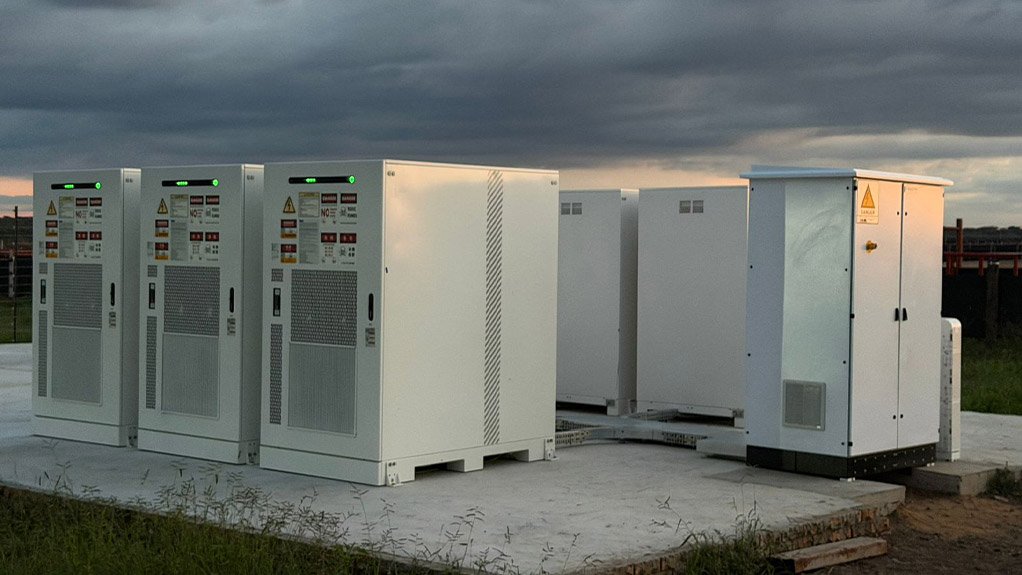
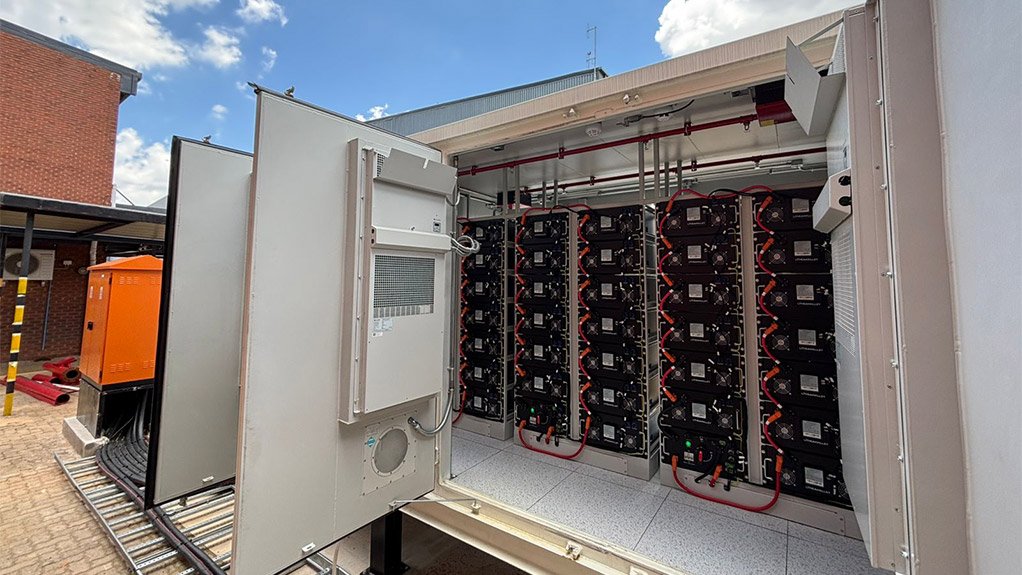

Figure 1: A precision-engineered BESS installation, custom-sized to the site's specific load profile and TOU requirements.
Figure 2: The interior of a containerised BESS - battery racks configured and sized to the site's specific storage requirements.



Battery Energy Storage Systems (BESS) look straightforward from the outside – select a capacity, install it, start saving. In practice, the return on a BESS investment depends less on how large the system is, and more on how it is engineered to match the way a specific operation consumes electricity. That precision is harder to achieve than it sounds, and it is where most of the real engineering design work happens.
Across mining, manufacturing and agri-processing, turnkey solar company SunRanch Solar has built its project delivery around optimised design, drawing on a growing portfolio of installations across different industries – and the reasoning behind it says as much about risk management as it does about electricity.
Sizing to Reality, Not Assumption
A rooftop or ground mounted solar system is, on its own, a relatively low-risk decision. The technology is mature, the payback period is short, and the financial case is easy to verify against a user’s actual electricity bills. Battery storage is a different proposition entirely – more capital, more complexity, and a return that depends heavily on how precisely the system matches the user’s actual consumption patterns rather than its estimated ones.
Electricity usage is rarely as stable as it looks on paper. Load profiles shift by season, by working shift patterns, by equipment age – which is why SunRanch Solar’s engineering teams start by measuring a user’s actual consumption rather than working from a standard estimate. Sizing a battery system correctly depends on that data being right.
“We size every BESS against measured load profiles, not assumed ones. Where solar is already installed, we’ve got a head start on the generation side. Where it isn’t, we run the same load analysis independently. The engineering discipline doesn’t change,” says SunRanch Solar Chief Technical Officer Connor Northing.
For one agricultural customer, that meant growing the system in stages – a rooftop array first, expanded over time into a much larger hybrid installation, with the final pairing of a 542 kWp ground-mounted solar array with 2.15 MWh of battery storage, added only once earlier phases had proven their value in the Customer’s own electrical data. This is one way of gathering that evidence but it is not the only one.
Purpose-Built, Not One-Size
For a Customer operating a business-critical facility, precision mattered more than growth over time. Rather than one centralised system, SunRanch Solar engineered two independent battery installations – one sized at 559.10 kWh, the other at 344.06 kWh, over 900 kWh combined – each specified to the demands of the operation it supports, with different discharge behaviours built to the same standard of predictability the Customer’s operations depend on.
The common thread across both approaches is not how quickly a system was built, but how closely it was matched to its site. Modularity supports that either way: individual battery units, typically in the range of 200 kWh, can be configured, combined, or run independently depending on what a facility actually requires, rather than forcing every project into a single template.
Intelligent control ties it together. A well-configured energy management system continuously assesses which power source – solar, stored battery capacity, the grid or diesel generators – is the most cost effective and most appropriate at any given moment, switching between them automatically. Financing structures have evolved too, with several models now allowing a third party to fund, install and insure a system.
What Happens After Commissioning
Where SunRanch Solar’s approach diverges most from a purely transactional installer is what happens after commissioning. Battery systems are generally engineered to last one decade or longer, but that figure assumes consistent servicing, monitoring and calibration – none of which happens by default.
“A system that goes unmonitored doesn’t fail overnight. It degrades slowly, a percentage point at a time. Our operations and maintenance services exist to catch that early, so performance – and the return our Customers were promised – stays exactly where it should be. Brand selection is critical. Only by standardising on superior quality products, with in-country support and training, and innovative R&D, will underpin product and performance guarantees” says SunRanch Solar MD Charles Mostert.
For one manufacturing Customer, ongoing reliability was the point of the investment. Its 1.5 MWh battery system, capable of sustaining over 750 kW of continues power, was sized specifically to keep production running through grid outages, protecting output and deadlines rather than simply offsetting cost – a reminder that correct sizing only pays off if performance is actually tracked afterwards. SunRanch Solar’s operations and maintenance services include quarterly inspections and continuous performance tracking, giving customers ongoing visibility rather than a once-off installation and a wave goodbye.
Built Around the Operation
None of these three projects looked alike. One grew in stages. One was engineered as two independent systems from day one. One was built around a single, non-negotiable requirement: keep production running no matter what. What unites them is not a shared timeline, but a shared discipline – every battery specification followed from a genuine understanding of how the operation runs, not the reverse.
For businesses weighing up their own energy strategy, that is arguably the more useful takeaway than any single project template: the return on battery storage comes down to precision, not scale. A system engineered to answer a specific operational question – and properly maintained once it does – is what actually delivers the value, regardless of how large or small that system turns out to be.
Article Enquiry
Email Article
Save Article
Feedback
To advertise email advertising@creamermedia.co.za or click here
Research Reports


Latest Multimedia

Latest News

Showroom
At Airshrink - CiP, we surpass customer expectations with innovative MV and LV cable accessories, including heat shrink joints, terminations,...
VISIT SHOWROOM
Established in 1983, the ASTPM is an industry association and representative body of the welded carbon steel tube and pipe manufacturers of South...
VISIT SHOWROOM

Press Office
Announcements
What's On
Subscribe to improve your user experience...
Option 1 (equivalent of R125 a month):
Receive a weekly copy of Creamer Media's Engineering News & Mining Weekly magazine
(print copy for those in South Africa and e-magazine for those outside of South Africa)
Receive daily email newsletters
Access to full search results
Access archive of magazine back copies
Access to Projects in Progress
Access to ONE Research Report of your choice in PDF format
Option 2 (equivalent of R375 a month):
All benefits from Option 1
PLUS
Access to Creamer Media's Research Channel Africa for ALL Research Reports, in PDF format, on various industrial and mining sectors
including Electricity; Water; Energy Transition; Hydrogen; Roads, Rail and Ports; Coal; Gold; Platinum; Battery Metals; etc.
Already a subscriber?
Forgotten your password?
Receive weekly copy of Creamer Media's Engineering News & Mining Weekly magazine (print copy for those in South Africa and e-magazine for those outside of South Africa)
➕
Recieve daily email newsletters
➕
Access to full search results
➕
Access archive of magazine back copies
➕
Access to Projects in Progress
➕
Access to ONE Research Report of your choice in PDF format
RESEARCH CHANNEL AFRICA
R4500 (equivalent of R375 a month)
SUBSCRIBEAll benefits from Option 1
➕
Access to Creamer Media's Research Channel Africa for ALL Research Reports on various industrial and mining sectors, in PDF format, including on:
Electricity
➕
Water
➕
Energy Transition
➕
Hydrogen
➕
Roads, Rail and Ports
➕
Coal
➕
Gold
➕
Platinum
➕
Battery Metals
➕
etc.
Receive all benefits from Option 1 or Option 2 delivered to numerous people at your company
➕
Multiple User names and Passwords for simultaneous log-ins
➕
Intranet integration access to all in your organisation