Strong commodity prices in 2025 ensure modest growth backing for SA mining – Minerals Council





While the South African mining sector continues to navigate a period of profound international and domestic change, this year has reinforced both the resilience of the sector and the importance of creating the conditions necessary for investment, growth and long-term competitiveness.
This is the sentiment expressed by Minerals Council South Africa CEO Mzila Mthenjane in the Minerals Council’s latest comprehensive facts and figures 2025 report.
In the report, Mthenjane acknowledges the uncertain global operating environment, highlighting the impacts of the war in Ukraine and the Middle East conflict.
Simultaneously, he notes, demand for minerals essential to electrification, energy security, advanced manufacturing, AI, digital infrastructure and defence applications continues has accelerated.
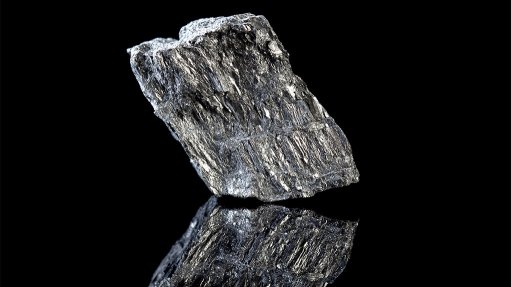
He argues that these developments present both opportunities and risks for South African mining, noting that the country remains endowed with some of the world’s most significant mineral resources, including platinum group metals (PGMs), gold, manganese and chrome, which are increasingly recognised as critical to innovation and future economic growth.
“However, mineral wealth alone does not guarantee investment and is not an entitlement to growth. Countries compete for capital and investors require certainty, stability, and confidence in the operating environment. Capital investment is not charitable giving. Both investment and growth are earned,” Mthenjane says.
The report indicates that price support improved in South Africa’s mining sector in 2025 for resources such as gold, PGMs, chrome and manganese, however, volume growth remained constrained by domestic cost pressures, logistics underperformance, regulatory uncertainty and weak fixed investment. Mining accounted for 6.2%, or R477.1-billion, of nominal GDP in 2025.
In real terms, which is a proxy for volumes produced, the industry contributed 4.8%, or R205.5-billion, to total GDP. Total primary sales were R861.1-billion in 2025 compared to R802.7-billion the previous year – representing a 7.3% increase.
Minerals Council explains that the South African economy grew by 1.1% in 2025 while the mining industry expanded marginally by 0.2%. The council emphasises that early 2026 indicators showed signs of recovery for the mining industry, with mining production in the first half of the year having grown by 2.2% year-on-year, driven by PGMs, chrome, manganese and gold.
Production of other major commodities such as coal, diamonds and iron-ore declined in the first five months of the year (January to May).
Minerals Council says despite the weaker monthly performances recorded in May and June, respectively, cumulative production over the first five months of the year remained above the level recorded during the corresponding period last year.
“This of course is not meant to downplay May and June poor production performance.”
Despite weaker production volumes, mineral sales improved substantially. When comparing mineral sales recorded between January and June 2025 with the corresponding period in 2026, the Minerals Council explains that sales increased by R124-billion.
It notes that this suggests that stronger commodity prices helped support revenue performance, even as production output weakened. The Minerals Council says the divergence between declining production and rising sales points to the important role of price movements in sustaining the sector’s nominal income performance.
Minerals Council says mining growth is expected to be modest, likely in the range of 1% to 2.5%, assuming improved rail performance, stable electricity supply, continued support from gold, chrome and manganese prices, and no severe escalation in fuel or logistics costs.
It notes, however, that the growth of the mining sector depends on the pace of State-owned Transnet rail recovery, electricity tariff moderation, stable labour relations and whether global demand from China, India, the US and the United Arab Emirates remains supportive.
“The mining industry’s outlook for 2026 could be described as cautiously positive, with the on-and-off conflict between the US and Iran being the elephant in the room,” Minerals Council says.
FUEL-PRICE EFFECTS
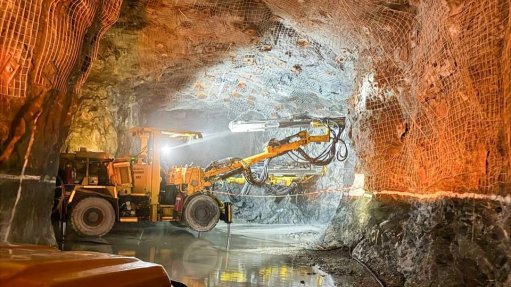
Looking at the effects of the Middle East conflict on fuel prices, Minerals Council notes that fuel is a major input in mining through diesel used in opencast operations, haulage, on-mine transport, generators, contractors, explosives supply chains and road freight.
It notes that higher fuel prices affect mines directly through operating costs and indirectly through logistics, food, labour, transport and imported capital equipment.
The impact of the fuel shock on mining is not entirely negative for mining. Higher geopolitical risk has supported gold and, at times, PGMs.
The Minerals Council cites PwC as reporting that South Africa’s mining industry benefitted from strong market gains in gold and PGMs in 2025, even though the operating environment remained difficult.
The net effect, therefore, is commodity-specific. Gold producers may benefit from higher prices, while coal, iron-ore, chrome and manganese producers face margin compression if freight and diesel costs rise faster than export prices, Mthenjane explains.
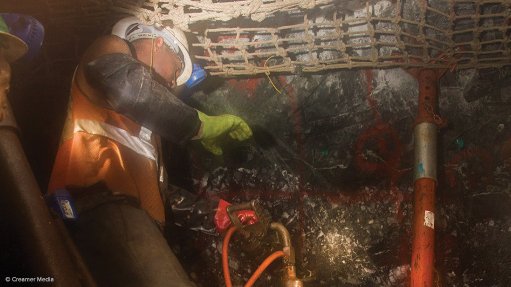
He concludes that deep-level gold and PGM mines still face rising electricity, labour and safety-related costs, which limit the benefit of higher prices.
Article Enquiry
Email Article
Save Article
Feedback
To advertise email advertising@creamermedia.co.za or click here
Projects
Latest Multimedia
Latest News
Showroom
The SAIMM started as a learned society in 1894 after the invention of the cyanide process that saved the South African gold mining industry of the...
VISIT SHOWROOM
Design, Construction and Maintenance of Site Erected, Welded Bulk Storage Tanks for the Petrochemical, LNG, Ammonia and Sustainable fuel Sectors.
VISIT SHOWROOM

Press Office
Announcements
What's On
Subscribe to improve your user experience...
Option 1 (equivalent of R125 a month):
Receive a weekly copy of Creamer Media's Engineering News & Mining Weekly magazine
(print copy for those in South Africa and e-magazine for those outside of South Africa)
Receive daily email newsletters
Access to full search results
Access archive of magazine back copies
Access to Projects in Progress
Access to ONE Research Report of your choice in PDF format
Option 2 (equivalent of R375 a month):
All benefits from Option 1
PLUS
Access to Creamer Media's Research Channel Africa for ALL Research Reports, in PDF format, on various industrial and mining sectors
including Electricity; Water; Energy Transition; Hydrogen; Roads, Rail and Ports; Coal; Gold; Platinum; Battery Metals; etc.
Already a subscriber?
Forgotten your password?
Receive weekly copy of Creamer Media's Engineering News & Mining Weekly magazine (print copy for those in South Africa and e-magazine for those outside of South Africa)
➕
Recieve daily email newsletters
➕
Access to full search results
➕
Access archive of magazine back copies
➕
Access to Projects in Progress
➕
Access to ONE Research Report of your choice in PDF format
RESEARCH CHANNEL AFRICA
R4500 (equivalent of R375 a month)
SUBSCRIBEAll benefits from Option 1
➕
Access to Creamer Media's Research Channel Africa for ALL Research Reports on various industrial and mining sectors, in PDF format, including on:
Electricity
➕
Water
➕
Energy Transition
➕
Hydrogen
➕
Roads, Rail and Ports
➕
Coal
➕
Gold
➕
Platinum
➕
Battery Metals
➕
etc.
Receive all benefits from Option 1 or Option 2 delivered to numerous people at your company
➕
Multiple User names and Passwords for simultaneous log-ins
➕
Intranet integration access to all in your organisation