Self-build, self-fund, self-deduct? A critical look at Palabora for IPP grid connection assets


This article has been supplied.
Written by Tanya Engels (Partner, KPMG) and Mary-Jane Mayer (Senior Manager, KPMG)
Independent Power Producers (IPPs) participating in South Africa’s Renewable Energy Independent Power Producer Procurement Programme (REIPPPP) have long debated whether they may claim a tax deduction for the costs of grid connection assets. Recently, the 1973 case Palabora Mining Company Limited v Secretary for Inland Revenue (Palabora) has increasingly been cited as providing support for treating these costs as revenue in nature and therefore deductible.
This article explains why Palabora is a weak analogy for IPP grid connection costs and why IPPs should be cautious in relying on it.
Background: self‑build policy and ownership of the assets
Under South Africa’s electricity framework, Eskom is responsible for building and owning grid connection assets. However, capacity constraints led Eskom to introduce a self‑build policy in 2015. Under this policy, IPPs may construct and fund the relevant grid connection assets themselves, although they do not own the assets.
Economically, the position is that irrespective of who constructs the assets, IPPs bear the cost, either directly (under self‑build) or indirectly (by reimbursing Eskom). Legally, however, Eskom owns the completed grid infrastructure.
This ownership structure has a critical tax consequence. Since IPPs do not own the assets, they cannot claim capital allowances in respect of these assets for tax purposes (an amendment to the Income Tax Act was introduced in 2013 to deem ownership of certain assets constructed by IPPs in terms of the REIPPPP, to rest with the IPPs. However, it fails to achieve that objective).
IPPs have therefore explored whether these costs could instead be deducted as revenue expenditure under the general deduction formula in section 11(a) of the Income Tax Act.
The general deduction formula: capital vs revenue
The general deduction formula permits a deduction of expenditure incurred in the production of income and for purposes of trade, provided it is not of a capital nature. The central question for grid connection costs is whether the cost is capital or revenue in nature.
In assessing this, the courts have repeatedly emphasised substance over form: what is the real nature and purpose of the expenditure? Is it part of the cost of establishing, improving or securing the income‑earning structure (typically capital), or is it part of the ongoing costs of operating that structure (typically revenue)?
On face value, Palabora seems to align to an IPP’s scenario of incurring expenditure on assets that it does not own, located on land over which it has no property rights.
The Palabora case: short‑term inducement payments
In Palabora, the taxpayer operated a copper mine whose production depended on the completion of a water barrage. The Phalaborwa Water Board (PWB) was responsible for building the barrage, however in order to accelerate completion and secure water earlier than would otherwise be the case, Palabora tendered for and ended up constructing the barrage. To achieve this, Palabora paid inducement amounts to the builder, resulting in an overall loss on the contract in Palabora’s hands.
The court allowed Palabora to deduct the loss arising from these inducement payments as revenue expenditure. Crucially, the costs at issue in the case were not the basic construction cost of the barrage, as this was reimbursed to Palabora by the PWB. Rather, the loss at issue in the case was created by additional, voluntary amounts paid to obtain an earlier start to production—a short‑term commercial advantage—rather than to create a capital asset.
The court characterised the expenditure as an operational cost aimed at hastening the flow of income, and thus revenue in nature.
Comparing IPP grid connection costs to Palabora
At first glance, there is an apparent similarity: in both situations, the taxpayer pays for construction of assets owned by another entity and essential for its operations. However, on closer analysis, there are crucial differences.
First, the nature of the expenditure differs significantly. In Palabora, the deduction that was sought related only to the additional inducement payments. The actual cost of constructing the barrage was not at issue. For IPPs, by contrast, the debate concerns the full construction cost of the grid connection assets, not a marginal premium paid to accelerate completion.
Seondly, the commercial context is not comparable. In Palabora, the taxpayer had a genuine choice: it could allow completion by the PWB according to the original timetable, or build the barrage itself and pay inducement amounts to accelerate the process. The expenditure was voluntary and clearly aimed at achieving a particular short‑term commercial goal. For IPPs, realistically there is no “choice” other than self‑build. Waiting for Eskom to construct the assets is not a viable choice, given the constraints in Eskom’s capacity and programme timelines. In practice, IPPs may have little option but to fund and arrange the grid connection themselves if they wish to participate in the REIPPPP.
Conclusion: caution in relying on Palabora
When the differences in nature, purpose, and commercial context are taken into account, Palabora does not support the IPPs treating grid connection costs as revenue in nature. IPPs should therefore exercise caution in relying on Palabora to justify a tax deduction for grid connection costs.
Article Enquiry
Email Article
Save Article
Feedback
To advertise email advertising@creamermedia.co.za or click here
Research Reports
Projects
Latest Multimedia
Showroom
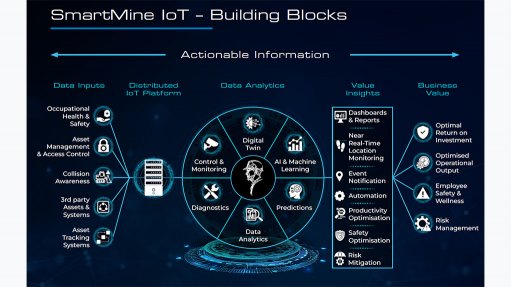
SmartMine IoT has been developed with the mining industry in mind, to provides our customers with powerful business intelligence and data modelling...
VISIT SHOWROOM
ESAB South Arica, the leading supplier of high-end welding and cutting products to the Southern African industrial market is based in...
VISIT SHOWROOM
Press Office
Announcements
What's On
Subscribe to improve your user experience...
Option 1 (equivalent of R125 a month):
Receive a weekly copy of Creamer Media's Engineering News & Mining Weekly magazine
(print copy for those in South Africa and e-magazine for those outside of South Africa)
Receive daily email newsletters
Access to full search results
Access archive of magazine back copies
Access to Projects in Progress
Access to ONE Research Report of your choice in PDF format
Option 2 (equivalent of R375 a month):
All benefits from Option 1
PLUS
Access to Creamer Media's Research Channel Africa for ALL Research Reports, in PDF format, on various industrial and mining sectors
including Electricity; Water; Energy Transition; Hydrogen; Roads, Rail and Ports; Coal; Gold; Platinum; Battery Metals; etc.
Already a subscriber?
Forgotten your password?
Receive weekly copy of Creamer Media's Engineering News & Mining Weekly magazine (print copy for those in South Africa and e-magazine for those outside of South Africa)
➕
Recieve daily email newsletters
➕
Access to full search results
➕
Access archive of magazine back copies
➕
Access to Projects in Progress
➕
Access to ONE Research Report of your choice in PDF format
RESEARCH CHANNEL AFRICA
R4500 (equivalent of R375 a month)
SUBSCRIBEAll benefits from Option 1
➕
Access to Creamer Media's Research Channel Africa for ALL Research Reports on various industrial and mining sectors, in PDF format, including on:
Electricity
➕
Water
➕
Energy Transition
➕
Hydrogen
➕
Roads, Rail and Ports
➕
Coal
➕
Gold
➕
Platinum
➕
Battery Metals
➕
etc.
Receive all benefits from Option 1 or Option 2 delivered to numerous people at your company
➕
Multiple User names and Passwords for simultaneous log-ins
➕
Intranet integration access to all in your organisation