Rise in South Africa’s logistics cost burden to R1.16tr highlights need for ‘better modal choices’



South Africa’s logistics cost burden is at its highest level in more than two decades, with a new analysis projecting that the cost of moving goods through the country will reach a record R1.16-trillion in 2026, equivalent to 14.6% of GDP.
These findings are contained in the 2026 edition of the 'State of Logistics' report, produced by consultative research firm the GAIN Group, which has been analysing South Africa’s logistics costs since 2023.
The study, which estimates that domestic logistics costs first breached the R1-trillion level last year, points to a steady rise in the cost burden since the Covid-related disruptions of 2020 and 2021. However, the 2026 forecast is also well up on the R534-billion costs calculated for ten years ago, which was equivalent to 11.2% of GDP.
Transport is forecast to account for 59% of total logistics expenditure this year, or some R683-billion, with road-freight costs having risen sharply year-on-year partly in response to surging diesel prices.
Road rates have, thus, also diverged from rail rates and consumer price inflation, where the increases are forecast to be more moderate. The other costs included in the 2026 figure relate to inventory carrying (R191-billion), warehousing (R152-billion), and management and administration (R130-billion).
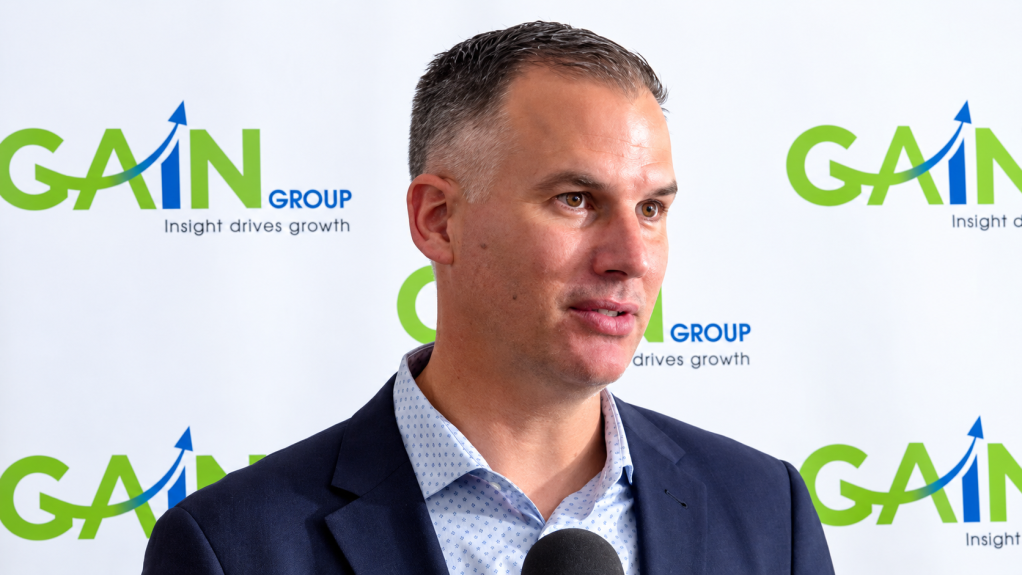
Releasing the report’s findings in Johannesburg, GAIN Group director Zane Simpson said the fact that logistics costs had breached the R1-trillion level underlined the transport-intensity of an economy characterised by large spatial separations between major economic centres and the ports.
However, he said it also brought to the fore the need to focus urgently on reducing unnecessary costs through improved system performance.
The first priority, Simpson argued, should be to ensure that freight was transported using the most appropriate mode.
“Long-distance, high-volume and rail-friendly freight should be moved from road to rail where rail can offer a reliable and more economical service, while road transport should continue serving the freight markets and distribution functions for which it is best suited.”
In addition, modal choices could be enhanced through careful spatial planning, the development of inland terminals, and consolidation hubs or freight villages close to points of production and consumption to reduce transport distances.
The report argues that, had all these three elements been implemented in 2026, there could have been cost savings of up to R150-billion.
Besides better modal choices, the research indicates that cost could be avoided through the effective utilisation of available logistics capacity and the introduction of efficiencies to reduce the cost of each tonne-kilometre.
Meanwhile, the report also provides evidence that improvements in freight rail are beginning to reduce the economic consequences of its recent underperformance.
These costs fell, Simpson said, from an estimated R410.7-billion in 2022 to R180.8-billion in 2025. The remaining burden was still equivalent to R495-million a day, but far below the more that R1-billion a day calculated at the height of the country’s rail and ports crises of 2022.
Rail freight volumes have also recovered from about 149.5-million tonnes in 2022/23 to 167.9-million tonnes in 2025/26, but remain well below the 250-million-tonne target set for rail by the end of the decade.
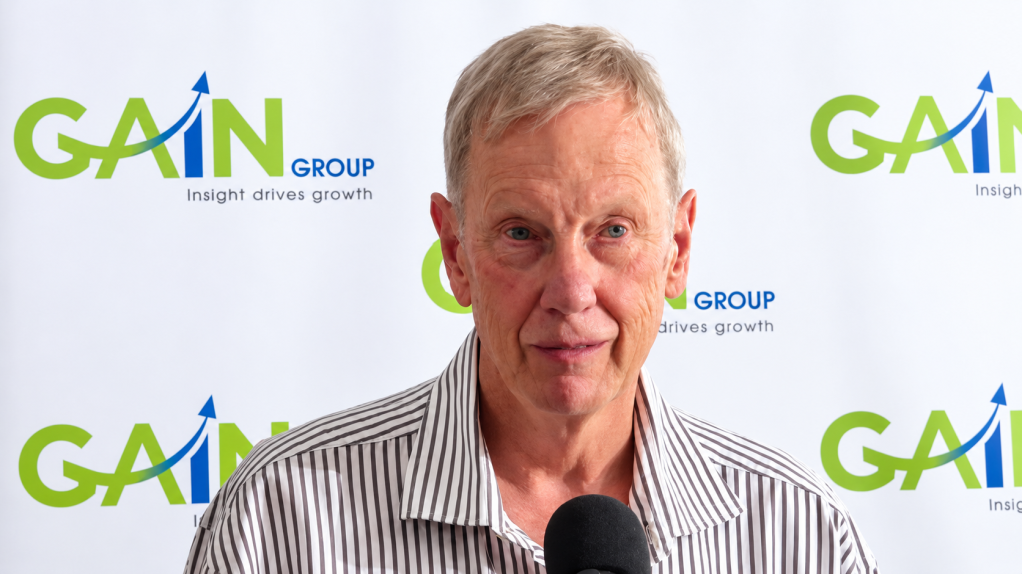
The Gain Group’s Professor Jan Havenga said that closing the gap would require a major recovery in the volumes of general freight moved by rail. These continued to contract while the heavy-haul commodity lines recovered.
“Although the recovery of established bulk commodity corridors for iron-ore and coal remains important, South Africa’s longer-term freight requirements cannot be met without rebuilding competitive general freight rail services,” Havenga said, adding that priority attention should be given to restoring the rail service on the corridors linking Gauteng with KwaZulu-Natal and the Western Cape.
He argued that this would require government investment to restore the networks, as the private sector could not be expected to finance the rebuilding of the core freight network.
Leaving it to the private sector to fix what he described as a broken general-freight network was equivalent, he said, to a “rail-to-road strategy” and the opposite of official government policy.
To recapture rail-friendly freight volumes, Havenga stressed that it was now urgent for the Transnet Rail Infrastructure Manager to be fully unbundled from the bigger Transnet Group to ensure it was able to focus on the funding, maintenance and stewardship of the rail network.
In parallel, the Transport Economic Regulator should be fully operationalised, and the rail’s role in the freight logistics system restored, which should be implemented through rail legislation, a masterplan and a national logistics strategy.
Article Enquiry
Email Article
Save Article
Feedback
To advertise email advertising@creamermedia.co.za or click here
Projects

Latest Multimedia
Latest News
Showroom
Astore Keymak is one of South Africa’s leading suppliers of high-quality Thermoplastic Pipeline Systems, with branches in the major provinces.
VISIT SHOWROOM
At Airshrink - CiP, we surpass customer expectations with innovative MV and LV cable accessories, including heat shrink joints, terminations,...
VISIT SHOWROOM
Announcements
What's On
Subscribe to improve your user experience...
Option 1 (equivalent of R125 a month):
Receive a weekly copy of Creamer Media's Engineering News & Mining Weekly magazine
(print copy for those in South Africa and e-magazine for those outside of South Africa)
Receive daily email newsletters
Access to full search results
Access archive of magazine back copies
Access to Projects in Progress
Access to ONE Research Report of your choice in PDF format
Option 2 (equivalent of R375 a month):
All benefits from Option 1
PLUS
Access to Creamer Media's Research Channel Africa for ALL Research Reports, in PDF format, on various industrial and mining sectors
including Electricity; Water; Energy Transition; Hydrogen; Roads, Rail and Ports; Coal; Gold; Platinum; Battery Metals; etc.
Already a subscriber?
Forgotten your password?
Receive weekly copy of Creamer Media's Engineering News & Mining Weekly magazine (print copy for those in South Africa and e-magazine for those outside of South Africa)
➕
Recieve daily email newsletters
➕
Access to full search results
➕
Access archive of magazine back copies
➕
Access to Projects in Progress
➕
Access to ONE Research Report of your choice in PDF format
RESEARCH CHANNEL AFRICA
R4500 (equivalent of R375 a month)
SUBSCRIBEAll benefits from Option 1
➕
Access to Creamer Media's Research Channel Africa for ALL Research Reports on various industrial and mining sectors, in PDF format, including on:
Electricity
➕
Water
➕
Energy Transition
➕
Hydrogen
➕
Roads, Rail and Ports
➕
Coal
➕
Gold
➕
Platinum
➕
Battery Metals
➕
etc.
Receive all benefits from Option 1 or Option 2 delivered to numerous people at your company
➕
Multiple User names and Passwords for simultaneous log-ins
➕
Intranet integration access to all in your organisation