
What We Expect From a Bank Has Changed





This article has been supplied.
Not long ago, choosing a bank meant choosing a building. People picked whichever branch sat closest to home or work, trusted the manager they saw face to face, and rarely thought twice about switching. Today that calculus has been turned on its head. Distance to the nearest branch matters far less than the speed of an app, the reach of an international transfer, the ease of holding a foreign currency account, or having access to a reliable currency converter.
From Proximity to Accessibility
For decades, banking was a fundamentally local business. A bank's value was measured by how many branches it had and how convenient those locations were. Customers judged institutions by the friendliness of the teller, the opening hours, and whether there was parking outside. Loyalty was often inherited – people banked where their parents banked, in the town where they grew up.
That model made sense in a world where money moved slowly and most financial needs were local: a mortgage on a nearby house, a savings account for a nearby goal, a loan negotiated over a desk. But the underlying assumption – that banking is something tied to a place – has quietly stopped being true for a growing share of customers.
Digital Access as the New Baseline
Ask most people today what they expect from a bank, and geographic proximity rarely comes up. What comes up instead is whether they can open an account without visiting anyone, whether they can check a balance in seconds, and whether a transfer initiated at midnight actually arrives before morning. Mobile-first account opening, real-time notifications, and clean, intuitive interfaces are no longer differentiators; they are baseline expectations, and institutions that fail to meet them are quietly abandoned regardless of how many physical branches they operate.
This shift has been accelerated by broader habits formed outside banking altogether. Consumers who can order groceries, book flights, and manage investments from a phone screen naturally expect the same fluidity from the institution holding their savings. A bank that requires an in-person appointment to update basic details now feels less like a service and more like friction.
Speed and Simplicity in International Transfers
Perhaps nowhere is this change more visible than in cross-border payments. A decade ago, sending money internationally often meant paperwork, unpredictable fees, and a wait of several days with little visibility into where the funds actually were. Today, that kind of delay is treated as a failure rather than a norm.
Freelancers working with overseas clients, families supporting relatives abroad, and small businesses paying international suppliers all now expect transfers that are fast, transparently priced, and easy to track. The bar has risen so quickly that even a few days' delay can prompt a customer to look elsewhere, something that would have seemed unremarkable not long ago.
Currency Services Take Center Stage
Multi-currency management has followed a similar trajectory. It used to be a niche requirement, relevant mainly to businesses with significant overseas operations. Now it is increasingly ordinary. People travel more, work remotely for companies based in other countries, invest internationally, or simply want to hold savings in more than one currency as a hedge against volatility at home.
Banks that make this easy – allowing customers to hold, convert, and spend in multiple currencies without excessive fees or delays – are increasingly seen as more relevant than those offering only a single domestic currency account, however convenient their branch network might once have been.
Remote Management as a Right, Not a Feature
Underlying all of this is a broader expectation: that finances should be manageable entirely from a distance, without the need to set foot in a physical location. This is not simply about convenience during a busy week. It reflects a deeper change in how people think about their relationship with a bank. Where trust was once built through repeated in-person interaction, it is now built through reliability, transparency, and responsiveness delivered digitally.
Institutions such as Dukascopy Bank illustrate this transition well. Built around remote account management, competitive currency handling, and digital-first service delivery, they represent a model where the absence of a branch on the corner is not a limitation but simply irrelevant to how the bank actually functions.
A Lasting Shift, Not a Passing Trend
It would be a mistake to treat this as a temporary adjustment born of recent circumstances. The change in expectations reflects something more permanent: money itself has become more mobile, more international, and more digitally managed, and customers expect their banks to keep pace.
The institutions that thrive going forward are unlikely to be those with the most branches, but those that treat speed, accessibility, and international flexibility as fundamental rather than optional. In that sense, what we expect from a bank has not just changed – it has been redefined for good.
Article Enquiry
Email Article
Save Article
Feedback
To advertise email advertising@creamermedia.co.za or click here
Research Reports


Projects

Latest Multimedia


Showroom
Iritron delivers advanced automation, control, and optimisation solutions to the Mining, Minerals & Metals, Consumer Package Goods and...
VISIT SHOWROOM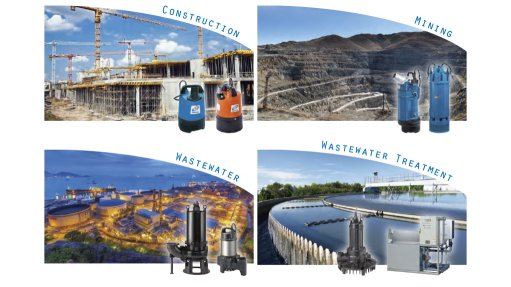
Tsurumi Pumps Africa is a specialist supplier of Japanese-engineered submersible pumping solutions, serving customers across the African continent.
VISIT SHOWROOM

Announcements
What's On
Subscribe to improve your user experience...
Option 1 (equivalent of R125 a month):
Receive a weekly copy of Creamer Media's Engineering News & Mining Weekly magazine
(print copy for those in South Africa and e-magazine for those outside of South Africa)
Receive daily email newsletters
Access to full search results
Access archive of magazine back copies
Access to Projects in Progress
Access to ONE Research Report of your choice in PDF format
Option 2 (equivalent of R375 a month):
All benefits from Option 1
PLUS
Access to Creamer Media's Research Channel Africa for ALL Research Reports, in PDF format, on various industrial and mining sectors
including Electricity; Water; Energy Transition; Hydrogen; Roads, Rail and Ports; Coal; Gold; Platinum; Battery Metals; etc.
Already a subscriber?
Forgotten your password?
Receive weekly copy of Creamer Media's Engineering News & Mining Weekly magazine (print copy for those in South Africa and e-magazine for those outside of South Africa)
➕
Recieve daily email newsletters
➕
Access to full search results
➕
Access archive of magazine back copies
➕
Access to Projects in Progress
➕
Access to ONE Research Report of your choice in PDF format
RESEARCH CHANNEL AFRICA
R4500 (equivalent of R375 a month)
SUBSCRIBEAll benefits from Option 1
➕
Access to Creamer Media's Research Channel Africa for ALL Research Reports on various industrial and mining sectors, in PDF format, including on:
Electricity
➕
Water
➕
Energy Transition
➕
Hydrogen
➕
Roads, Rail and Ports
➕
Coal
➕
Gold
➕
Platinum
➕
Battery Metals
➕
etc.
Receive all benefits from Option 1 or Option 2 delivered to numerous people at your company
➕
Multiple User names and Passwords for simultaneous log-ins
➕
Intranet integration access to all in your organisation