Proven technology, tighter regulations boost duff coal viability

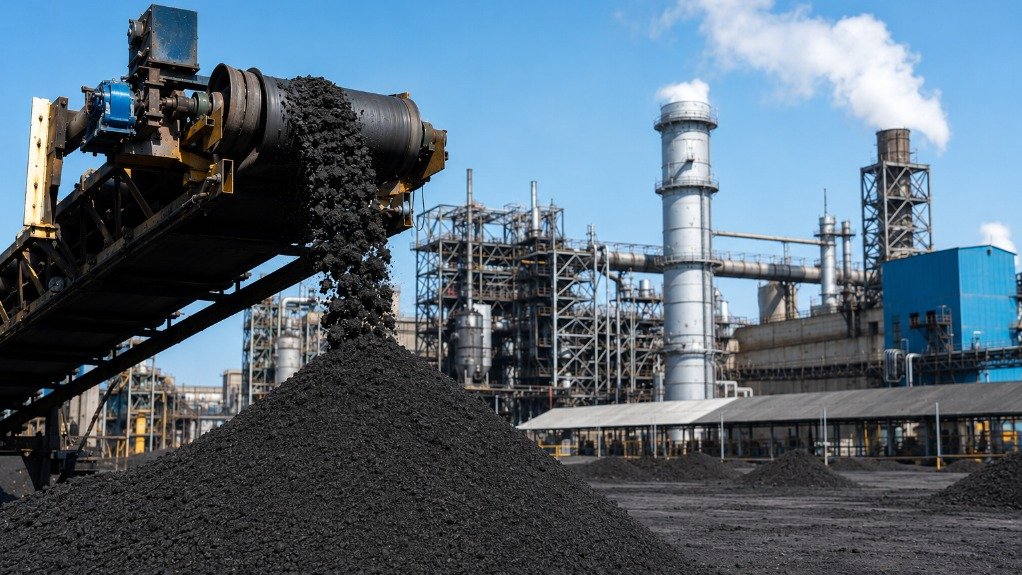
UNTAPPED POTENTIAL Modern circulating fluidised bed technology makes it possible to use duff coal as a fuel in industrial boilers


Tightening emissions compliance requirements, technology maturity and fuel characterisation methodology have made circulating fluidised bed (CFB) combustion technology commercially competitive, making the use of duff coal as a fuel source for thermal applications more viable, says steam generation solutions company Steinmüller Africa boiler engineering group leader Warwick Ham.
Duff coal consists of coal fines and discards. South Africa currently holds over 1.5-billion tonnes in surface stockpiles of duff, accumulated as a by-product of the washing process that separates export-grade coal from lower-quality streams.
However, unmanaged duff stockpiles carry significant environmental and financial responsibilities, given that weathering, oxidisation and the risk of spontaneous combustion generates emissions and related safety risks, he says.
Despite this, Ham says duff coal has been treated as an unavoidable liability because it is too fine, too wet and too inconsistent to deploy in any commercially meaningful way.
While CFB combustion is able to effectively employ duff coal as a fuel, these plants are highly project-specific and – depending on plant scale, site conditions, fuel logistics and the required emissions abatement configuration – the capital cost of implementing CFB technologies is high, he notes.
As a result, the commercial case for using duff coal in industrial boilers has historically stalled at feasibility stage, explains Ham, adding that local emissions regulations were previously not stringent enough to make CFB combustion commercially competitive.
However, he says stricter minimum carbon emissions standard’s requirements – under South Africa’s Air Quality Act that governs sulphur dioxide, nitrogen oxides (NOx) and particulate matter emissions – combined with more consistent enforcement, have strengthened the case for CFB technology.
Ham explains that CFB combustion holds a structural advantage in terms of carbon emissions contribution over conventional pulverised-fuel combustion, by achieving full compliance within the combustion process itself.
In CFB plants, desulphurisation occurs in the bed, through limestone addition during combustion. The technology also runs at lower, even combustion temperatures, suppressing NOx formation, at source.
“A well-designed CFB system can meet the minimum emission standards for sulphur dioxide, NOx and particulates with far less reliance on costly downstream abatement equipment, such as flue gas desulphurisation, than a conventional plant typically requires to achieve the same result,” says Ham.
System’s Integration
In deploying a CFB power plant, Ham says an exact emissions envelope is modelled for each specific fuel to be used at the plant and based off of site specifics as part of the design process, which enables fuel characterisation. This, he adds, is critical when using duff coal because its ash, moisture, volatiles and sulphur content varies significantly depending on the season, source and age of the stockpile material.
“There is no generic, off-the-shelf solution for duff coal; instead every project is built around the fuel it will actually run on. It’s a deliberate feature of how we approach the engineering [of a CFB-enabled system],” says Ham.
As the combustion system of a CFB boiler is engineered to handle the full variability of duff coal, it is also inherently more capable of accommodating other variable fuel streams, such as biomass and waste-derived material. Additional fuels can be incorporated in the system by applying the same engineering diligence to modify the plant, enabling it to evolve alongside the energy transition as opposed to remaining a fixed-point technology that the user must eventually abandon, he explains.
This, in turn, enables a phased, engineering-led pathway for heavy industry to handle more complex fuels and facilitate fuel blending.
Further, CFB technology has matured to utility scale and is able to perform efficiently and reliably for up to 40 years, states Ham. This reduces technology adoption risk and enables integration at projects that have previously stalled at the feasibility stage.
He asserts that CFB technology reinforces that well-engineered solutions can balance both environmental responsibility and commercial pragmatism. “South Africa does not need to choose between managing its duff coal stockpile legacy and building energy security; the right engineering foundation lets it do both at once.”
Given the high level of customisation inherent in CFB plants, it can be integrated in operations spanning various industries.
Ham points out that co-location with mines is a particularly logical entry point, given that stockpiles are already located at or near mine sites, reducing transport and logistics costs from the first day of integration.
Industrial heat and power applications are equally viable, particularly for heavy industry seeking long-term energy cost certainty. Industrial processes that generate waste products are also a focus owing to the rising costs and environmental constraints with respect to disposal or waste processing, says Ham.
Steinmüller Africa is actively engaging with mining operations, industrial energy users, independent power producers and investors to explore how CFB technology can benefit their specific sites.
Aligned to this, the company is currently involved in the construction and commissioning of a coal- and biomass-fired CFB project, which will be commissioned towards the end of 2026.
Article Enquiry
Email Article
Save Article
Feedback
To advertise email advertising@creamermedia.co.za or click here
Research Reports
Projects
Latest Multimedia
Latest News

Showroom
M and J Mining are leading suppliers of physical support systems as used by the underground mining industry. Our selection of products are not...
VISIT SHOWROOM
SABAT Batteries is a renowned brand in the battery industry, manufacturing a wide range of batteries at its state-of-the-art production facility in...
VISIT SHOWROOM

Announcements
What's On
Subscribe to improve your user experience...
Option 1 (equivalent of R125 a month):
Receive a weekly copy of Creamer Media's Engineering News & Mining Weekly magazine
(print copy for those in South Africa and e-magazine for those outside of South Africa)
Receive daily email newsletters
Access to full search results
Access archive of magazine back copies
Access to Projects in Progress
Access to ONE Research Report of your choice in PDF format
Option 2 (equivalent of R375 a month):
All benefits from Option 1
PLUS
Access to Creamer Media's Research Channel Africa for ALL Research Reports, in PDF format, on various industrial and mining sectors
including Electricity; Water; Energy Transition; Hydrogen; Roads, Rail and Ports; Coal; Gold; Platinum; Battery Metals; etc.
Already a subscriber?
Forgotten your password?
Receive weekly copy of Creamer Media's Engineering News & Mining Weekly magazine (print copy for those in South Africa and e-magazine for those outside of South Africa)
➕
Recieve daily email newsletters
➕
Access to full search results
➕
Access archive of magazine back copies
➕
Access to Projects in Progress
➕
Access to ONE Research Report of your choice in PDF format
RESEARCH CHANNEL AFRICA
R4500 (equivalent of R375 a month)
SUBSCRIBEAll benefits from Option 1
➕
Access to Creamer Media's Research Channel Africa for ALL Research Reports on various industrial and mining sectors, in PDF format, including on:
Electricity
➕
Water
➕
Energy Transition
➕
Hydrogen
➕
Roads, Rail and Ports
➕
Coal
➕
Gold
➕
Platinum
➕
Battery Metals
➕
etc.
Receive all benefits from Option 1 or Option 2 delivered to numerous people at your company
➕
Multiple User names and Passwords for simultaneous log-ins
➕
Intranet integration access to all in your organisation