Project delays result in NCOP delegates calling for tracking mechanism


SYLVIA NXUMALO One concern is that a contractor may abandon an incomplete project yet still bid for other projects and win the tender without accounting for the previous incomplete projects


Throughout last month’s oversight visits to a wastewater treatment plant and a sewer line in the Thaba Chweu local municipality – which formed part of the follow-up Provincial Week to assess progress made since 2024 – the National Council of Provinces (NCOP) Mpumalanga delegation heard that contractors contributed to project delays by missing deadlines or “simply disappearing from site”.
“Delayed and abandoned projects are a major problem not only in Mpumalanga, but nationally. It is often too difficult to track the monies lost as a consequence of these projects,” NCOP Mpumalanga delegation leader Sylvia Nxumalo states.
However, through digital and paper trails within the National Treasury, Provincial Treasury and the Office of the Auditor-General, the NCOP can obtain figures on the cost of major failures.
Consequently, she suggests that a project-tracking mechanism, that includes costs associated with delayed project completion, must be established and made easily accessible to Parliamentarians.
During the oversight visit, the NCOP delegates observed that while the Mashishing wastewater treatment plant – which was about 40% complete in 2024 – has been completed, following the termination of the contract with the first contractor, at the sewer line, it was immediately evident that there had been no progress since 2024, when the NCOP first visited.
“We welcome the fact that there has been progress at the wastewater treatment plant and it is now in operation. However, at the sewer line we all witnessed that nothing has happened since 2024. The department must come up with a plan to ensure that this work is completed by year-end,” Nxumalo urges.
Additionally, the contractor that had been working on the sewer line had been accused of disappearing and reappearing on site without any explanation, she points out. Said contractor told the NCOP that the reason for the non-completion had been geotechnical challenges with workers finding hard rock and groundwater, which complicated activities. As such, the delegation encouraged the department to follow rules and legislation that guide what should happen when a contractor does not complete the work and “has to be chased” either as a result of mismanagement of funds or poor workmanship.
The NCOP delegates, therefore, welcomed the provincial government’s decision to terminate agreements with contractors that had failed to deliver, but members believe that these contractors must also be blacklisted by the Construction Industry Development Board (CIDB).
“Blacklisting rogue contractors will ensure they do not receive other infrastructure projects going forward. One concern is that a contractor may abandon an incomplete project yet still bid for other projects and win the tender without accounting for the previous incomplete projects,” Nxumalo explains.
Such contractors, she highlights, thrive by starting and then abandoning projects.
Further, blacklisting contractors that are found responsible for misconduct will demonstrate government’s commitment to consequence management, the efficient and effective use of State resources and holding those involved in mismanagement accountable.
However, she acknowledges that other factors lead to project delays beyond contractors’ poor performance, citing government’s delayed payments to contractors, whereby departments miss the stipulated 30-day timeframe after invoicing as required by the Public Finance Management Act and Municipal Finance Management Act provisions.
“The existing contractor management legislation under the National Treasury and other bodies, including the CIDB, is sufficient in holding contractors accountable. However, the executive needs political will to ensure that corrective action, in line with existing legislation, is acted upon and that defaulting contractors are not left unpunished,” Nxumalo concludes.
Article Enquiry
Email Article
Save Article
Feedback
To advertise email advertising@creamermedia.co.za or click here
Research Reports


Projects


Latest Multimedia


Latest News


Showroom
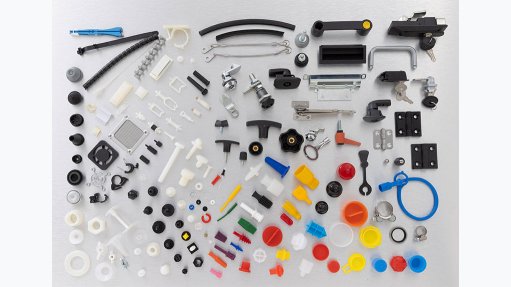
We are responsible manufacturers of essential components. Manufacturing 80 million parts a week, we have over 1 billion parts in stock.
VISIT SHOWROOM
Industrial Nozzles & Systems (Pty) Ltd (Est. 2000) exclusive representative in Southern Africa for LECHLER GmbH (Est. 1879) - Europe's leading...
VISIT SHOWROOM



Announcements
What's On
Subscribe to improve your user experience...
Option 1 (equivalent of R125 a month):
Receive a weekly copy of Creamer Media's Engineering News & Mining Weekly magazine
(print copy for those in South Africa and e-magazine for those outside of South Africa)
Receive daily email newsletters
Access to full search results
Access archive of magazine back copies
Access to Projects in Progress
Access to ONE Research Report of your choice in PDF format
Option 2 (equivalent of R375 a month):
All benefits from Option 1
PLUS
Access to Creamer Media's Research Channel Africa for ALL Research Reports, in PDF format, on various industrial and mining sectors
including Electricity; Water; Energy Transition; Hydrogen; Roads, Rail and Ports; Coal; Gold; Platinum; Battery Metals; etc.
Already a subscriber?
Forgotten your password?
Receive weekly copy of Creamer Media's Engineering News & Mining Weekly magazine (print copy for those in South Africa and e-magazine for those outside of South Africa)
➕
Recieve daily email newsletters
➕
Access to full search results
➕
Access archive of magazine back copies
➕
Access to Projects in Progress
➕
Access to ONE Research Report of your choice in PDF format
RESEARCH CHANNEL AFRICA
R4500 (equivalent of R375 a month)
SUBSCRIBEAll benefits from Option 1
➕
Access to Creamer Media's Research Channel Africa for ALL Research Reports on various industrial and mining sectors, in PDF format, including on:
Electricity
➕
Water
➕
Energy Transition
➕
Hydrogen
➕
Roads, Rail and Ports
➕
Coal
➕
Gold
➕
Platinum
➕
Battery Metals
➕
etc.
Receive all benefits from Option 1 or Option 2 delivered to numerous people at your company
➕
Multiple User names and Passwords for simultaneous log-ins
➕
Intranet integration access to all in your organisation