
Morocco builds on long-standing investment in renewable energy

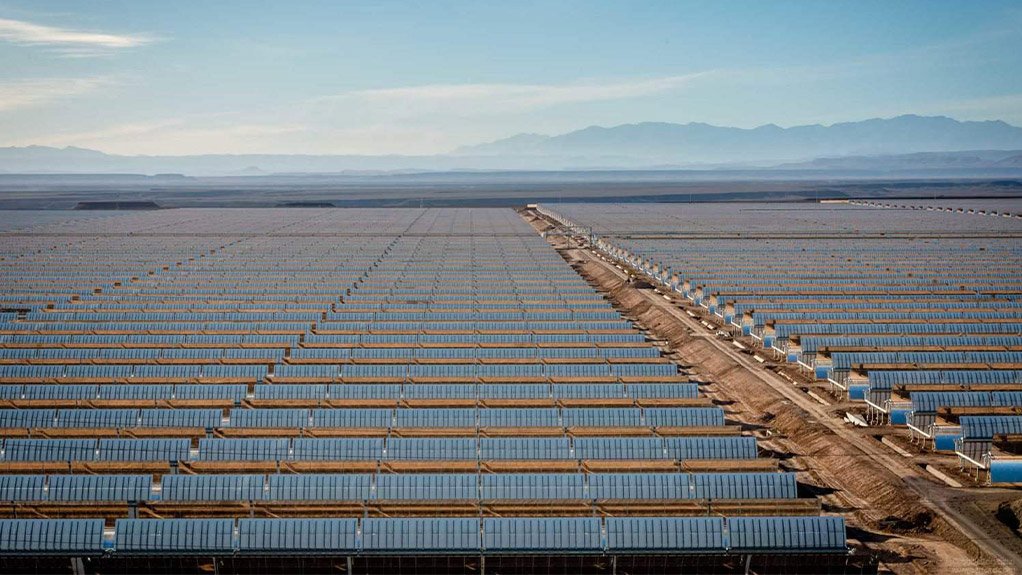


Morocco has been developing renewable energy for electricity generation since the 1990s, with private-sector investment playing an increasingly important role in expanding its generation capacity, Office National de l’Electricité et de l’Eau Potable (ONEE) CEO Tarik Hamane has said.
Morocco developed its first wind power facility in 1996/97 and commissioned its first wind power plant developed with private-sector participation in 1999. That year also saw the development of Morocco’s first solar plants.
Morocco has 2.2 GW of operational hydropower capacity, while coal has also contributed to its electricity supply. The country previously exploited its own coal reserves, although this production has apparently ended. It does not produce oil or gas.
ONEE was the first utility in Africa to open its electricity generation sector to private investment. Today, about 95% of Morocco’s generation capacity is privately owned, while ONEE focuses on transmission and is responsible for the national grid.
Hamane believes national grids should remain under the control of national utilities, given the substantial capital investment required and the long-term nature of returns. Electricity generation, by contrast, could be undertaken by the private sector.
Despite no longer being a major generation player, ONEE remains one of Africa’s four or five largest utilities, with yearly revenue of about $5-billion. It is also the country’s second-largest company. Electricity access in Morocco has reached 99.9% of the population, while access to potable water stands at 98.4% in rural areas and almost 100% in urban areas.
Hamane said a financially sound utility helped to make grid projects bankable and was important to ensuring a successful energy transition.
He highlighted that Morocco initially used solar power to supply electricity to rural villages as a temporary measure while transmission lines were being built. The nationwide expansion of the grid began in 1996, and decentralised solar installations were subsequently replaced by connections to the national network.
In 2009, following the financial crisis, Morocco decided to substantially expand its renewable-energy capacity to reduce its dependence on fossil fuels and strengthen energy security.
Hamane attributed the country’s progress to decisions taken at the highest levels of government, including the early introduction of legislation and regulation governing private investors’ rights in the electricity sector. Today, Morocco has more than 20 public-private partnerships (PPPs) across the energy sector, covering wind, solar, hydropower and coal projects.
Battery energy storage systems are also part of the country’s energy plans. Morocco has six manufacturing plants producing batteries and related components, and ONEE is working to secure energy supplies to support further expansion of the sector.
Morocco is also developing many desalination PPPs, reported Hamane, adding that they will be powered by renewables. The private sector will be responsible for developing both the desalination facilities and their associated renewable power projects. Direct electricity supply from generators to consumers will reduce demand on the national grid.
Morocco’s latest desalination project, in Casablanca, is the largest in Africa and is being viewed as a model for other countries. Egypt is seeking to emulate it, Hamane said.
He added that Morocco was the first country to use desalinated water for crop irrigation.
Meanwhile, the country is also preparing for increased electricity demand from electric vehicles (EVs). Hamane said the additional demand could be managed, noting that already 80% of vehicles sold in Morocco are hybrids. He described hybrid vehicles as a step towards wider EV adoption.
Hamane said ONEE continued to play an important role in ensuring that electricity-sector developments are aligned with national priorities, including industrialisation, climate change and energy security. The utility also helps provide greater stability in electricity pricing and assurance to investors.
Article Enquiry
Email Article
Save Article
Feedback
To advertise email advertising@creamermedia.co.za or click here
Research Reports
Projects

Latest Multimedia
Showroom
Rittal is a world leading provider of top-quality integrated systems for enclosures, power distribution, climate control, IT infrastructure and...
VISIT SHOWROOM
ALBIS FLANGES — founded in 1965 — is a petro-chemical approved manufacturer of flanges and fittings in most grades of steel, listed with Sasol,...
VISIT SHOWROOM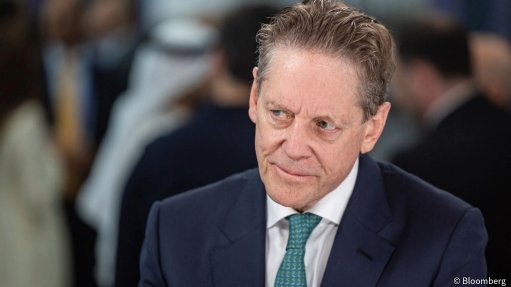
Press Office
Announcements
What's On
Subscribe to improve your user experience...
Option 1 (equivalent of R125 a month):
Receive a weekly copy of Creamer Media's Engineering News & Mining Weekly magazine
(print copy for those in South Africa and e-magazine for those outside of South Africa)
Receive daily email newsletters
Access to full search results
Access archive of magazine back copies
Access to Projects in Progress
Access to ONE Research Report of your choice in PDF format
Option 2 (equivalent of R375 a month):
All benefits from Option 1
PLUS
Access to Creamer Media's Research Channel Africa for ALL Research Reports, in PDF format, on various industrial and mining sectors
including Electricity; Water; Energy Transition; Hydrogen; Roads, Rail and Ports; Coal; Gold; Platinum; Battery Metals; etc.
Already a subscriber?
Forgotten your password?
Receive weekly copy of Creamer Media's Engineering News & Mining Weekly magazine (print copy for those in South Africa and e-magazine for those outside of South Africa)
➕
Recieve daily email newsletters
➕
Access to full search results
➕
Access archive of magazine back copies
➕
Access to Projects in Progress
➕
Access to ONE Research Report of your choice in PDF format
RESEARCH CHANNEL AFRICA
R4500 (equivalent of R375 a month)
SUBSCRIBEAll benefits from Option 1
➕
Access to Creamer Media's Research Channel Africa for ALL Research Reports on various industrial and mining sectors, in PDF format, including on:
Electricity
➕
Water
➕
Energy Transition
➕
Hydrogen
➕
Roads, Rail and Ports
➕
Coal
➕
Gold
➕
Platinum
➕
Battery Metals
➕
etc.
Receive all benefits from Option 1 or Option 2 delivered to numerous people at your company
➕
Multiple User names and Passwords for simultaneous log-ins
➕
Intranet integration access to all in your organisation