More generation will not solve Africa’s power problem without stronger grids


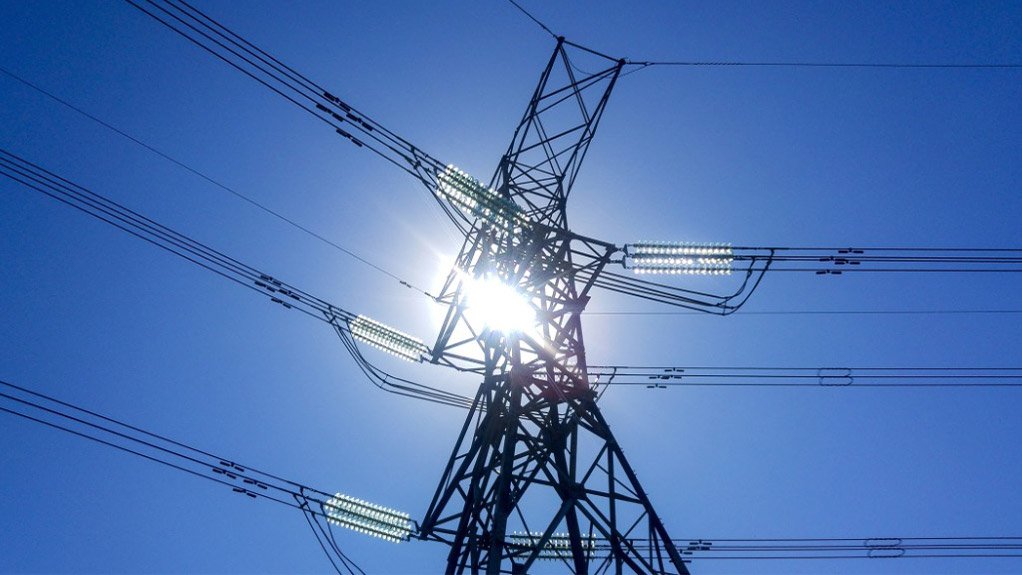
MIKHAIL NIKOMAROV Transmission constraints are restricting new generation and electricity connections, while technical and commercial losses continue to weigh on distribution networks



Adding more generation capacity will not solve Africa’s electricity deficit if power and revenue continue to leak from weak distribution networks, says Boston Consulting Group (BCG) partner Mikhail Nikomarov.
The continent needs to pay greater attention to the performance and financial sustainability of its existing electricity grids, especially distribution, alongside efforts to develop new generation, he argues.
“If we have 20% commercial losses on the distribution side, that’s 20% of that energy that’s been generated. It’s just leaking out of the system,” Nikomarov says.
Every additional unit of electricity still has to pass through a network that may be unable to account for, or collect revenue from, all the power it delivers. “It undermines the entire business case,” he says.
The point runs through ‘Grids of the Future’, a report published in August by BCG and the Global Energy Alliance for People and Planet. The report draws on a Utility CEO Forum the two organisations co-convened on the sidelines of Enlit Africa in May. It argues that strengthening utilities, and in particular their transmission and distribution networks, is the most effective step available to anyone invested in African growth.
Looking Beyond Generation
Much of the effort to close Africa’s power gap has gone into new generation, where independent power producer programmes have shown that private capital can be mobilised.
“I think we’ve been working too much from the generation side,” Nikomarov says.
He notes that transmission is now widely recognised as a bottleneck, restricting the connection of new generation and, in some cases, new electricity loads. Distribution presents another major constraint where significant technical and commercial losses are occurring.
The report identifies commercial and technical losses, tariffs that do not reflect costs and a widening infrastructure financing gap among the main pressures facing African utilities.
It warns that weaknesses in one part of the system reinforce problems elsewhere. Financially weak distribution companies struggle to pay for bulk electricity, constrained transmission limits the movement of power, and generators face payment and fuel challenges. Energy-intensive customers, meanwhile, may seek alternatives, placing further pressure on utilities. The report describes this as a self-reinforcing downward spiral that no volume of new generation can fix on its own.
Tackling commercial losses is the first of four priorities the report sets for the next 12 months.
Nikomarov believes distribution deserves more attention in countries where the power sector is not financially self-sustaining, especially where power and revenue are clearly leaking out of the system.
Rising Stakes
The report describes the grid as the “circulatory system of growth”, connecting investment in generation with the factories, hospitals, schools and digital infrastructure that ultimately use electricity.
Nikomarov expects the grid’s economic importance to increase as electricity takes on a larger role in the overall energy system.
“When I was born, it was like 10% of all energy went to electricity. Around Covid time, it was 20%. Depending on what reports you look at, by 2040 it’ll be 40% to 50%,” he says.
The electrification of mobility and other parts of the economy will tighten the link between electricity supply and economic activity, he adds.
Africa has already seen the economic cost of unreliable electricity. Nikomarov points to South Africa’s experience with loadshedding, which he says has been associated with an estimated 1% to 1.5% annual impact on gross domestic product. Some historical estimates for Ghana have put the impact of severe shortages at as much as 3%.
Different Utilities, Different Priorities
There is no uniform starting point across the continent. Africa has 54 countries, some of which have several utilities operating across generation, transmission and distribution. Utilities also differ substantially in size, maturity, operational performance and financial health.
A solution appropriate for a large utility such as South Africa’s Eskom may make little sense for a much smaller operator, Nikomarov says.
“If you’ve got a big utility, you may want to get the best-in-class solution because you’ve got scale,” he says. Smaller utilities may instead need a minimum viable product that addresses their most pressing operational problems.
Financial condition should also determine priorities. “If you’re losing money, the first thing you need to do is to figure that out and become sustainable,” Nikomarov says. A utility operating around break-even has more scope to focus on growth and longer-term modernisation.
Building the Data Foundation
Digitisation sits at the centre of the report, which describes it, together with AI, as the most practical and affordable route available to utilities today. Nikomarov stresses that the sequence matters.
The report’s approach is to “digitise first, then add intelligence”. That means starting with accurate digital records of physical assets and processes, followed by a consolidated data layer, then the intelligence that turns data into decisions, and only then AI applications.
“AI is a tool, and it loves data, but it needs good data,” Nikomarov says.
Without good data, AI produces answers that look credible but are wrong, he explains, comparing it to an online search that returns a convincing result for something that never happened. The report makes the same point about grids. Without a geospatially referenced asset register, AI cannot tell which feeders are bleeding value.
The report’s five-stage modernisation journey starts with network digitisation, followed by operational integration and grid observability, AI-enabled predictive analytics and distributed-energy optimisation. The final stage is a transactive grid in which the utility acts as an active market orchestrator.
The report lists applications such as identifying sources of losses, improving outage management, predicting equipment failures, assessing asset health, forecasting renewable generation and optimising battery storage. It says this moves utilities from reactive crisis management to evidence-driven operations.
The report points to the experience of Jaipur in India as an indication of what can already be achieved.
Global Energy Alliance’s work with Jaipur Vidyut Vitran Nigam Limited digitised roughly two-million assets in months rather than years, at an order of magnitude lower cost than traditional approaches. Connection-application processing times fell from 90 days to less than a week.
Nikomarov says the experience challenges the assumption that mapping a large electricity network digitally requires millions of dollars and lengthy implementation periods.
He notes that utilities already hold information about many of their assets, even those that are decades old. Existing records can be fed into digital systems, while drones and mapping tools can generate new information where records are incomplete.
“What may have cost millions of dollars before now costs hundreds of thousands of dollars,” he says.
Nor does a utility have to digitise its entire network before seeing benefits.
“You may not digitise your entire grid, but even 60%, 70% – you’re starting somewhere,” he says.
Smart meters can then be rolled out to fill the gaps where information is lacking, he adds.
The same data foundation can help utilities make existing infrastructure last longer. The report highlights drone-based inspections, AI-enabled imagery analysis, predictive maintenance and continuous asset-health monitoring as ways of identifying problems earlier, extending asset lives and reducing unplanned outages. Where replacement capital is scarce, it describes extending the life of existing assets as a powerful lever. It also notes that the approach eases the capital pressure that drives the financing conversation in the first place.
The data that helps utilities identify losses can also show where scarce capital should go, so that investment decisions are based on evidence rather than political pressure.
A Route to Private Investment
The report argues that utilities and governments need to move the financing conversation beyond grants and sovereign guarantees.
For digitisation and operational improvements, modest investment requirements and quick paybacks create scope for vendor and service contracts, outcome- and performance-based arrangements and public–private partnerships. The report singles out non-technical loss reduction as having the simplest business case of all, because it pays for itself.
Generation has already shown that private investment can be mobilised where the regulatory environment supports it. Nikomarov says the next question is how to bring private investors into the transmission networks that transport electricity.
“How do we get them into wires rather than into generation?” he asks.
He points to South Africa’s private transmission procurement model, first-loss structures, insurance and credit enhancement as mechanisms that could reduce risk for investors. The report highlights the Credit Guarantee Vehicle supporting South Africa’s transmission tenders, which is designed to remove the need for government guarantees. It also identifies independent transmission developers and regional intermediaries as potential participants.
On the distribution side, private companies have tried rural electrification models, but Nikomarov says the financial model has not yet worked. He sees scope for arrangements that tackle the commercial losses directly, under which a private company would keep a share of the revenue it helps a utility recover.
“We’re not at the end of financial innovation when it comes to grids,” he says.
Stuck in Firefighting Mode
Despite the emphasis on digitisation, AI and new financing structures, Nikomarov believes the greatest barrier to transformation may sit inside utilities themselves.
He describes the challenge as an iceberg. The tools and technology are the visible part above the water, which he puts at about 10% to 20% of the whole. People, behaviour and mindsets make up the much larger part below.
That applies to the losses that undermine new generation as much as to any other part of the grid. The report notes that theft, vandalism and non-payment are as much socio-cultural problems as technical ones. It says they need community engagement, education and visible accountability alongside smart meters and analytics.
Utilities dealing with financial losses, unreliable infrastructure and public scrutiny are often stuck firefighting, which makes it difficult for employees to step back and work on longer-term change.
“I don’t want to blame anyone here,” he says. “Working in a utility that is loss-making, you’re firefighting the whole time.”
He points to the negative public attention faced by Eskom, while stressing that similar pressures exist at utilities elsewhere on the continent.
“There are good people working in those companies, but they’re just stuck in this reactive firefighting mode,” he says.
He argues that utilities need to free up at least some employees to focus on improvement.
“Obviously most of it is still firefighting, keeping the lights on, but we need someone who is going to actually start thinking about how to do this differently,” Nikomarov says.
The report also calls for structured peer learning between utilities, so that operators share lessons from approaches that did not work as well as their successes.
New tools will only deliver if people are given the time and support to learn how to use them and to find where they add value, Nikomarov says.
“Just putting a tool in itself doesn’t solve [the problem]. Ultimately, it’s the people who use those tools.”
Article Enquiry
Email Article
Save Article
Feedback
To advertise email advertising@creamermedia.co.za or click here
Research Reports

Projects


Latest Multimedia


Latest News
Showroom

Treo is an independent mining consulting company, delivering mining consultancy services, engineering and technology solutions to mines and...
VISIT SHOWROOM
Industrial Nozzles & Systems (Pty) Ltd (Est. 2000) exclusive representative in Southern Africa for LECHLER GmbH (Est. 1879) - Europe's leading...
VISIT SHOWROOM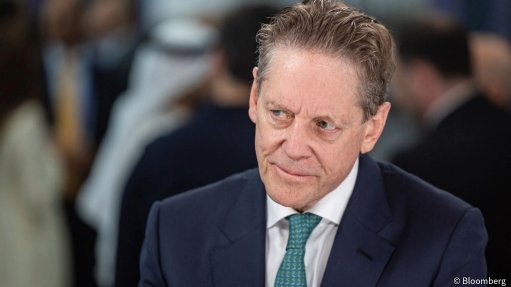

Announcements
What's On
Subscribe to improve your user experience...
Option 1 (equivalent of R125 a month):
Receive a weekly copy of Creamer Media's Engineering News & Mining Weekly magazine
(print copy for those in South Africa and e-magazine for those outside of South Africa)
Receive daily email newsletters
Access to full search results
Access archive of magazine back copies
Access to Projects in Progress
Access to ONE Research Report of your choice in PDF format
Option 2 (equivalent of R375 a month):
All benefits from Option 1
PLUS
Access to Creamer Media's Research Channel Africa for ALL Research Reports, in PDF format, on various industrial and mining sectors
including Electricity; Water; Energy Transition; Hydrogen; Roads, Rail and Ports; Coal; Gold; Platinum; Battery Metals; etc.
Already a subscriber?
Forgotten your password?
Receive weekly copy of Creamer Media's Engineering News & Mining Weekly magazine (print copy for those in South Africa and e-magazine for those outside of South Africa)
➕
Recieve daily email newsletters
➕
Access to full search results
➕
Access archive of magazine back copies
➕
Access to Projects in Progress
➕
Access to ONE Research Report of your choice in PDF format
RESEARCH CHANNEL AFRICA
R4500 (equivalent of R375 a month)
SUBSCRIBEAll benefits from Option 1
➕
Access to Creamer Media's Research Channel Africa for ALL Research Reports on various industrial and mining sectors, in PDF format, including on:
Electricity
➕
Water
➕
Energy Transition
➕
Hydrogen
➕
Roads, Rail and Ports
➕
Coal
➕
Gold
➕
Platinum
➕
Battery Metals
➕
etc.
Receive all benefits from Option 1 or Option 2 delivered to numerous people at your company
➕
Multiple User names and Passwords for simultaneous log-ins
➕
Intranet integration access to all in your organisation