High stakes at an even higher altitude

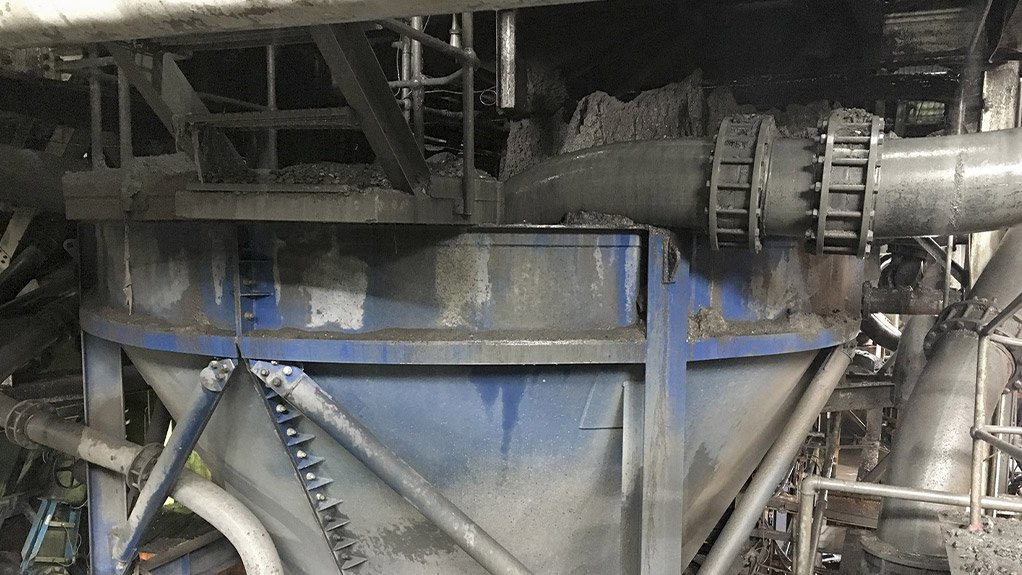


(Virtual Showroom) In Maluti Mountains of Lesotho, southern Africa, sits the world's highest diamond mine, 3 200 meters above sea level. It's a punishing place to work with heavy snowfall, temperatures swinging from -18°C to +20°C, and relentless wind. The ore preparation process is no gentler. The mine pulls ore to the surface through two kimberlite pipes. That source rock is crushed and processed to extract diamonds, but the yield is small and less than two carats per hundred tons of rock. Getting to those diamonds takes serious effort.
Separating Diamonds from Kimberlite
In a DMS (Dense Media Separation) plant, powdered ferrosilicon is suspended in water to create a fluid with the same density as diamond. Crushed diamond-bearing material is added, separating the heavier minerals from the lighter rock. The result is a concentrate that's typically less than one percent of what went into the plant.
An alternative is centrifugation, where dense material is spun through cyclones at varying speeds. Diamonds and other heavy minerals get pressed against the cyclone walls and forced out the bottom, while wastewater rises through the center and is drawn off and screened.
Each method has trade-offs. A DMS plant costs roughly ten times more to build than a cyclone system, but delivers better yields at the cost of higher water consumption and operating expenses. And regardless of which technology is used, results still come down to operator skill. What keeps a DMS plant, and the whole process behind it, running smoothly is a high level of automation paired with measurement technology that can be trusted to deliver accurate readings.
Turbulence and Inlet Pipes Make Measurement Harder
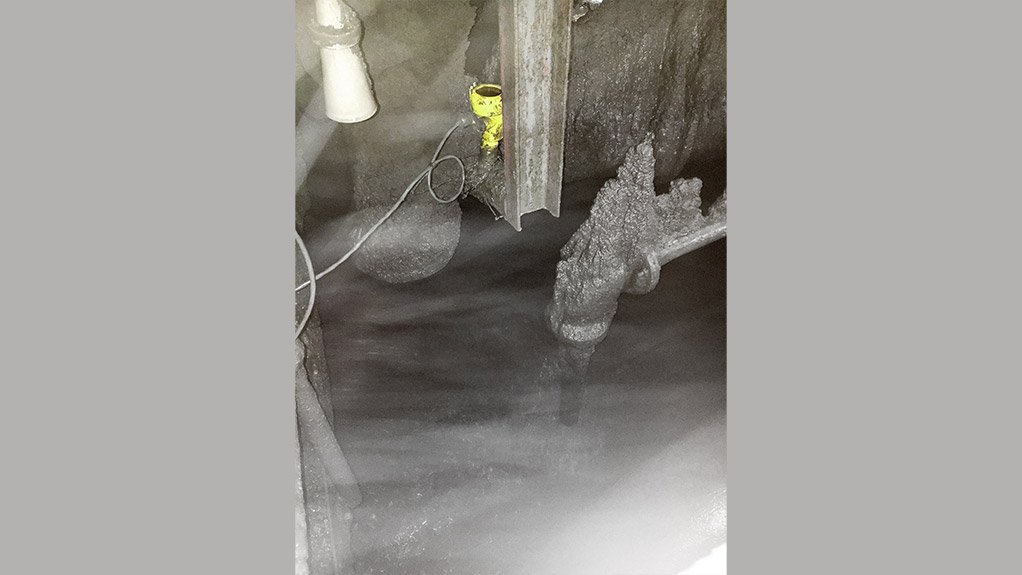
Conditions inside a diamond mine are brutal, and dust is everywhere. That's a real problem for level measurement technology. In the flotation tank, the level of the flotation liquid carrying the enriched material needs to be measured precisely. But the medium enters the tank through pipes from multiple directions, creating heavy turbulence and splashing.
An older 26 GHz radar sensor installed there years earlier experienced some challenges. Dust and debris built up on the antenna, triggering false readings again and again. Radar is a non-contact technology and should be well-suited to dirty environments, but under these extreme conditions, the sensor simply couldn't keep up.
80 GHz Technology Brings Stability
VEGA's South African team recommended replacing the old sensor with the new VEGAPULS. Its 3° beam angle was the key: a much tighter focus that could separate the real measurement signal from interference caused by the inlet pipes. Combined with a dynamic range of 120 dB, the sensor brought a level of accuracy, repeatability, and reliability the application hadn't seen before. Temperature and pressure swings don't affect the readings, and neither do changes in the liquid's density or viscosity, a critical advantage given how inhospitable conditions at the mine can get.
The VEGAPULS operates across a pressure range of -1 bar to +20 bar and process temperatures from -40°C to +200°C. Despite its shorter wavelength, the 80 GHz sensor is largely unaffected by buildup or condensation. Its distance-dependent dynamic adaptation reduces interference close to the antenna while maintaining strong signal sensitivity at greater range.
Beyond signal stability, the sensor is mechanically robust and virtually wear- and maintenance-free. Even when it needs to be cleared of mud from time to time, the process keeps running without interruption. Since the VEGAPULS was installed, the flotation tank has run smoothly.
At 3,200 meters, there's no room for guesswork. Every reading has to hold up against dust, turbulence, and conditions most sensors were never built for. With VEGAPULS now running the flotation tank, VEGA has given the Lesotho mine exactly that: a level measurement it can rely on, shift after shift, regardless of what the mountain throws at it.
Article Enquiry
Email Article
Save Article
Feedback
To advertise email advertising@creamermedia.co.za or click here
Research Reports

Projects
Latest Multimedia
Latest News
Showroom
CSIR International Convention Centre (CSIR ICC) - the leading conference and events venue in Pretoria/Tshwane.
VISIT SHOWROOM
Electrifying the world in a safe, smart, and sustainable way, ABB Electrification is a global technology leader in electrical distribution and...
VISIT SHOWROOM

Press Office
Announcements
What's On
Subscribe to improve your user experience...
Option 1 (equivalent of R125 a month):
Receive a weekly copy of Creamer Media's Engineering News & Mining Weekly magazine
(print copy for those in South Africa and e-magazine for those outside of South Africa)
Receive daily email newsletters
Access to full search results
Access archive of magazine back copies
Access to Projects in Progress
Access to ONE Research Report of your choice in PDF format
Option 2 (equivalent of R375 a month):
All benefits from Option 1
PLUS
Access to Creamer Media's Research Channel Africa for ALL Research Reports, in PDF format, on various industrial and mining sectors
including Electricity; Water; Energy Transition; Hydrogen; Roads, Rail and Ports; Coal; Gold; Platinum; Battery Metals; etc.
Already a subscriber?
Forgotten your password?
Receive weekly copy of Creamer Media's Engineering News & Mining Weekly magazine (print copy for those in South Africa and e-magazine for those outside of South Africa)
➕
Recieve daily email newsletters
➕
Access to full search results
➕
Access archive of magazine back copies
➕
Access to Projects in Progress
➕
Access to ONE Research Report of your choice in PDF format
RESEARCH CHANNEL AFRICA
R4500 (equivalent of R375 a month)
SUBSCRIBEAll benefits from Option 1
➕
Access to Creamer Media's Research Channel Africa for ALL Research Reports on various industrial and mining sectors, in PDF format, including on:
Electricity
➕
Water
➕
Energy Transition
➕
Hydrogen
➕
Roads, Rail and Ports
➕
Coal
➕
Gold
➕
Platinum
➕
Battery Metals
➕
etc.
Receive all benefits from Option 1 or Option 2 delivered to numerous people at your company
➕
Multiple User names and Passwords for simultaneous log-ins
➕
Intranet integration access to all in your organisation