Minerals Council welcomes fiscal progress, calls for accelerated structural reforms



JOHANNESBURG (miningweekly.com) – The Minerals Council South Africa welcomes the commitment in the 2026 Medium-Term Budget Policy Statement (MTBPS) to fiscal sustainability and structural reforms aimed at lifting South Africa’s economic growth potential, allowing the mining sector to continue its significant contribution to the economy.
With economic growth now forecast at just 1.2% in 2026, accelerating reforms that remove binding constraints on investment and productive activity is increasingly urgent. The MTBPS itself acknowledges that growth remains too low and identifies structural reforms, stronger State capacity and infrastructure delivery as central to achieving faster and more sustainable growth.
The Minerals Council particularly welcomes the continued focus on reforms in electricity, water and infrastructure. These are key elements of the Mineral Council’s Investment and Growth Strategy, which seeks to catalyse growth of the sector at 3% annually. In electricity, the restructuring of Eskom and establishment of an independent transmission operator are important steps towards creating a more competitive electricity market, attracting additional generation investment and accelerating grid expansion.
For the mining sector, reliable and competitively priced electricity, together with sufficient grid capacity for new generation projects, is fundamental to sustaining existing operations and unlocking new investments.
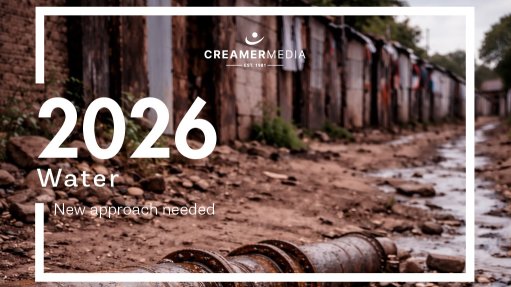
The renewed focus on water security is equally important. The National Water Action Plan seeks to address both infrastructure and institutional weaknesses by improving operational performance, governance and technical capacity, reducing water losses, strengthening revenue collection and reforming infrastructure financing. These reforms are particularly important for mining operations and mining communities where reliable water infrastructure is essential to both economic activity and community wellbeing.
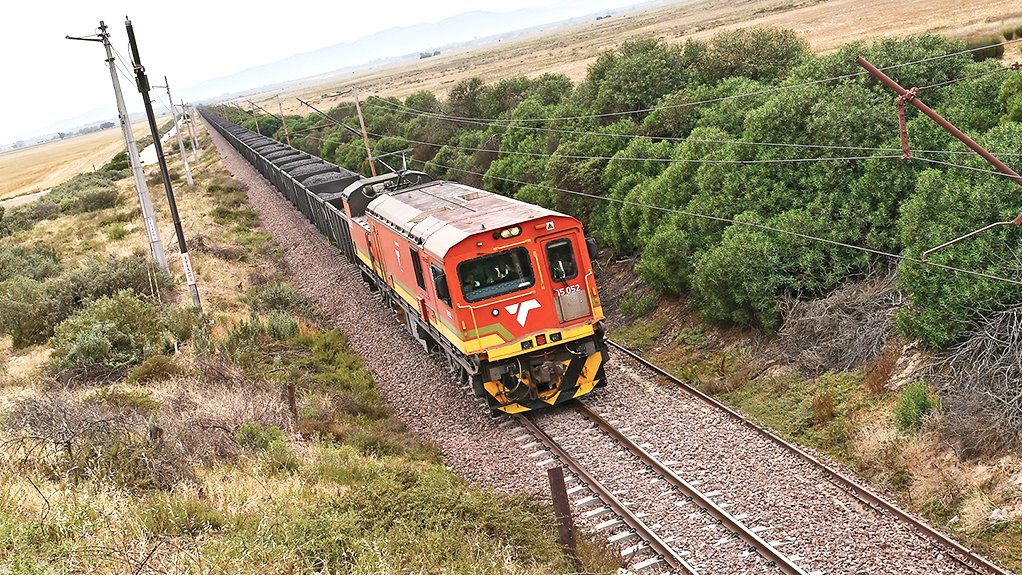
The Minerals Council emphasises the need to maintain momentum on rail and port reforms. Efficient, reliable and cost-competitive logistics are indispensable to an export-intensive mining economy. Minerals Council analysis has identified logistics as a major constraint on the sector, with rail performance limiting export volumes and South Africa's ability to fully benefit from global commodity demand. Accelerating rail reform and liberalisation therefore remain central to improving mining competitiveness and translating favourable commodity markets into higher production, exports and investment. Towards this end, the customer collaboration policy is a key pillar in improving the efficiency of the rail system and our members are ready to play a catalytic role.
The improvement in the fiscal position is encouraging. Government reports that debt-to-GDP stabilised at 78.4% in 2025/26, while the primary surplus is expected to rise from 1.7% of GDP this year to nearly 3% by 2030.
The budget deficit is also expected to narrow to 3.9% of GDP this year and to 2.5% by 2030. Maintaining this trajectory is critical to reducing borrowing requirements and debt-service costs, thereby creating greater fiscal space for productive infrastructure and essential public services.
The stronger revenue outcome also illustrates the importance of the mining industry to South Africa's public finances. Gross tax revenue for 2026/27 has been revised upwards by R17.1-billion compared with the February 2026 estimate, with the MTBPS noting that a large portion of the improvement is attributable to higher commodity prices. Minerals Council analysis shows that higher prices for gold and platinum group metals (PGMs) have supported mining revenues during 2026, even while production volumes have remained under pressure.
This reinforces a fundamental point that a competitive and growing mining sector matters not only to mining companies and employees, but to South Africa's exports, tax revenues and wider macroeconomic stability. Minerals and mineral-related exports account for more than half of South Africa's merchandise export earnings.
The current revenue windfall from favourable commodity prices therefore strengthens the case for accelerating the reforms needed as well as exploration incentives aimed at enabling the sector to translate strong mineral prices into higher investment and production.
The introduction of mineral exploration incentives is especially relevant as global interest rates increase, and investors find it attractive to invest in interest-bearing assets and reduce their exposure on risky activities such as exploration.
The Minerals Council welcomes government's temporary fuel levy relief at a time when sharply higher fuel costs are adding pressure to households and businesses, including diesel-intensive mining operations and logistics chains. The MTBPS provides for the levy on diesel to be reduced by R3/litre and petrol by R1.50/litre from 4 November to 1 December 2026, followed by relief of R1.50/litre for diesel and R1/litre for petrol until 5 January 2027. The intervention provides R10-billion in relief.
The temporary relief is important, but it also highlights the broader challenge of maintaining the competitiveness of South Africa's productive sectors in an environment of high energy, electricity and logistics costs.
Petrol and diesel are significant cost items for the mining sector – at approximately R37-billion annually. With diesel and petrol prices at more than 40% compared to pre-war (US-Israel attack on Iran) period, estimates point to a sector that will spend over R50-billion on liquid fuels in 2026.
There is need for a long-term solution that will protect the economy from high fuel prices. Revitalising the country’s refining capacity is one option. The other is looking at the design of the pricing formula. The delay, to June 2027, in the implementation of the diesel fuel refund mechanism has prejudiced the primary sector (including mining and agriculture).
In the final analysis, the central message from this MTBPS is therefore encouraging. Fiscal consolidation and structural reform must reinforce each other. South Africa cannot sustainably strengthen its public finances without stronger economic growth, and stronger growth requires faster implementation of reforms in electricity, rail, ports and water. For mining, these reforms are critical to converting the country's mineral endowment and favourable commodity prices into investment, production, exports, employment and sustainable tax revenues.
Article Enquiry
Email Article
Save Article
Feedback
To advertise email advertising@creamermedia.co.za or click here
Projects
Latest Multimedia

Latest News
Showroom
Design, Construction and Maintenance of Site Erected, Welded Bulk Storage Tanks for the Petrochemical, LNG, Ammonia and Sustainable fuel Sectors.
VISIT SHOWROOM
Announcements
What's On
Subscribe to improve your user experience...
Option 1 (equivalent of R125 a month):
Receive a weekly copy of Creamer Media's Engineering News & Mining Weekly magazine
(print copy for those in South Africa and e-magazine for those outside of South Africa)
Receive daily email newsletters
Access to full search results
Access archive of magazine back copies
Access to Projects in Progress
Access to ONE Research Report of your choice in PDF format
Option 2 (equivalent of R375 a month):
All benefits from Option 1
PLUS
Access to Creamer Media's Research Channel Africa for ALL Research Reports, in PDF format, on various industrial and mining sectors
including Electricity; Water; Energy Transition; Hydrogen; Roads, Rail and Ports; Coal; Gold; Platinum; Battery Metals; etc.
Already a subscriber?
Forgotten your password?
Receive weekly copy of Creamer Media's Engineering News & Mining Weekly magazine (print copy for those in South Africa and e-magazine for those outside of South Africa)
➕
Recieve daily email newsletters
➕
Access to full search results
➕
Access archive of magazine back copies
➕
Access to Projects in Progress
➕
Access to ONE Research Report of your choice in PDF format
RESEARCH CHANNEL AFRICA
R4500 (equivalent of R375 a month)
SUBSCRIBEAll benefits from Option 1
➕
Access to Creamer Media's Research Channel Africa for ALL Research Reports on various industrial and mining sectors, in PDF format, including on:
Electricity
➕
Water
➕
Energy Transition
➕
Hydrogen
➕
Roads, Rail and Ports
➕
Coal
➕
Gold
➕
Platinum
➕
Battery Metals
➕
etc.
Receive all benefits from Option 1 or Option 2 delivered to numerous people at your company
➕
Multiple User names and Passwords for simultaneous log-ins
➕
Intranet integration access to all in your organisation