Mandela Mining Precinct showcase underscores importance of collaboration, innovation

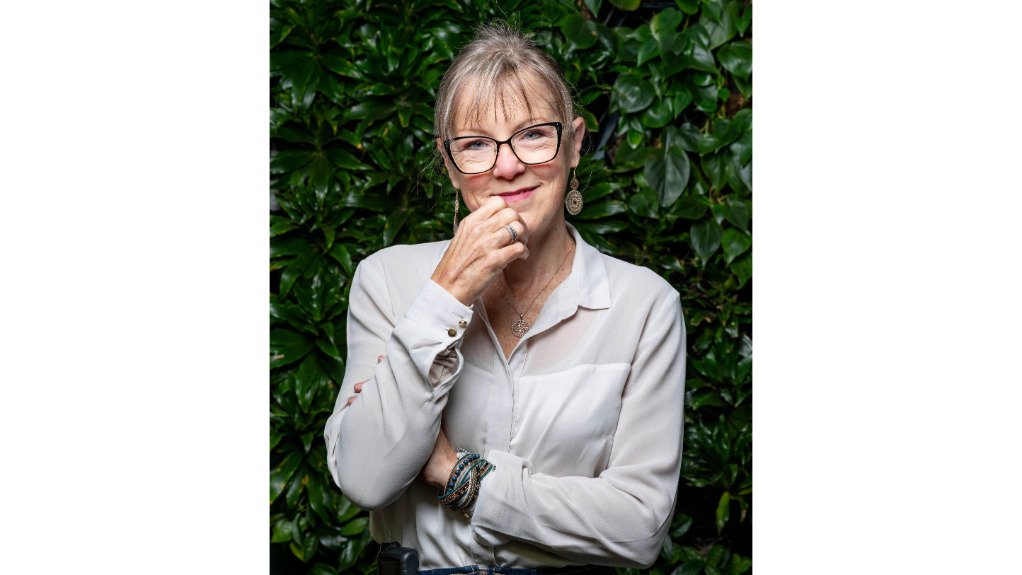


The Mandela Mining Precinct (MMP) this week hosted its second Biennial Showcase at the Council for Scientific and Industrial Research (CSIR) International Convention Centre, in Pretoria, with the first day showcasing the research progress, emerging technologies and practical solutions addressing the changing needs of the country’s mining industry.
MMP executive director Julie Courtnage referenced the theme of the showcase, “Collaborative Innovation for a Future-Ready Mining Sector”, calling for “collaboration as a verb” and for “real collaboration”.
“Real collaboration means organisations with different mandates, priorities, funding arrangements, rules, timeframes and risk appetites, working out how to do something together that none of us could do effectively alone. It can be slow, frustrating, and messy. Occasionally, the technology is the easy bit. When it works, it gives us access to something considerably more valuable than any individual organisation can do for itself: collective capacity and capability,” she averred.
Speakers pointed out that technology alone cannot transform the mining industry, and that people, skills, leadership and behavioural change must remain central to the process.
The importance of technologies in engendering safety in South Africa’s mining industry was highlighted, with Mine Health and Safety Council research delivery specialisation Zamaswazi Nkosi indicating that as of October 19, 53 mineworkers had lost their lives in the country’s mines, which is a 43% increase on the 37 in 2025.
There were also 45 fatal accidents, up 41% from 32, which Nkosi explained was due to broad-based reasons, and not explained by one or two major events.
Despite these concerning increase, Nkosi noted that it was encouraging to see improvements and interventions working in some areas, with reported injuries decreasing 10% from 1 594 to 1 441.
However, while injuries were down, fire and heat signals rose, the former from zero to ten, and the latter from three to 13.
While these were small figures, Nkosi cautioned that it showed a new trend, and that, as mines adopted more diesel, battery and electrified equipment, fire risk required early attention.
She pointed out that with fatalities owing to fall of ground and seismicity, people and moving machines, behaviour, skills and contractors, and fire and energy, this underscored the importance of technologies showcased at the event, including the Advanced Orebody Knowledge (AOK), the AOK E-PEGS positioning, successful application of technology centred around people, or SATCAP, and lithium batteries and mining rescue services, respectively.
However, Nkosi warned of a research gap in mudrushes, falls in shafts and drowning, with 17 lives lost there, but no dedicated showcase for this.
She also stressed the need for all of the technologies to query whether they see the hazard early enough, separate people from the hazard, and if it will work in the different mining conditions for every shift.
Nkosi emphasised that installation did not translate to impact but rather, the test was the evidence of reduced risk at the point of exposure.
As indicated by Nkosi, a slew of technologies were showcased and outlined during the proceedings, including the AOK, which aimed to improve orebody and rock-mass knowledge ahead of the face to support safer and more efficient mining.
This entails capturing through scanning, drilling, radar, acoustics, positioning and rock imagery; analysing by recognising lithology, geological structures, hazardous conditions and spatial context; and visualising, by creating usable digital faces, amps and information for operational decisions.
AOK was said to enable geological and geotechnical understanding, early hazard identification, fall-of-ground risk education, real-time operational decisions, drilling and extraction efficiency and glass rock visions.
Another technology demonstrating collaboration was the Integrated Rock Mass Imaging (IRMI), with companies participating on this project posited to be a good example of this, as many of them contributed beyond what the scope of funding entailed.
IRMI aims to understand rock mass beyond the exposed surface, using integrated 3D interpretation and engendering better-informed mining decisions.
The technologies and supporting partners' contributions included surface geometry, near-face radar, borehole observations and cross-hole imaging.
In terms of SATCAP, a project to upskill industry assessors to assess technical readiness, human readiness and change management for the adoption of modern technologies in the country’s mines was outlined.
This entailed the development of an exemplar learning management system to upskill assessors and assist them in conducting readiness assessments. It was piloted this year at selected sites, with the aim to refine and hand over this to the Mining Qualifications Authority next year.
This will provide industry with a practical, adaptable and future-ready tool to support technology adoption, skills development and informed decision-making in mining operations.
Meanwhile, Minerals Council South Africa CEO Mzila Mthenjane lauded progress on addressing safety, especially in terms of controls and empowering workers to say no to unsafe working conditions.
He stressed that while good research and technology was essential, the value must extend beyond reports and prototypes. “The question now is how effectively they are reaching operating environments and solving real problems. That is an important measure of progress,” he said.
He also called for a mechanism through which common industry problems could be tackled collaboratively, where research capability met operating experience, where technologies could be tested and derisked, and where knowledge could be shared.
Mthenjane said the future of mining could not be shaped by individual organisations working in isolation, but that this needed a shared vision, strong partnerships and a willingness to embrace new ways of thinking and operating.
CSIR Business Excellence and Integration group executive Dr Kavin Naidoo lauded progress by the MMP and the sizeable investment in this by government and the private sector, and called for more stakeholders to bolster this.
He also highlighted the need for accountability, with the impact of the work undertaken to be questioned.
Naidoo emphasised that South Africa needed to be clear about pushing mining and mining safety as a national priority, and being clear about its strategic priorities when it engaged with international partners.
Article Enquiry
Email Article
Save Article
Feedback
To advertise email advertising@creamermedia.co.za or click here
Research Reports
Projects
Latest Multimedia

Latest News
Showroom
ISO-certified Condra manufactures overhead cranes, portal cranes, cantilever cranes and crane components: hoists, drives, end-carriages, brakes and...
VISIT SHOWROOM
Press Office
Announcements
What's On
Subscribe to improve your user experience...
Option 1 (equivalent of R125 a month):
Receive a weekly copy of Creamer Media's Engineering News & Mining Weekly magazine
(print copy for those in South Africa and e-magazine for those outside of South Africa)
Receive daily email newsletters
Access to full search results
Access archive of magazine back copies
Access to Projects in Progress
Access to ONE Research Report of your choice in PDF format
Option 2 (equivalent of R375 a month):
All benefits from Option 1
PLUS
Access to Creamer Media's Research Channel Africa for ALL Research Reports, in PDF format, on various industrial and mining sectors
including Electricity; Water; Energy Transition; Hydrogen; Roads, Rail and Ports; Coal; Gold; Platinum; Battery Metals; etc.
Already a subscriber?
Forgotten your password?
Receive weekly copy of Creamer Media's Engineering News & Mining Weekly magazine (print copy for those in South Africa and e-magazine for those outside of South Africa)
➕
Recieve daily email newsletters
➕
Access to full search results
➕
Access archive of magazine back copies
➕
Access to Projects in Progress
➕
Access to ONE Research Report of your choice in PDF format
RESEARCH CHANNEL AFRICA
R4500 (equivalent of R375 a month)
SUBSCRIBEAll benefits from Option 1
➕
Access to Creamer Media's Research Channel Africa for ALL Research Reports on various industrial and mining sectors, in PDF format, including on:
Electricity
➕
Water
➕
Energy Transition
➕
Hydrogen
➕
Roads, Rail and Ports
➕
Coal
➕
Gold
➕
Platinum
➕
Battery Metals
➕
etc.
Receive all benefits from Option 1 or Option 2 delivered to numerous people at your company
➕
Multiple User names and Passwords for simultaneous log-ins
➕
Intranet integration access to all in your organisation