LNG demand in China and India expected to recover when Mideast war ends

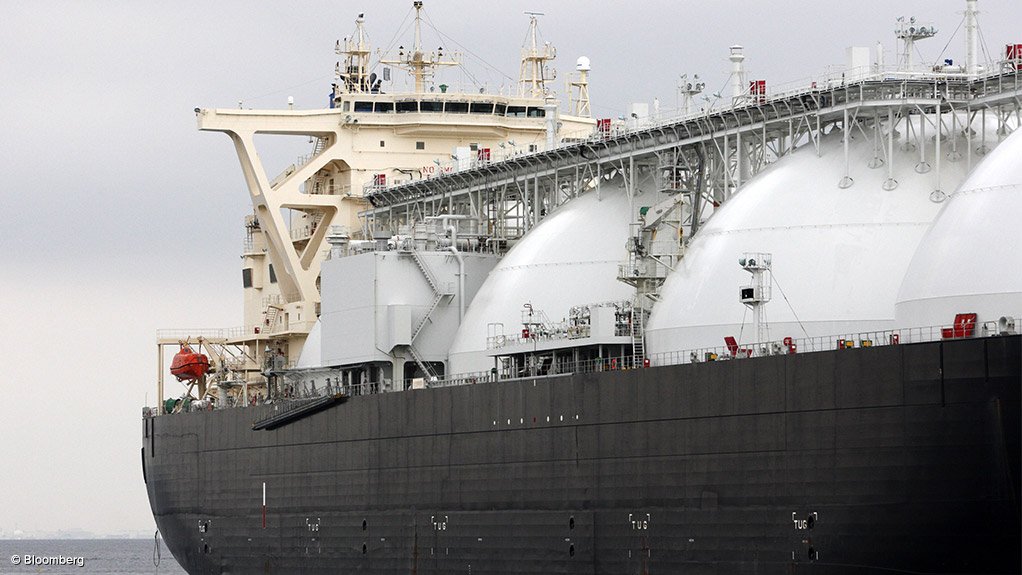


BANGKOK - China and India's LNG imports are likely to rebound from multi-year lows once the Middle East supply crunch ends and prices ease, industry executives expect, reversing a pick-up in coal and oil use to generate power due to the US-Iran war.
The conflict has prevented Qatar and the United Arab Emirates from exporting most of their LNG via the Strait of Hormuz, where a fifth of global supplies used to pass, driving up prices and curbing demand in Asia.
Shell, the world's biggest LNG trader, estimates the world has lost about 36-million tons of LNG from the Middle East so far this year, President for Integrated Gas Cederic Cremers said.
Asia's spot prices have surged to nearly $30 per million British thermal units, from a pre-war range around $10 per MMBtu, as the region is competing with Europe for limited supplies ahead of winter.
"The prices have hit through the roof ... and that is definitely impacting the demand insofar as India is concerned because there are a lot of sectors which are price sensitive," GAIL chairperson Deepak Gupta said at the Gastech conference in Bangkok.
"There are many industries which switch over to different fuels in case gas is not viable for them," said Gupta, who heads India's top natural gas distributor by market share.
Both GAIL and PetroChina, China's top LNG importer, have deployed their trading teams to scour for alternative cargoes to replace Qatari and Emirati supplies since the war broke out.
DEMAND DESTRUCTION NOT PERMANENT
Luo Yizhou, CEO of PetroChina International (PCI), the trading arm of the state energy major, said the company was working on the Sunday of February 28 in lieu of the Lunar New Year holiday when the US and Israel launched attacks on Iran.
"We had a meeting for something else, planning for this year, and then suddenly we saw the news, and then we switched the topic to how to secure supply," Luo said.
"We were probably one day ahead of the market because most of the other companies start to work on Monday."
GAIL's Gupta said India had to limit gas consumption initially but resumed supplies to almost 90% to 95% as it ramped up its trading capability to buy LNG from elsewhere.
Exxon Mobil, GAIL and PCI executives expect the Middle East conflict to have a temporary impact on demand, with consumption to rebound once prices fall and global supply recovers.
"We are hoping that all this is very short term, and in the coming days, in mid-term and long-term, things will become normal," Gupta said, adding that there may be about 150-million to 200-million tons of LNG coming online in the next four to five years which could cool prices.
"The sectors like the power sector in our country, like the various industries, they are going to go for more gas ... because it's a cleaner fuel," he said.
In China, PCI's Luo expects demand from gas-fired power plants to rebound once LNG prices return to a "normal" range of $7 to $9 per MMBtu, citing strong growth in electricity consumption even as LNG imports have fallen.
"I think it is due to the temporary suppression of the demand faced by high price," Luo said.
"I don’t think it will kill the demand in China."
Exxon expects substantial LNG demand growth in China over the long term, with extensive LNG import infrastructure built along the country's east coast, the company's vice president for global LNG marketing, Andrew Barry, told Reuters on the sidelines of the Gastech conference.
There is a lot of latent demand that is price sensitive, he said.
ExxonMobil remains confident in the diversification of its LNG portfolio, which includes assets and interests in the US, Mozambique, Qatar, Papua New Guinea and Australia. It continues to look at new opportunities with a focus on cost of supply.
"We still have an extremely bullish demand forecast out through to 2050," Barry said.
Article Enquiry
Email Article
Save Article
Feedback
To advertise email advertising@creamermedia.co.za or click here


Projects

Latest Multimedia

Latest News
Showroom

ESAB South Arica, the leading supplier of high-end welding and cutting products to the Southern African industrial market is based in...
VISIT SHOWROOM
Energy and Densification Systems (EDS) has developed equipment for crushing, milling, blending and densifying products. Based on its globally...
VISIT SHOWROOM

Press Office
Announcements
What's On
Subscribe to improve your user experience...
Option 1 (equivalent of R125 a month):
Receive a weekly copy of Creamer Media's Engineering News & Mining Weekly magazine
(print copy for those in South Africa and e-magazine for those outside of South Africa)
Receive daily email newsletters
Access to full search results
Access archive of magazine back copies
Access to Projects in Progress
Access to ONE Research Report of your choice in PDF format
Option 2 (equivalent of R375 a month):
All benefits from Option 1
PLUS
Access to Creamer Media's Research Channel Africa for ALL Research Reports, in PDF format, on various industrial and mining sectors
including Electricity; Water; Energy Transition; Hydrogen; Roads, Rail and Ports; Coal; Gold; Platinum; Battery Metals; etc.
Already a subscriber?
Forgotten your password?
Receive weekly copy of Creamer Media's Engineering News & Mining Weekly magazine (print copy for those in South Africa and e-magazine for those outside of South Africa)
➕
Recieve daily email newsletters
➕
Access to full search results
➕
Access archive of magazine back copies
➕
Access to Projects in Progress
➕
Access to ONE Research Report of your choice in PDF format
RESEARCH CHANNEL AFRICA
R4500 (equivalent of R375 a month)
SUBSCRIBEAll benefits from Option 1
➕
Access to Creamer Media's Research Channel Africa for ALL Research Reports on various industrial and mining sectors, in PDF format, including on:
Electricity
➕
Water
➕
Energy Transition
➕
Hydrogen
➕
Roads, Rail and Ports
➕
Coal
➕
Gold
➕
Platinum
➕
Battery Metals
➕
etc.
Receive all benefits from Option 1 or Option 2 delivered to numerous people at your company
➕
Multiple User names and Passwords for simultaneous log-ins
➕
Intranet integration access to all in your organisation