International certification would improve operations


ISO 3834 CERTIFICATION SAIW says that obtaining ISO 3834 certification should be viewed a necessity for ensuring optimal daily operating culture in industries where welding is necessary


Welding requires stringent quality standards to ensure the quality, safety and effectiveness of welding-fabrication structures, says technical organisation Southern African Institute of Welding (SAIW), which plays a leading role in strengthening welding quality in South Africa by implementing the ISO 3834 certification scheme and certifying companies against the standard.
There are three subquality standard levels for ISO 3834: ISO 3834-2 for comprehensive quality requirements, ISO 3834-3 for standard quality requirements and ISO 3834-4 for elementary quality requirements. Companies can choose which substandard to adhere to, based on their work application processes.
To obtain ISO-3834 certification, companies must meet technical requirements, including using approved welding procedure specifications; employing qualified welders and welding operators, as well as competent welding coordination personnel; using suitable equipment for welding, cutting, handling, inspection and testing; controlling nonconforming products, weld repairs and corrective action; and maintaining technical and quality records.
“A central requirement is that welding must be treated as a specialist process since the final quality of a weld cannot always be fully confirmed by inspecting the finished product; therefore, quality must be built into every stage of production,” explains SAIW certification manager Confidence Lekoane.
Full Turnkey Certification
The SAIW therefore provides a turnkey solution for clients looking to obtain ISO 3834 certification by, firstly, allowing companies access to an initial enquiry and application, followed by the selection of the appropriate certification level of ISO 3834-2, ISO 3834-3 or ISO 3834-4.
“The selection depends on the complexity and safety significance of the products, materials, welding processes and contractual or regulatory requirements,” adds Lekoane.
Thereafter, the SAIW reviews the application and provides the client with a quote, based on the required audit duration, and then formally initiates the certification process after the quote and agreement have been accepted.
The institute also conducts a review of the company’s documented system and a readiness assessment to ensure that the company meets the requirements, while qualified SAIW auditors conduct an on-site certification audit to “assess the practical implementation of the system at the company’s premises, construction or installation sites”.
If gaps or nonconformities are identified, the SAIW urges the client to take the necessary steps to implement corrective action and submit evidence of a root-cause analysis within a specified timeframe.
Once corrective action has been implemented, the institute conducts a technical review and makes a certification decision, after which a final decision is made on ISO 3834 certificate issuance.
Further, the SAIW conducts periodic surveillance audits to ensure that the company maintains compliance, which enables the company to recertify.
There are several benefits of ISO 3834 certification, including global recognition.
For example, Lekoane says certification leads to reduced weld defects; improved productivity and cost control; improved ability to tender for quality-sensitive local and international projects; and enhanced consistency among different projects, workshops and teams.
Employees also benefit from improved professional development for welders, inspectors and welding coordinators; well-structured training programmes and qualifications; and better accountability and workmanship consistency. When paired with ISO 45001, employees can benefit from enhanced workplace safety.
To date, Lekoane says the SAIW Welding Fabricator Certification Scheme has approved more than 200 companies for ISO 3834 certification, enabling them to demonstrate “that their welding activities are managed through internationally recognised quality requirements”.
Going forward, significant trends in the welding industry will include robotic welding, laser and laser-hybrid welding, AI for weld monitoring, and remote inspection and sensor-based condition monitoring, she says.
However, challenges, such as skills shortages, an ageing technical workforce, underinvestment in modern fabrication technologies and quality assurance, will also persist if not actively addressed.
“ISO 3834 should not be viewed merely as a certificate required to qualify for a tender. Its real value is realised when it becomes part of the company’s daily operating culture. Successful certification requires commitment from senior leadership, welding coordinators, supervisors, welders, inspectors, procurement personnel and quality teams. Companies should begin by conducting an honest gap analysis of their people, procedures, equipment and records,” Lekoane concludes.
Article Enquiry
Email Article
Save Article
Feedback
To advertise email advertising@creamermedia.co.za or click here
Research Reports
Projects
Latest Multimedia

Latest News

Showroom
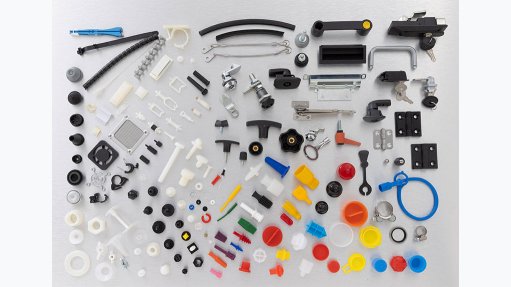
We are responsible manufacturers of essential components. Manufacturing 80 million parts a week, we have over 1 billion parts in stock.
VISIT SHOWROOM
Industrial Nozzles & Systems (Pty) Ltd (Est. 2000) exclusive representative in Southern Africa for LECHLER GmbH (Est. 1879) - Europe's leading...
VISIT SHOWROOM
Announcements
What's On
Subscribe to improve your user experience...
Option 1 (equivalent of R125 a month):
Receive a weekly copy of Creamer Media's Engineering News & Mining Weekly magazine
(print copy for those in South Africa and e-magazine for those outside of South Africa)
Receive daily email newsletters
Access to full search results
Access archive of magazine back copies
Access to Projects in Progress
Access to ONE Research Report of your choice in PDF format
Option 2 (equivalent of R375 a month):
All benefits from Option 1
PLUS
Access to Creamer Media's Research Channel Africa for ALL Research Reports, in PDF format, on various industrial and mining sectors
including Electricity; Water; Energy Transition; Hydrogen; Roads, Rail and Ports; Coal; Gold; Platinum; Battery Metals; etc.
Already a subscriber?
Forgotten your password?
Receive weekly copy of Creamer Media's Engineering News & Mining Weekly magazine (print copy for those in South Africa and e-magazine for those outside of South Africa)
➕
Recieve daily email newsletters
➕
Access to full search results
➕
Access archive of magazine back copies
➕
Access to Projects in Progress
➕
Access to ONE Research Report of your choice in PDF format
RESEARCH CHANNEL AFRICA
R4500 (equivalent of R375 a month)
SUBSCRIBEAll benefits from Option 1
➕
Access to Creamer Media's Research Channel Africa for ALL Research Reports on various industrial and mining sectors, in PDF format, including on:
Electricity
➕
Water
➕
Energy Transition
➕
Hydrogen
➕
Roads, Rail and Ports
➕
Coal
➕
Gold
➕
Platinum
➕
Battery Metals
➕
etc.
Receive all benefits from Option 1 or Option 2 delivered to numerous people at your company
➕
Multiple User names and Passwords for simultaneous log-ins
➕
Intranet integration access to all in your organisation