Innovation key to sector growth


MARCUS WENDELL JACOBS The food industry is no longer competing solely on taste or price, and engineering is therefore no longer a support function but has become one of the primary drivers of food security, competitiveness and economic growth



Creating a competitive advantage has become the South African food and beverage sector’s greatest challenge, with business organisation the Johannesburg Chamber of Commerce and Industry (JCCI) identifying technology, regional trade and value-added manufacturing as key drivers of future growth.
The sector remains resilient despite economic pressure, supported by sophisticated food manufacturing industries, strong agricultural capabilities, established retailers and internationally recognised food brands, says JCCI business development strategist Marcus Wendell Jacobs.
He adds that the industry’s greatest opportunities lie in smart value-added manufacturing, premium and health-conscious products, localising supply chains and expanding exports into Africa.
Jacobs believes that improving efficiency, rather than reducing quality, offers manufacturers the best way to do this while navigating increasing input costs.
“Automation, operational efficiency, energy savings, waste reduction and route optimisation have become increasingly important as companies face pressure on margins.”
He adds that strengthening supply chains will also improve competitiveness. This includes diversifying suppliers, building stronger supplier relationships, increasing local sourcing, investing in forecasting technologies and improving inventory management.
Improving Productivity
Technology investment is gathering pace as manufacturers want to improve productivity while maintaining high food safety standards. Jacobs highlights the growing investment in automated production lines, robotics, AI-assisted quality inspection, predictive maintenance, digital inventory systems and real-time production monitoring in this regard.
He also believes that product innovation is becoming a strategic necessity, combined with strategic marketing methods.
“Consumers have access to information. They know much more than manufactures think . . . I personally believe in a bottom-up approach. Boardrooms need to understand the bazaar”Jacobs declares.
He notes that manufacturers are responding by developing healthier products, reducing sugar and salt, expanding plant-based offerings and introducing functional foods while placing greater emphasis on ingredient transparency, sustainability and convenience.
These changing consumer expectations are also influencing how companies approach sustainability, with businesses investing in solar energy, water recycling, efficient refrigeration, reduced packaging, recyclable materials and waste-to-energy initiatives to strengthen brand reputation.
Technology is central to improving food safety, quality control and supply chain efficiency, he adds.
AfCFTA
Efforts to improve efficiency and competitiveness also create opportunities beyond the domestic market.
Jacobs says the African Continental Free Trade Area (AfCFTA) presents an opportunity to increase exports of higher-value processed foods by building on the country’s strengths in food processing, packaging, logistics, quality assurance and manufacturing expertise.
Success will depend on reducing trade barriers and harmonising standards. Through regular trade events across Africa and internationally, the JCCI connects South African businesses with trade agencies, embassies, High Commissioners and business leaders to support market access, investment and export opportunities.
Jacobs also emphasises the importance of the informal economy, as informal traders, township retailers and community-based enterprises should be viewed as complementary to the formal sector because they play an important role in making food and beverage products accessible to millions of consumers.
This broader approach to the food system is also important for food security, with collaboration across the value chain remaining essential.
“Priority areas include supporting commercial and emerging farmers, investing in irrigation, water infrastructure and logistics, reducing energy constraints, encouraging food processing investment, improving agricultural skills development and expanding export opportunities,” he adds.
Jacobs expects that automation and AI, sustainability, regional trade, changing consumer preferences and using Hi-Tech integration security companies with AI cameras, automated license plate recognition and drone monitoring will have the greatest influence on the industry in the short-term.
“It is imperative to note that the food industry is no longer competing solely on taste or price. Engineering is therefore no longer a support function; it has become one of the primary drivers of food security, competitiveness and economic growth. Competitive intelligence is the name of the game. The intelligence to innovate, to automate, to conserve resources, to understand changing consumer needs, to build resilient supply chains and to establish relationship capital. The countries and companies that engineer smarter food systems will ultimately feed both their people and their economies,” he concludes.
Article Enquiry
Email Article
Save Article
Feedback
To advertise email advertising@creamermedia.co.za or click here


Projects

Latest Multimedia

Latest News


Showroom
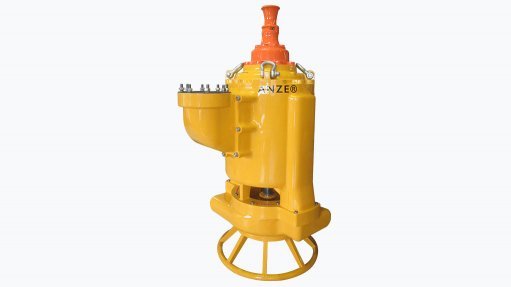
Goodwin Submersible Pumps Africa is sole distributors for Goodwin electrically driven, submersible, abrasion resistance slurry pumps.
VISIT SHOWROOM
SABAT Batteries is a renowned brand in the battery industry, manufacturing a wide range of batteries at its state-of-the-art production facility in...
VISIT SHOWROOM


Announcements
What's On
Subscribe to improve your user experience...
Option 1 (equivalent of R125 a month):
Receive a weekly copy of Creamer Media's Engineering News & Mining Weekly magazine
(print copy for those in South Africa and e-magazine for those outside of South Africa)
Receive daily email newsletters
Access to full search results
Access archive of magazine back copies
Access to Projects in Progress
Access to ONE Research Report of your choice in PDF format
Option 2 (equivalent of R375 a month):
All benefits from Option 1
PLUS
Access to Creamer Media's Research Channel Africa for ALL Research Reports, in PDF format, on various industrial and mining sectors
including Electricity; Water; Energy Transition; Hydrogen; Roads, Rail and Ports; Coal; Gold; Platinum; Battery Metals; etc.
Already a subscriber?
Forgotten your password?
Receive weekly copy of Creamer Media's Engineering News & Mining Weekly magazine (print copy for those in South Africa and e-magazine for those outside of South Africa)
➕
Recieve daily email newsletters
➕
Access to full search results
➕
Access archive of magazine back copies
➕
Access to Projects in Progress
➕
Access to ONE Research Report of your choice in PDF format
RESEARCH CHANNEL AFRICA
R4500 (equivalent of R375 a month)
SUBSCRIBEAll benefits from Option 1
➕
Access to Creamer Media's Research Channel Africa for ALL Research Reports on various industrial and mining sectors, in PDF format, including on:
Electricity
➕
Water
➕
Energy Transition
➕
Hydrogen
➕
Roads, Rail and Ports
➕
Coal
➕
Gold
➕
Platinum
➕
Battery Metals
➕
etc.
Receive all benefits from Option 1 or Option 2 delivered to numerous people at your company
➕
Multiple User names and Passwords for simultaneous log-ins
➕
Intranet integration access to all in your organisation