In mining, transformation can’t come with a pause button

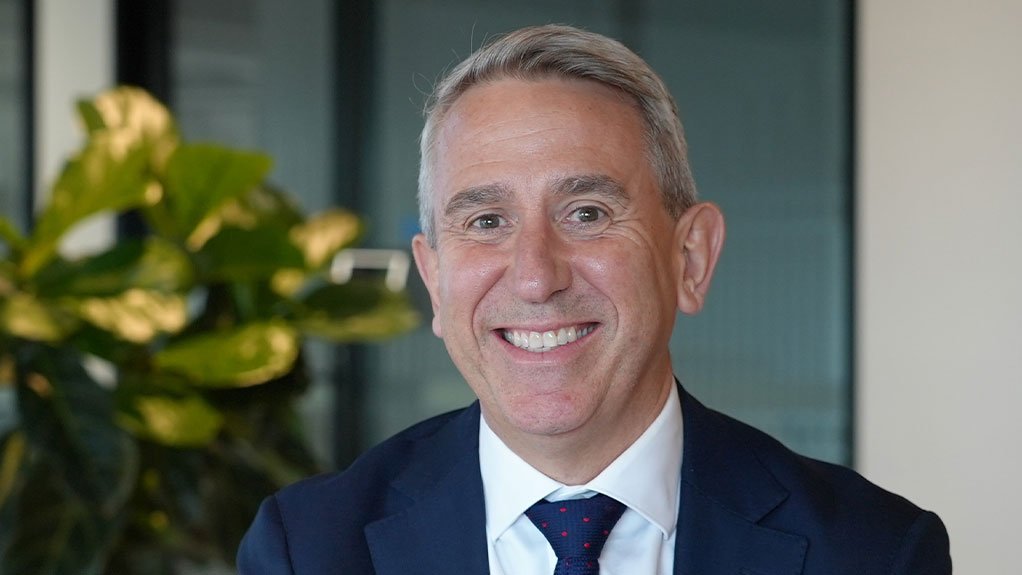



By: Dave McKeering, Executive Managing Director, NTT DATA Australia and New Zealand
At a mining site, the trucks and crews never stop moving. So, when a critical system goes down for an hour, there’s the obvious loss of productivity — but perhaps a shipment also misses its window, or a maintenance team sits idle. And with every passing minute, confidence in the technology supporting the operation dwindles.
We know mining companies need to modernise their technology estates, connect IT and OT securely, strengthen cyber resilience and prepare for AI. But how do you change the technology beneath a 24x7 operation without putting that operation at risk?
There’s no “after the transformation” anymore
Thinking about transformation as a project with a clear end no longer reflects reality. Cloud and AI create new demands on infrastructure, security and governance, while the technology itself keeps changing. There’s always another “next”.
Mining makes continuous change particularly difficult: corporate and operational technology stretches across remote sites, numerous vendors and interconnected partners. You can’t perform an upgrade on Friday evening and assume everyone can wait until Monday if something goes wrong.
The challenge, then, isn’t simply to transform but to keep transforming. To do that without disrupting operations, you need to know how each technology change could affect operational resilience. What depends on this system? Who uses it? What other systems exchange data with it? What happens if it’s unavailable for a day?
And, crucially, what happens if the change goes wrong? “We don’t expect it to” isn’t an answer. Every change introduces risk, and you need to understand and manage it before it affects the operation.
What working in critical environments has taught me
Working in industries where technology failure has serious consequences, I’ve learned that the technology itself is rarely the hardest part of transformation.
Problems are much more likely to emerge when it’s not clear who owns a decision, understands an operational dependency or has authority to stop a change.
Getting that clarity sounds mundane compared with conversations about AI, automation or cloud, but it’s often the difference between a controlled transformation and one full of surprises.
Moving a mining application from ageing infrastructure to a new platform might seem straightforward, but let’s say the application exchanges data with an old system that’s not on the dependency map. When the application comes back online, a site loses an important data feed.
From the project’s perspective, the migration worked. From the mine’s perspective, it didn’t.
Transformation in a critical environment has to be judged by the outcome experienced by the operation, not only by whether the technology change succeeded.
AI foundations are just as important as the model
Predictive maintenance, better resource planning, improved safety and faster analysis of operational data all depend on what’s beneath them — data, infrastructure, networks, applications, security and governance.
If those foundations are fragmented or unreliable, adding AI can expose those weaknesses rather than resolve them.
When a supervisor uses AI to help decide whether to keep a piece of equipment in operation, the model matters, but so do the data quality, the network reliability and the connection security. And what happens when the AI can’t provide an answer?
The more technology becomes involved in operational decision-making, the more important those questions become. It’s why I see operational resilience as an enabler of innovation: If you trust the foundations, you can move faster on top of them.
5 key principles for critical transformation projects
Across the critical environments we work in, I keep coming back to five principles:
- Protect critical operations first: Before deciding what to modernise, understand what you cannot afford to lose and which systems are critical to production, safety, maintenance, logistics and decision-making.
- Build resilience into every stage of change: Make resilience part of the architecture, cyber controls, governance, implementation and ongoing support model from the start. Decide how failures will be detected, contained and recovered at every layer, from site systems and OT to the cloud.
- Establish clear accountability: Be clear about who makes decisions, who carries the risk and who has the authority to stop a change — particularly when multiple technology providers are involved. Accountability should simplify delivery without weakening strategic control.
- Innovate without creating unnecessary complexity: New technology is exciting; complexity isn’t. Simplify and standardise what you already have before adding another platform, AI tool or layer.
- Deliver change with transparency: Be clear about what will change, why it needs to change, what could go wrong and how those risks are being managed. Confidence comes from showing people that you understand the risks and are prepared for them.
The best transformation may be nearly invisible
There probably won’t be a point at which a mining company can say, “That’s it. We’ve modernised.” The challenge is to keep changing without repeatedly putting critical operations at risk.
At a mine operating around the clock, perhaps the better measure is what didn’t happen:
Production didn’t stop, people didn’t lose access to key systems and an unexpected dependency didn’t turn into an incident.
In a critical environment, that can be the most impressive transformation of all.
Dave McKeering is Executive Managing Director of NTT DATA Australia and New Zealand. He works with organisations in critical industries to help them navigate complex transformation, operational resilience and technology modernisation challenges.
Article Enquiry
Email Article
Save Article
Feedback
To advertise email advertising@creamermedia.co.za or click here
Projects
Latest Multimedia

Latest News
Showroom
We are responsible manufacturers of essential components. Manufacturing 80 million parts a week, we have over 1 billion parts in stock.
VISIT SHOWROOM
Announcements
What's On
Subscribe to improve your user experience...
Option 1 (equivalent of R125 a month):
Receive a weekly copy of Creamer Media's Engineering News & Mining Weekly magazine
(print copy for those in South Africa and e-magazine for those outside of South Africa)
Receive daily email newsletters
Access to full search results
Access archive of magazine back copies
Access to Projects in Progress
Access to ONE Research Report of your choice in PDF format
Option 2 (equivalent of R375 a month):
All benefits from Option 1
PLUS
Access to Creamer Media's Research Channel Africa for ALL Research Reports, in PDF format, on various industrial and mining sectors
including Electricity; Water; Energy Transition; Hydrogen; Roads, Rail and Ports; Coal; Gold; Platinum; Battery Metals; etc.
Already a subscriber?
Forgotten your password?
Receive weekly copy of Creamer Media's Engineering News & Mining Weekly magazine (print copy for those in South Africa and e-magazine for those outside of South Africa)
➕
Recieve daily email newsletters
➕
Access to full search results
➕
Access archive of magazine back copies
➕
Access to Projects in Progress
➕
Access to ONE Research Report of your choice in PDF format
RESEARCH CHANNEL AFRICA
R4500 (equivalent of R375 a month)
SUBSCRIBEAll benefits from Option 1
➕
Access to Creamer Media's Research Channel Africa for ALL Research Reports on various industrial and mining sectors, in PDF format, including on:
Electricity
➕
Water
➕
Energy Transition
➕
Hydrogen
➕
Roads, Rail and Ports
➕
Coal
➕
Gold
➕
Platinum
➕
Battery Metals
➕
etc.
Receive all benefits from Option 1 or Option 2 delivered to numerous people at your company
➕
Multiple User names and Passwords for simultaneous log-ins
➕
Intranet integration access to all in your organisation