From childhood garage to the forefront of sailplane engineering

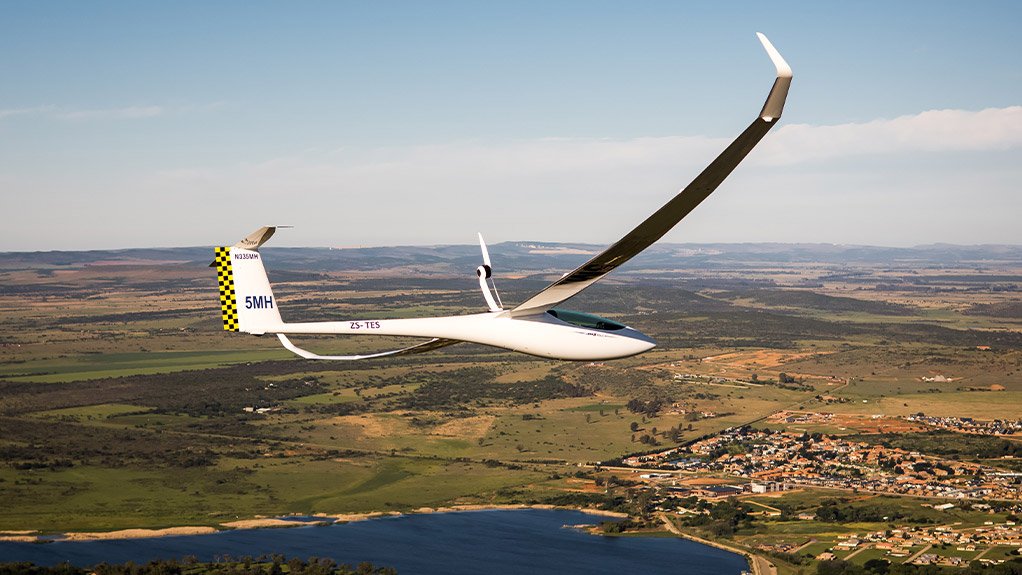
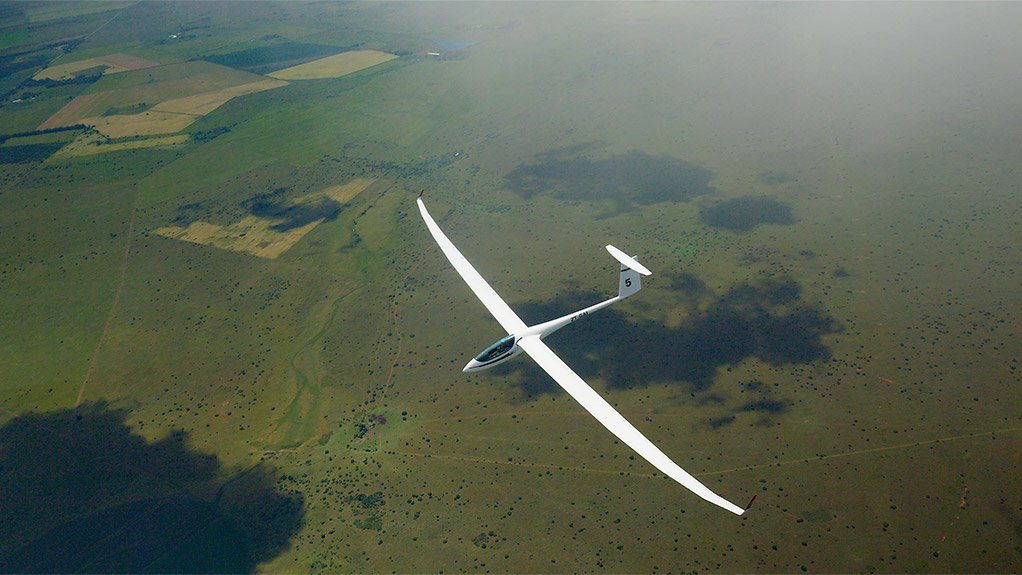
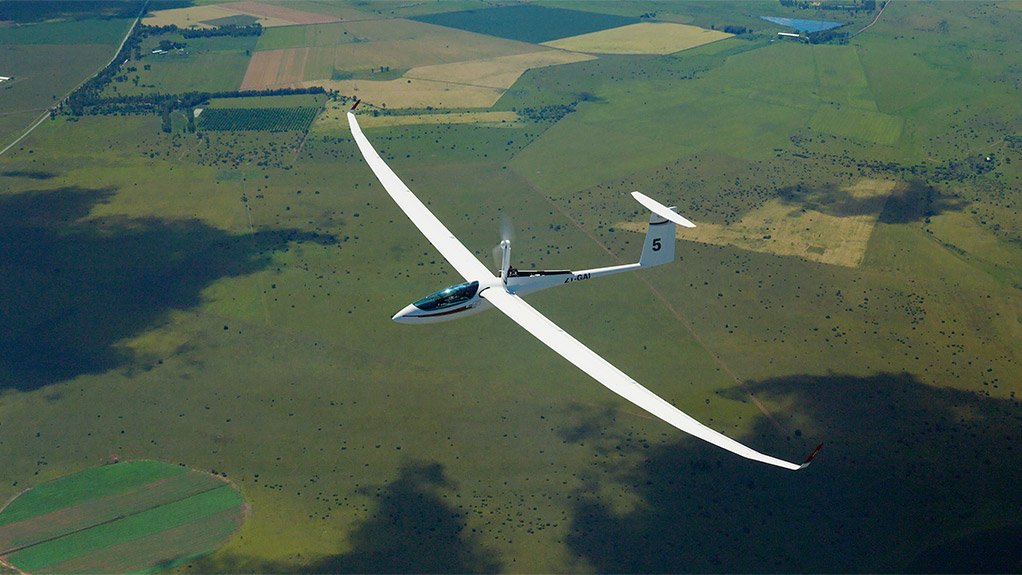

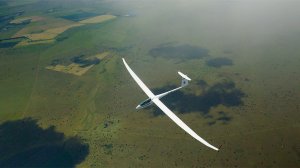
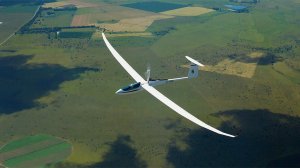


What began with a childhood fascination in a garage in Bloemhof has grown into a South African engineering success story reaching international skies.
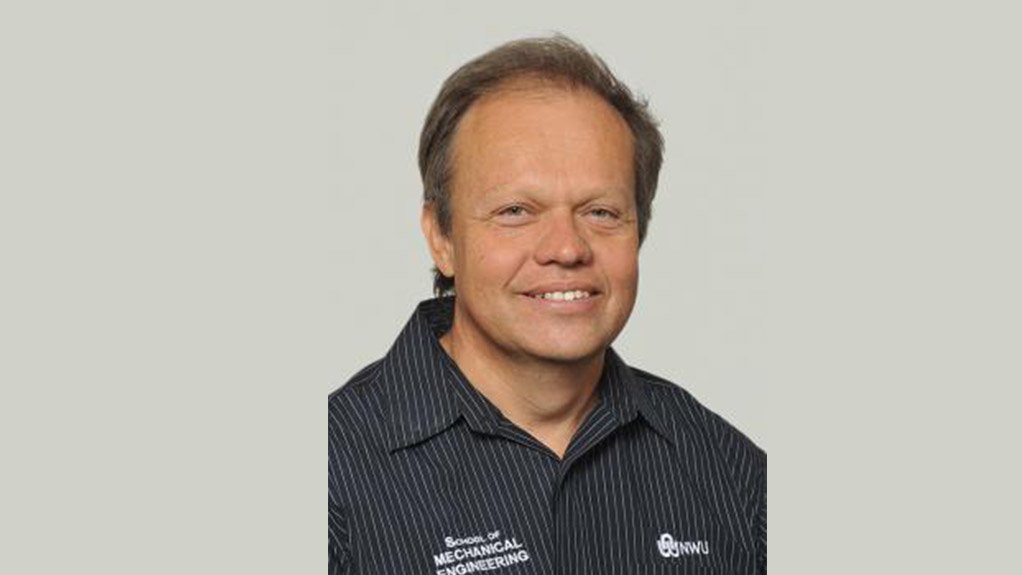
North-West University’s (NWU’s) aircraft development journey can be traced back to Professor Attie Jonker’s childhood in Bloemhof, where his father, a science and mathematics teacher, built a glider in the family garage because he could not afford a factory-built one.
For young Jonker, watching his father turn an idea into a working aircraft was more than a childhood memory. It became the foundation of a lifelong ambition.
By age of 15, he was already imaging creating “the best glider in the world”.
“I grew up watching my father tackle monumental projects with determination and ingenuity. This inspired me to dream big,” recalls the Director of the School of Mechanical Engineering.
That ambition shaped the decisions that followed, including studying engineering at NWU, where the dream he had carried since childhood began to take shape.
In his final year, Jonker designed a glider as part of his engineering project. The design won the national award for the best engineering project in South Africa, laying an important foundation for what would eventually become Jonker Sailplanes.
Together with Prof Johan Bosman, an Associate Professor and Postgraduate Programme Manager for Mechanical Engineering at NWU, Jonker embarked on a 20-year journey to turn that vision into reality. Bosman is a professional engineer whose expertise includes computational fluid dynamics and aerodynamics.
In 2006, the JS1 made its maiden flight, marking a significant milestone in the development of a South African sailplane manufacture with ambitions beyond the country’s borders.
Childhood Dream Meets Engineering Precision
From the beginning, Jonker Sailplanes took an engineering-led approach to a glider design.
Rather than relying primarily on decades of accumulated industry experience, the team developed detailed mathematical models to optimise every component in its gliders.
This approach enabled Jonker Sailplanes to compete directly with established manufacturers that had been operating for more than a century, showing how engineering knowledge and innovation could help a South African company enter a highly specialised global market.
The company’s development journey has produced a series of aircraft, each building on the engineering and performance of its predecessors.
The JS1 Revelation became a strong competitor in international competitions, followed by the JS1C, which incorporated performance and technological upgrades.
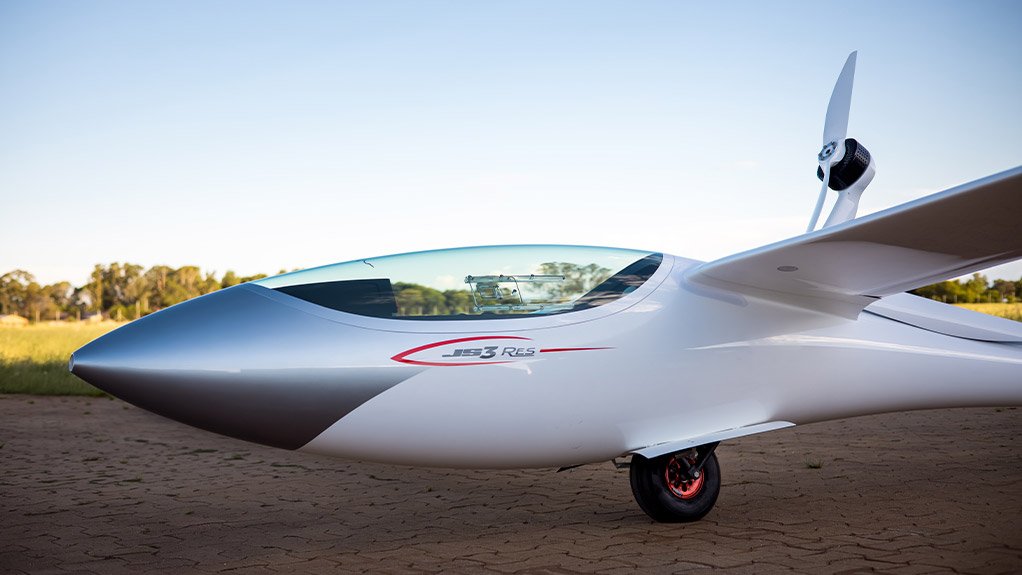
The JS3 Rapture, which first flew in 2016, became another major milestone. More than 250 JS3 gliders have been sold worldwide, and the model has achieved multiple World Championship victories.
The evolution continued with the JS2 Revenant, designed for higher performance and versatility, and the JS5 open class glider with a 24-m wingspan which pushes that boundaries of glider performance.
Jonker Sailplanes leads the charge in sustainable aviation, developing electric-powered gliders that meet Europe’s demand for environment friendly flight solutions. These models leverage cutting-edge battery technology and advanced aerodynamics to set new performance and sustainability benchmarks.
Taking South African Engineering to the World
Jonker Sailplanes’ development has extended beyond aircraft design to advanced manufacturing and international markets.
Based in Potchefstroom, the company has expanded its facilities to meet growing demand, strengthening the city’s position as a base for specialised aircraft manufacturing.
The impact of the company extends across economic, educational and global spheres. The company employs about 150 people, including 30 people focused on research and development and 120 people working in production. It produces 40 to 50 gliders a year, with a two-to three-year order book.
All gliders are exported, bringing foreign revenue into South Africa and demonstrating the ability of a locally based engineering company to compete in a highly specialised international market.
The expansion of manufacturing facilities in Potchefstroom is intended to allow Jonker Sailplanes to scale production and respond to growing global demand.
Innovation Beyond the Sailplane
The engineering expertise developed through the sailplane programme has also found applications beyond aviation.
The collaboration between Jonker Sailplanes and NWU has extended to the university’s Solar Car Project, where technologies and knowledge developed through sailplane engineering, including advanced composites and aerodynamic modelling have been adapted for a solar car development.
The collaboration demonstrates how engineering knowledge developed for one application can be transferred to another, creating opportunities for cross disciplinary innovation.
Where Education Meets Industry
The relationship between Jonker Sailplanes and NWU is an important part of the company’s development and success.
Every year, undergraduate and postgraduate engineering students collaborate on various projects, ensuring a continuous pipeline of fresh ideas and talent.
The company also recruits top-performing final-year engineering students, creating a pathway for engineering graduates to move from university into a highly specialised industry.
For students, the partnership provides exposure to practical engineering challenges and the opportunity to apply their academic knowledge to real-world projects.
For NWU, it strengthens the university’s role in applied engineering research and demonstrates the value of close collaboration between academia and industry.
The collaboration also creates a continuous pipeline of engineering talents and ideas, connecting the university classroom and laboratory with a South African company competing in global markets.
Master’s and doctoral applications are open. Apply now: https://studies.nwu.ac.za/studies/apply
Article Enquiry
Email Article
Save Article
Feedback
To advertise email advertising@creamermedia.co.za or click here
Projects

Latest Multimedia


Latest News


Showroom
Rentech provides renewable energy products and services to the local and selected African markets. Supplying inverters, lithium and lead-acid...
VISIT SHOWROOM
Press Office
Announcements
What's On
Subscribe to improve your user experience...
Option 1 (equivalent of R125 a month):
Receive a weekly copy of Creamer Media's Engineering News & Mining Weekly magazine
(print copy for those in South Africa and e-magazine for those outside of South Africa)
Receive daily email newsletters
Access to full search results
Access archive of magazine back copies
Access to Projects in Progress
Access to ONE Research Report of your choice in PDF format
Option 2 (equivalent of R375 a month):
All benefits from Option 1
PLUS
Access to Creamer Media's Research Channel Africa for ALL Research Reports, in PDF format, on various industrial and mining sectors
including Electricity; Water; Energy Transition; Hydrogen; Roads, Rail and Ports; Coal; Gold; Platinum; Battery Metals; etc.
Already a subscriber?
Forgotten your password?
Receive weekly copy of Creamer Media's Engineering News & Mining Weekly magazine (print copy for those in South Africa and e-magazine for those outside of South Africa)
➕
Recieve daily email newsletters
➕
Access to full search results
➕
Access archive of magazine back copies
➕
Access to Projects in Progress
➕
Access to ONE Research Report of your choice in PDF format
RESEARCH CHANNEL AFRICA
R4500 (equivalent of R375 a month)
SUBSCRIBEAll benefits from Option 1
➕
Access to Creamer Media's Research Channel Africa for ALL Research Reports on various industrial and mining sectors, in PDF format, including on:
Electricity
➕
Water
➕
Energy Transition
➕
Hydrogen
➕
Roads, Rail and Ports
➕
Coal
➕
Gold
➕
Platinum
➕
Battery Metals
➕
etc.
Receive all benefits from Option 1 or Option 2 delivered to numerous people at your company
➕
Multiple User names and Passwords for simultaneous log-ins
➕
Intranet integration access to all in your organisation