Crisis exposes Africa’s vulnerabilities, opportunities

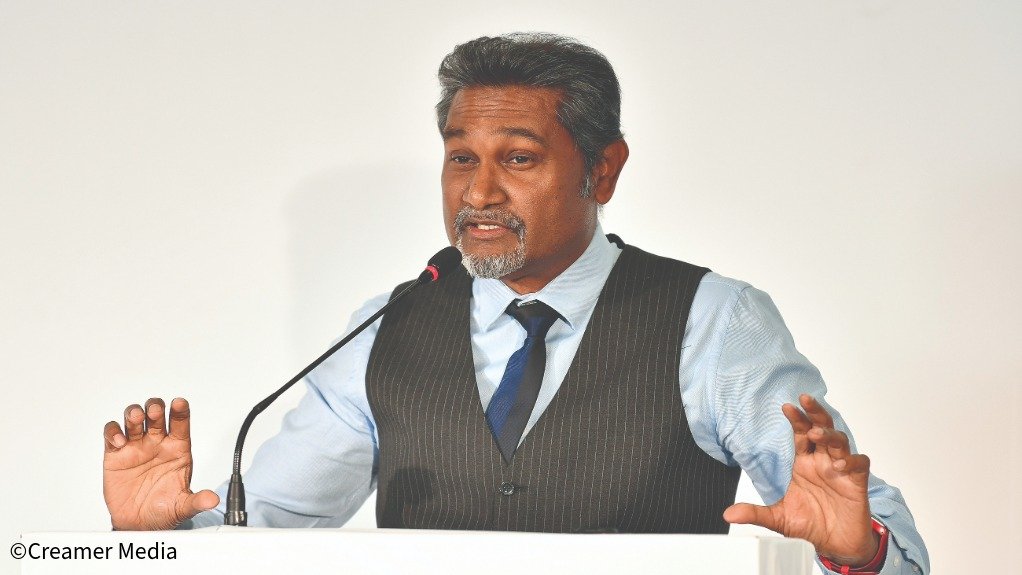
DHESIGEN NAIDOO The Gulf crisis has the potential to serve as a catalyst for decisive actions that can benefit African countries while reducing exposure to global instabilities
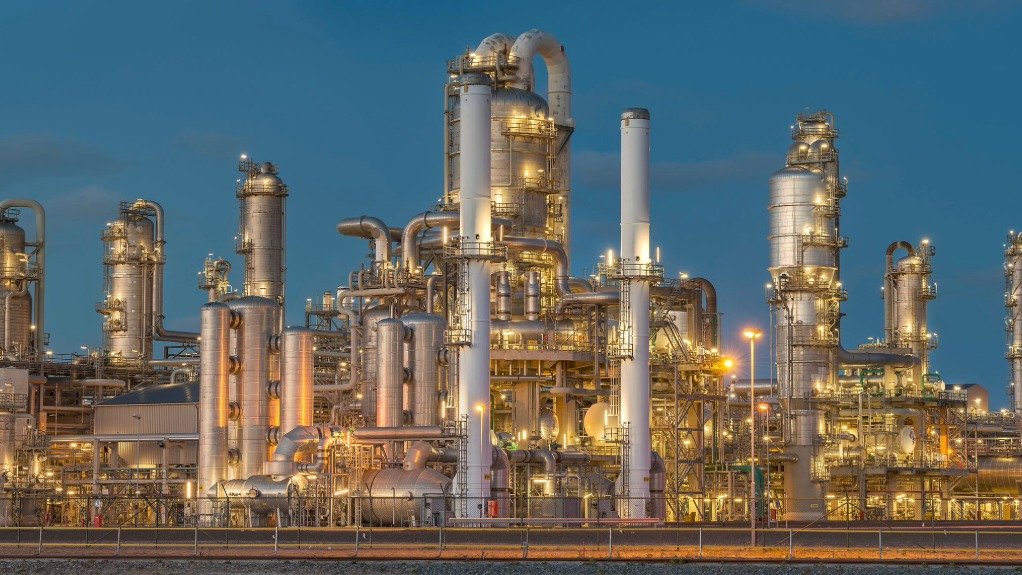
FAR-REACHING IMPACTS The disruption of the Strait of Hormuz presents significant challenges for many African countries lacking adequate crude oil supply and domestic refining capacity


The global repercussions of the ongoing US-Iran War and the Persian Gulf crisis have exacerbated the urgency for Africa to accelerate its energy transition and industrialisation goal, says independent research organisation Institute for Security Studies senior research associate Dhesigen Naidoo.
“The politics of what is happening in the Gulf is quite troubling because it goes hand in hand with the genocide in Gaza. For some parties, it functions as an alternative strategy to consolidate the impact of the genocide.”
Additionally, there is a shift from unipolarity, from the US having been the sole global superpower to a multipolar world of competing power centres. While some countries are embracing this transition, “those with the most to lose from the end of American dominance are pushing back hard”, Naidoo explains.
Unlike the medium- to long-term repercussions of geopolitical flashpoints in Ukraine, Venezuela, Cuba or Greenland, the disruption of the Strait of Hormuz, in the Persian Gulf, is uniquely immediate in its global impact.
“The effects were felt on the very day of the bombing, with global oil prices and supply chains reacting instantly,” he adds.
About 20% of the world’s crude oil and natural gas transits through the Strait of Hormuz. However, the real impact of the closure exceeds this, as those who can afford to are stockpiling resources as a precaution.
This presents significant challenges for many African countries lacking adequate crude oil supply and domestic refining capacity, particularly for countries that exclusively import refined fuels, as South Africa does with diesel.
African countries are also pressured by resulting increased logistics costs, further straining Africa’s import-export economies, which are already under stress from disruptions to the Panama and Suez canals.
The closure of the Strait of Hormuz has also resulted in disruptions to urea-based fertiliser exports from the Middle East, which is critical to the global agriculture industry.
Mitigation Opportunities
Despite these compounding pressures, Naidoo argues that the Gulf crisis has the potential to serve as a catalyst for decisive actions that can benefit African countries while reducing exposure to global instabilities.
He points out that reducing fossil fuel dependency directly reduces exposure to Gulf instability. While South Africa entered COP26, held in Glasgow in 2021, with ambitious commitments under the Just Energy Transition Partnership, that momentum has stalled.
However, renewing it would secure domestic energy supply and potentially open an international market in the goods and services others need to make the same transition.
The crisis also creates an opportunity for continental unity. As global markets tighten, African countries should prioritise intra-continental trade by leveraging the African Continental Free Trade Area (AfCFTA) Agreement and the African Union Agenda 2063.
Naidoo also argues that economic survival is a common project that can “cut through divisions” among African countries and drive collaboration.
“No single country on this continent is going to be able to do this on its own. Every country can do a little better independently, but if you want a frame-shift in the status of your people, you have to work together.”
He avers that targeted incentives and infrastructure investment aligned with AfCFTA and Agenda 2063 would drive industrialisation, attract capital and strengthen Africa’s economic position, building manufacturing and refining capacity on the continent.
Acceleration towards a reasonable level of self-sufficiency serves as the foundation for global competitiveness, with the Dangote Petroleum Refinery, operated by multinational industrial conglomerate Dangote Industries, in Nigeria, demonstrating this principle.
“Having built refinery capacity in West Africa, the group is now expanding into East Africa, including Kenya. The logic is straightforward, raw resources alone do not generate high value, processing capacity does,” Naidoo adds.
In a similar manner, chemicals and energy company Sasol has the scale and capability to drive chemicals industrialisation across Africa and establish itself as a “genuinely continental” player.
It is one of the largest petrochemicals beneficiation operations in the Southern African Development Community and already operates in multiple countries.
“It’s retreat into survival mode is, therefore, highly problematic, not only for South Africa but for the continent,” says Naidoo.
The same dynamic occurs in the fertiliser industry. Chemicals producer Foskor began as a South African State-owned corporation to ensure strong domestic fertiliser production before privatisation eroded some of that capacity.
However, other countries are revisiting the importance of building domestic fertiliser production, including Algeria and Egypt.
He also posits that the fossil-fuel fertiliser crisis could stimulate agroecology, which focuses on organic farming methods that preserve biodiversity and position Africa as a niche supplier in a global market that increasingly demands both.
Naidoo adds that, since the African continent spans both hemispheres, it has a natural agricultural advantage, with the potential to drive a 12-month cycle of circulating produce across the continent, which remains largely unexploited, regardless of season.
“The Strait of Hormuz situation is difficult and genuinely tragic, but it can serve as the catalyst for a far more sustainable future,” he concludes.
Article Enquiry
Email Article
Save Article
Feedback
To advertise email advertising@creamermedia.co.za or click here
Projects
Latest Multimedia


Latest News
Showroom
M and J Mining are leading suppliers of physical support systems as used by the underground mining industry. Our selection of products are not...
VISIT SHOWROOM
Multotec, recognised industry leaders in metallurgy and process engineering help mining houses across the world process minerals more efficiently,...
VISIT SHOWROOM
Announcements
What's On
Subscribe to improve your user experience...
Option 1 (equivalent of R125 a month):
Receive a weekly copy of Creamer Media's Engineering News & Mining Weekly magazine
(print copy for those in South Africa and e-magazine for those outside of South Africa)
Receive daily email newsletters
Access to full search results
Access archive of magazine back copies
Access to Projects in Progress
Access to ONE Research Report of your choice in PDF format
Option 2 (equivalent of R375 a month):
All benefits from Option 1
PLUS
Access to Creamer Media's Research Channel Africa for ALL Research Reports, in PDF format, on various industrial and mining sectors
including Electricity; Water; Energy Transition; Hydrogen; Roads, Rail and Ports; Coal; Gold; Platinum; Battery Metals; etc.
Already a subscriber?
Forgotten your password?
Receive weekly copy of Creamer Media's Engineering News & Mining Weekly magazine (print copy for those in South Africa and e-magazine for those outside of South Africa)
➕
Recieve daily email newsletters
➕
Access to full search results
➕
Access archive of magazine back copies
➕
Access to Projects in Progress
➕
Access to ONE Research Report of your choice in PDF format
RESEARCH CHANNEL AFRICA
R4500 (equivalent of R375 a month)
SUBSCRIBEAll benefits from Option 1
➕
Access to Creamer Media's Research Channel Africa for ALL Research Reports on various industrial and mining sectors, in PDF format, including on:
Electricity
➕
Water
➕
Energy Transition
➕
Hydrogen
➕
Roads, Rail and Ports
➕
Coal
➕
Gold
➕
Platinum
➕
Battery Metals
➕
etc.
Receive all benefits from Option 1 or Option 2 delivered to numerous people at your company
➕
Multiple User names and Passwords for simultaneous log-ins
➕
Intranet integration access to all in your organisation