Corridor makes significant progress

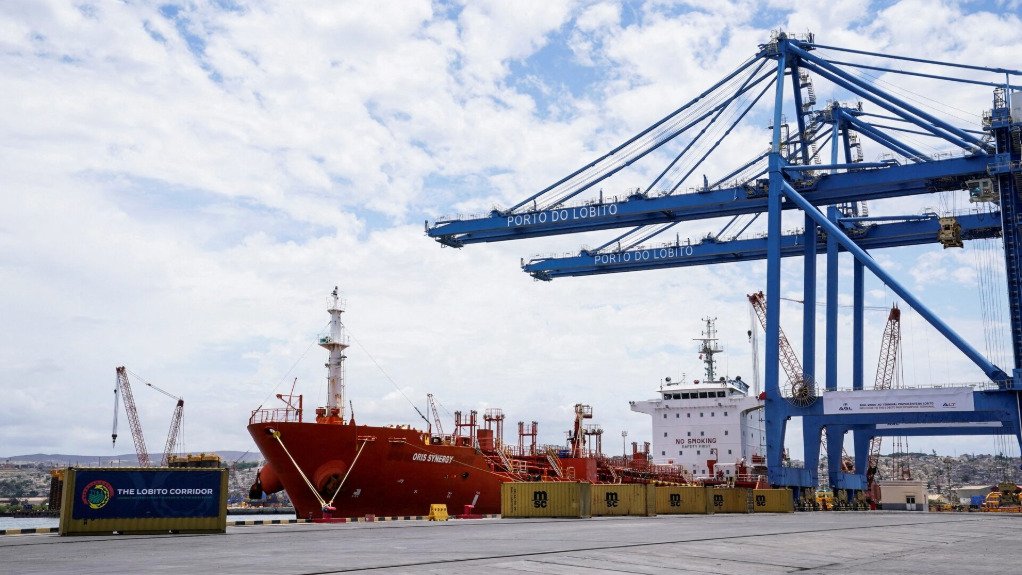

PORT OF CALL The Lobito Port in Angola is the focal point of the Lobito Corridor which routes through DRC, Angola and Zambia
KAFUTA MULEMBA An increase in movement of minerals, agricultural products, fuel and general cargo through the corridor has already been experienced as the corridor develops further



The development and use of the Lobito Corridor – a multimodal logistics corridor that spans Angola, the Democratic Republic of Congo (DRC) and Zambia – has progressed significantly over the past 12 months in transitioning from a collection of national infrastructure investments into a coordinated regional economic corridor with an established governance structure, says Lobito Corridor Transit Transport Facilitation Agency (LCTTFA) secretariat special adviser to the executive Kafuta Mulemba.
There has been increased movement of minerals, agricultural products, fuel and general cargo through the corridor, he says, adding that among the significant developments are the signing of the LCTTFA agreement in 2023, followed by the establishment of the Lobito Corridor secretariat and its more recent operationalisation in July 2025.
The secretariat provides a dedicated institutional mechanism to coordinate the development and management of the Lobito Corridor on behalf of Angola, the DRC and Zambia.
Mulemba highlights that the LCTTFA secretariat has significantly strengthened coordination among member States, corridor institutions, development partners and private-sector stakeholders, consequently enabling technical, operational and policy challenges to be addressed through structured regional mechanisms.
In addition, progress on the Angola–Zambia greenfield railway project has progressed from completed feasibility studies to the engineering, procurement and construction (EPC) stage, marking another significant milestone in the development of the corridor.
According to the Africa Finance Corporation (AFC), the EPC contract award process is expected to conclude next month.
“Our development partners the African Development Bank, World Bank, the European Union, the US government and others, and private-sector investors – notably the AFC, have continued to support the project, with AFC leading development under a public-private partnership build-operate-transfer model,” he adds.
Mulemba adds that trade facilitation, regulatory harmonisation and corridor governance initiatives have advanced to improve the efficiency and competitiveness of the Lobito Corridor.
Primary Purpose, Challenges
Mulemba emphasises that the Lobito Corridor is more than a transport corridor; it is a strategic regional economic development corridor jointly developed by Angola, the DRC and Zambia to drive trade, investment, industrialisation and regional integration.
The main goal of the Lobito Corridor is to create an efficient, competitive and integrated multimodal transport and logistics system linking the Central African Copperbelt region – a landlocked region abundant in critical minerals, to the Port of Lobito in Angola, says Mulemba.
By providing a shorter and more competitive export route, the corridor reduces transport costs and transit times for minerals, agricultural products, fuel and general cargo while improving access to global markets.
Despite heavy rains affecting certain sections of the Benguela railway, Mulemba says the Lobito Atlantic Railway (LAR) has continued to operate freight services along the corridor while rehabilitation works continue.
Given the Lobito Corridor’s multimodal nature, contingency measures have been implemented by the operator – LAR, supported by the use of road transport on the damaged sections to maintain cargo flows while repairs are undertaken.
Mulemba adds that the vast majority of the Angolan railway network remains operational and in good condition.
According to Mulemba, being an economic development corridor, the Lobito Corridor is comprised of multiple infrastructure, logistics, institutional and economic development projects and investments and, therefore, the technical, operational and regulatory challenges vary depending on the specific component under consideration.
Technical challenges include the need for rehabilitation on certain rail sections in the DRC; climate-related infrastructure impacts, such as floods and heavy rainfall affecting transport infrastructure; the development of new infrastructure, particularly the Angola to Zambia railway link; and the expansion of logistics platforms, dry ports and intermodal facilities required to support growing cargo volumes and industrial development.
Operational challenges encompass enhancing rail and port capacities to support rising demand; increasing smooth integration of multimodal transportation between rail, road and maritime systems; and reducing transit times to improve cross-border logistics efficiency.
Critical to optimising overall operational performance is cargo visibility, which must be strengthened, and data-sharing among corridor stakeholders, which must be encouraged, adds Mulemba.
He says that enhancing cargo visibility through digital tracking systems and improving data sharing among corridor stakeholders will be essential to improving operational efficiency, transparency and supply chain reliability.
Regulatory and institutional challenges include harmonising transport legislation and regulations across the three member States, standardising operational procedures and technical requirements, aligning customs and trade facilitation measures, as well as developing corridor-wide, data-exchange frameworks and digital systems.
Addressing these issues was the motivation for the member States establishing the LCTTFA secretariat in January 2025, with the mandate to coordinate corridor development and facilitate implementation of harmonised measures across the Lobito Corridor.
“Through its governance structures, including technical committees, ministerial oversight mechanisms and specialised working groups, the LCTTFA secretariat is working to promote regulatory convergence, trade facilitation, infrastructure coordination and operational efficiency,” concludes Mulemba.
Article Enquiry
Email Article
Save Article
Feedback
To advertise email advertising@creamermedia.co.za or click here
Research Reports


Projects

Latest Multimedia


Latest News


Showroom
Stewarts & Lloyds is a leading steel, tube, and engineering product supplier in South Africa.
VISIT SHOWROOM
Established in 1933, EKATO is the world leader in agitation technology, supplying agitators for processes and applications such as chemicals and...
VISIT SHOWROOM



Press Office
Announcements
What's On
Subscribe to improve your user experience...
Option 1 (equivalent of R125 a month):
Receive a weekly copy of Creamer Media's Engineering News & Mining Weekly magazine
(print copy for those in South Africa and e-magazine for those outside of South Africa)
Receive daily email newsletters
Access to full search results
Access archive of magazine back copies
Access to Projects in Progress
Access to ONE Research Report of your choice in PDF format
Option 2 (equivalent of R375 a month):
All benefits from Option 1
PLUS
Access to Creamer Media's Research Channel Africa for ALL Research Reports, in PDF format, on various industrial and mining sectors
including Electricity; Water; Energy Transition; Hydrogen; Roads, Rail and Ports; Coal; Gold; Platinum; Battery Metals; etc.
Already a subscriber?
Forgotten your password?
Receive weekly copy of Creamer Media's Engineering News & Mining Weekly magazine (print copy for those in South Africa and e-magazine for those outside of South Africa)
➕
Recieve daily email newsletters
➕
Access to full search results
➕
Access archive of magazine back copies
➕
Access to Projects in Progress
➕
Access to ONE Research Report of your choice in PDF format
RESEARCH CHANNEL AFRICA
R4500 (equivalent of R375 a month)
SUBSCRIBEAll benefits from Option 1
➕
Access to Creamer Media's Research Channel Africa for ALL Research Reports on various industrial and mining sectors, in PDF format, including on:
Electricity
➕
Water
➕
Energy Transition
➕
Hydrogen
➕
Roads, Rail and Ports
➕
Coal
➕
Gold
➕
Platinum
➕
Battery Metals
➕
etc.
Receive all benefits from Option 1 or Option 2 delivered to numerous people at your company
➕
Multiple User names and Passwords for simultaneous log-ins
➕
Intranet integration access to all in your organisation