AI productivity applications gaining momentum


JOHAN POTGIETER AI-driven predictive analytics can forecast equipment behaviour seven to 20 days in advance, protecting assets and staff



Following upward automation integration trends, AI systems are gaining traction in hazardous zones to improve safety, productivity and equipment longevity, says automation and digitalisation specialist Schneider Electric cluster industrial software lead Johan Potgieter.
Manually gathering, inputting and interpreting operational data for enterprise resource planning (ERP) and business intelligence tools can be time consuming and requires multiple staff, often taking the staff up to three days.
In contrast, AI can acquire and read sensor data in milliseconds, compare it against historical records and produce predictions in less than five seconds, he says.
AI-driven predictive analytics can also forecast equipment behaviour seven to 20 days in advance, protecting assets and staff.
However, AI can learn only from the data it receives. In mining, systems typically run in closed, localised environments, which contains the AI’s scope, Potgieter explains.
Schneider Electric’s AI platform feeds up to five years of historical data into its models to train the system, while predictions for specific assets start developing after about seven days.
“AI can do nothing on its own. You need the sensors. You need equipment that [can] feed it accurate, detailed information to train it and then it can give you predictive analytics or safety [warnings].”
Schneider Electric’s software is hardware-agnostic; therefore, clients can install any equipment, including devices without cybersecurity.
However, in a turnkey solution, the company’s network, drive and human-machine interface layers carry built-in, multi-layered cybersecurity products, while smart drives also send pre-aggregated, tested analytics to the AI platform.
With underground systems, such as ventilation and cooling infrastructure, being safety-critical and governed by mining regulations, Potgieter says communication systems require certified cabling and network switches to secure data between surface and underground, as failures can be fatal.
In these environments, enhanced sensors improve safety by measuring atmosphere, humidity and temperature, while AI combines these readings into health-risk warnings.
The data feeds into a unified operations platform linked to ERP, health and safety, and transport systems. Ground movement is also monitored continuously at millisecond intervals, adds Potgieter.
However, he acknowledges that machines can fail, human input can get lost and data centres can overheat or lose power, thereby creating gaps in the collected data. To ensure data process continuity, modern systems use “late-arriving data” processing – whereby information that does not reach the system in the expected timeframe – is captured and processed later on to recover and rebuild lost data.
Schneider Electric mitigates potential data losses by localising data collection through on-site, wired data loggers that aggregate data before sending it to the AI system. Consequently, the plant can continue to operate and issue warnings even if the link is lost.
Equipment Safety
Operational safety applies to assets as well as people, says Potgieter, elaborating that traditional maintenance schedules can lead to the over-maintenance of lightly used equipment and under-maintenance of equipment running continuously.
To prevent this, Schneider Electric’s AI system uses actual operating conditions, including temperature and feed metrics, to schedule maintenance accordingly.
When equipment is flagged for maintenance or replacement, the system identifies a certified, trained technician, checks the employee shift pattern to avoid fatigue-related errors, and confirms whether parts are in stock, contacting the vendor to order the part if not.
The system then issues a work order specifying the tools required and how long the technician may remain in the area, says Potgieter.
On site, the technician can scan a quick-response, or QR, code or photograph the installation on a mobile device, after which AI verification will confirm whether the electrical connections and installation are correct.
If there is a problem, a safety interlock prevents startup and a supervisor is called. If it cannot be resolved, the vendor can inspect the asset through a live view to prevent faulty installations and startup complications.
AI systems’ being scalable and fit for purpose enable them to offer value for various operations, from low-cost setups for a junior miner to full value-chain optimisation.
Article Enquiry
Email Article
Save Article
Feedback
To advertise email advertising@creamermedia.co.za or click here
Research Reports


Projects

Latest Multimedia
Latest News
Showroom
AxFlow AQS Liquid Transfer (Pty) Ltd is an Importer and Distributor of Pumps in Southern Africa
VISIT SHOWROOM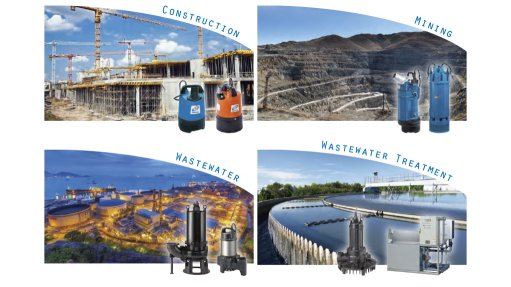
Tsurumi Pumps Africa is a specialist supplier of Japanese-engineered submersible pumping solutions, serving customers across the African continent.
VISIT SHOWROOM



Announcements
What's On
Subscribe to improve your user experience...
Option 1 (equivalent of R125 a month):
Receive a weekly copy of Creamer Media's Engineering News & Mining Weekly magazine
(print copy for those in South Africa and e-magazine for those outside of South Africa)
Receive daily email newsletters
Access to full search results
Access archive of magazine back copies
Access to Projects in Progress
Access to ONE Research Report of your choice in PDF format
Option 2 (equivalent of R375 a month):
All benefits from Option 1
PLUS
Access to Creamer Media's Research Channel Africa for ALL Research Reports, in PDF format, on various industrial and mining sectors
including Electricity; Water; Energy Transition; Hydrogen; Roads, Rail and Ports; Coal; Gold; Platinum; Battery Metals; etc.
Already a subscriber?
Forgotten your password?
Receive weekly copy of Creamer Media's Engineering News & Mining Weekly magazine (print copy for those in South Africa and e-magazine for those outside of South Africa)
➕
Recieve daily email newsletters
➕
Access to full search results
➕
Access archive of magazine back copies
➕
Access to Projects in Progress
➕
Access to ONE Research Report of your choice in PDF format
RESEARCH CHANNEL AFRICA
R4500 (equivalent of R375 a month)
SUBSCRIBEAll benefits from Option 1
➕
Access to Creamer Media's Research Channel Africa for ALL Research Reports on various industrial and mining sectors, in PDF format, including on:
Electricity
➕
Water
➕
Energy Transition
➕
Hydrogen
➕
Roads, Rail and Ports
➕
Coal
➕
Gold
➕
Platinum
➕
Battery Metals
➕
etc.
Receive all benefits from Option 1 or Option 2 delivered to numerous people at your company
➕
Multiple User names and Passwords for simultaneous log-ins
➕
Intranet integration access to all in your organisation