
Africa’s oil and gas growth outlook trimmed on FID delays

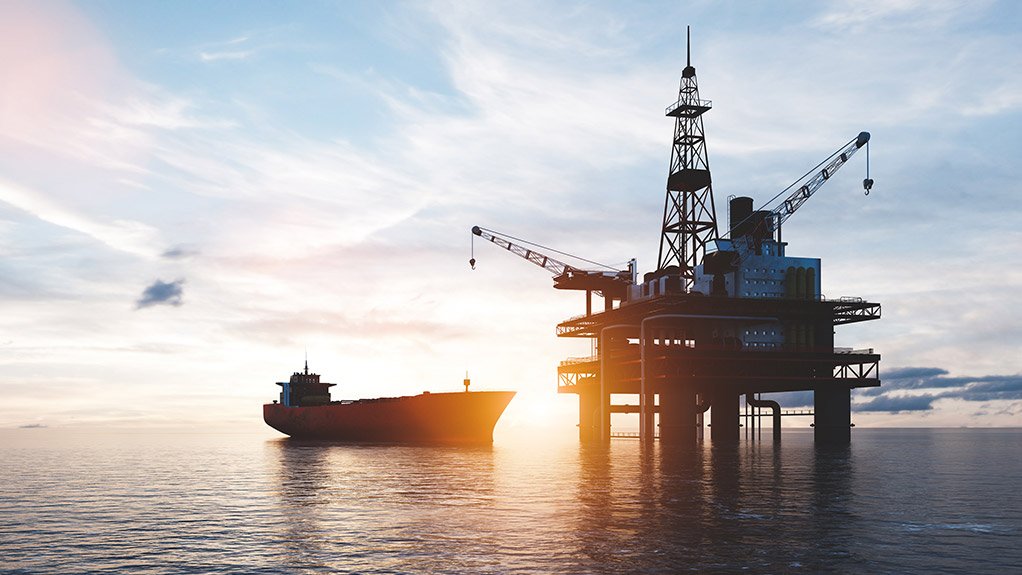



Africa’s hydrocarbon output is still forecast to climb to about 12.5-million barrels of oil equivalent a day by 2030. However, the outlook is now lower than it was a year ago, as slower final investment decisions (FIDs), most notably on Namibia’s Venus project, push back new production.
The revised outlook is contained in the ‘State of African Energy 2027 Outlook’, compiled by the African Energy Chamber (AEC) and S&P Global and released at African Energy Week in South Africa, in October.
Production is expected to reach about 11-million barrels of oil equivalent a day in 2027. The report says this is slightly below the previous forecast because of production revisions. The 2030 figure is also lower than expected in the 2026 edition, owing to what the authors describe as FID rationalisation.
Namibia is a significant factor. First oil from Total-Energies’ Venus development, with capacity of about 150 000 bbl, was expected in 2030/31. Delays related to the FID now suggest a 2031 start-up, which the report says contributes to the downward revision of the continent’s 2030 outlook.
Once Venus is on line, Namibia could still become a major producer. The Mopane development is expected to follow about two years later, adding a further 170 000 bbl/d and taking national output above 300 000 bbl/d by the mid-2030s. If the Rhino/Azule development proceeds on a similar timeline, Namibian production could approach 400 000 bbl/d.
Old Producers Still Dominate
For all the attention on frontier basins, most of Africa’s oil and gas still comes from five ageing producers. Algeria, Nigeria, Libya, Angola and Egypt account for about 80% of the continent’s hydrocarbon output, with Algeria and Nigeria the largest at about 2.5-million barrels of oil equivalent a day each.
Keeping those barrels flowing is getting harder. Angola’s output has roughly halved since its 2008 peak and is expected to slip below one-million barrels a day in 2027, despite fiscal incentives aimed at getting more out of mature fields. In Algeria, new gas projects are expected to do little more than hold total output flat for the next five years.
Nigeria is the exception. Tighter security against pipeline theft and vandalism has pushed crude and condensate output above 1.8-million barrels a day, and the government is aiming for three-million barrels a day by 2030. The report says this target depends on major projects being delivered on time.
A handful of sanctioned projects due to start up in 2027 and 2028 are meant to bridge the gap between the mature fields and the new frontier. These include Uganda’s Lake Albert development, Shell’s Bonga North in Nigeria, Kenya’s Lokichar Phase 1, Angola’s Kaminho and Mozambique’s Coral Norte floating liquefied natural gas (LNG) facility.
The report warns that these projects are as much a test of execution as of geology. Offshore developments are exposed to construction delays and a shortage of contractors and drilling rigs. Onshore projects in East Africa depend on pipelines and roads to get crude to the coast.
Lake Albert shows how this plays out. Production was expected to start in October, but sustained output now seems likely only in the first half of 2027, as the project relies on the 1 400 km East African Crude Oil Pipeline to reach export markets.
In Kenya, plans for a pipeline from Lokichar to Lamu have been scrapped, and crude from the first phase will be trucked to Mombasa.
Investment to Peak in 2027 and 2028
Spending on these projects is nearing its peak. The report expects upstream capital expenditure in the African markets it tracks to rise by about 40% in 2027 and 2028, to close to $50-billion. Spending is then expected to taper as the current wave of projects comes on line and companies shift towards maintaining output. Mozambique’s LNG developments will absorb the largest share, followed by Nigeria.
Part of the momentum comes from a change in how investors view the continent. The report argues that conflicts involving Russia and the Middle East have eroded the risk premium investors have historically attached to Africa, as other regions now look less stable by comparison. Oil majors have moved quickly, taking up more than 200 000 km² of acreage along Africa’s Atlantic Margin in 2025, compared with 30 000 km² the year before.
AEC executive chairperson NJ Ayuk warns, however, that rules made outside the continent could undo this advantage. In the report’s foreword, he singles out the EU’s Corporate Sustainability Due Diligence Directive. He argues that supply-chain and due-diligence mandates of this kind slow down contracting, complicate traceability across long supply chains and raise the risk premium on the projects the world needs.
“Energy security is not served by bureaucratic red tape,” he says, adding that such rules ultimately hurt African producers, African consumers and Europe’s own long-term energy reliability.
Ayuk calls on African leaders to reject a model in which distant regulators dictate how African resources are developed while African countries still struggle to electrify homes, power factories and refine their own crude.
The report also points to policy risk closer to home. In 2027, new local content laws, greater State participation and extended domestic gas obligations in Mozambique, Namibia, Senegal and South Africa are expected to create commercial, compliance and contract sanctity risks for foreign investors.
African LNG Gains from Hormuz Closure
The closure of the Strait of Hormuz has given African gas producers an opening. It cut off almost all LNG supply from Qatar and the United Arab Emirates, about 17% of the global total, and the report says African cargoes offer buyers a route that avoids the strait altogether.
African exporters could do little at first, as most plants were already running at or above capacity. Nigeria has since lifted deliveries by a third through better plant utilisation, and accounts for most of the additional six-million tonnes of African LNG expected this year. Nigeria LNG is also set to add 7.6-million tonnes a year of capacity by mid-2027.
The bigger shift comes later in the decade. Mozambique is forecast to become the continent’s largest LNG exporter by 2033. TotalEnergies’ Mozambique LNG project has been back under construction since the force majeure was lifted in October 2025, and is expected to be joined by Eni’s Coral Norte and, potentially, ExxonMobil’s Rovuma LNG, which has yet to reach FID.
Governments are also keeping more gas at home. At least 13 sub-Saharan African countries now have policies promoting domestic gas use, and gas-fired power generation is forecast to grow by 40% to 2040.
Article Enquiry
Email Article
Save Article
Feedback
To advertise email advertising@creamermedia.co.za or click here
Research Reports
Projects


Latest Multimedia


Latest News
Showroom
Axiom Hydraulics is a trusted leader in South Africa’s hydraulic industry, delivering world-class components, systems, and engineering expertise...
VISIT SHOWROOM
Iritron delivers advanced automation, control, and optimisation solutions to the Mining, Minerals & Metals, Consumer Package Goods and...
VISIT SHOWROOM



Announcements
What's On
Subscribe to improve your user experience...
Option 1 (equivalent of R125 a month):
Receive a weekly copy of Creamer Media's Engineering News & Mining Weekly magazine
(print copy for those in South Africa and e-magazine for those outside of South Africa)
Receive daily email newsletters
Access to full search results
Access archive of magazine back copies
Access to Projects in Progress
Access to ONE Research Report of your choice in PDF format
Option 2 (equivalent of R375 a month):
All benefits from Option 1
PLUS
Access to Creamer Media's Research Channel Africa for ALL Research Reports, in PDF format, on various industrial and mining sectors
including Electricity; Water; Energy Transition; Hydrogen; Roads, Rail and Ports; Coal; Gold; Platinum; Battery Metals; etc.
Already a subscriber?
Forgotten your password?
Receive weekly copy of Creamer Media's Engineering News & Mining Weekly magazine (print copy for those in South Africa and e-magazine for those outside of South Africa)
➕
Recieve daily email newsletters
➕
Access to full search results
➕
Access archive of magazine back copies
➕
Access to Projects in Progress
➕
Access to ONE Research Report of your choice in PDF format
RESEARCH CHANNEL AFRICA
R4500 (equivalent of R375 a month)
SUBSCRIBEAll benefits from Option 1
➕
Access to Creamer Media's Research Channel Africa for ALL Research Reports on various industrial and mining sectors, in PDF format, including on:
Electricity
➕
Water
➕
Energy Transition
➕
Hydrogen
➕
Roads, Rail and Ports
➕
Coal
➕
Gold
➕
Platinum
➕
Battery Metals
➕
etc.
Receive all benefits from Option 1 or Option 2 delivered to numerous people at your company
➕
Multiple User names and Passwords for simultaneous log-ins
➕
Intranet integration access to all in your organisation