Africa needs power to accelerate industrialisation

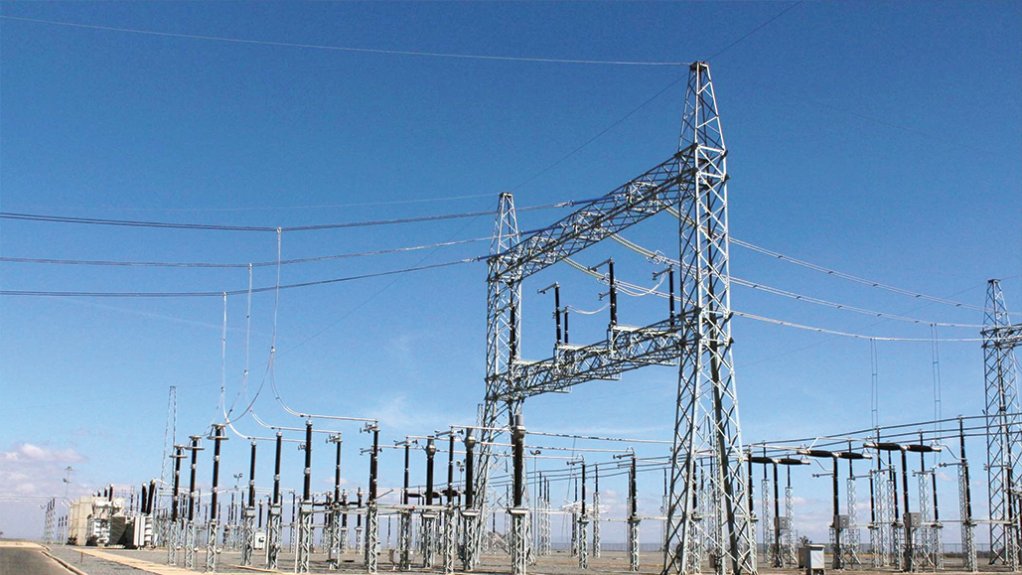
Industries require reliable power, while developing the energy industry can create local demand


Power in Africa is not only an issue of infrastructure, but also an economic issue because industry requires reliable, affordable and sustainable energy.
Industrial competitiveness is impossible without energy security, but renewable energy is an industry that presents an industrial development opportunity for Africa.
Understanding and aggregating industrial demand could attract investments into energy systems while simultaneously creating markets for local manufacturers and suppliers, said international agency United Nations Industrial Development Organisation (Unido) Energy Efficiency for Sustainable Livelihoods in Africa programme manager Karin Reiss-Haimbala.
Africa had an opportunity not simply to move from exporting raw materials to manufacturing, but to move from being a supplier of commodities to becoming an active participant in global and regional supply and value chains, she said during the first day of the Manufacturing Indaba on July 14.
The global energy transition presents a unique opportunity for Africa to industrialise because it has abundant renewable resources, there is growing demand for clean energy technologies and the critical minerals required for the transition are present on the continent.
Africa exports resources and imports technology, but could use the global transition to build industries.
“Creating markets and local demand is important, because manufacturing follows markets. Africa has a rapidly growing demand for solar PV and batteries, electric mobility, energy-efficient appliances and infrastructure.
“These can be a powerful driver of local development and industrialisation.”
Technology, skills and industrial capabilities were important because the countries that captured the greatest value from the energy transition were not those with the largest resource-bases, but those that could innovate, manufacture competitively, enforce quality standards and continuously upgrade their capabilities, she said.
Further, no countries produce all the components of technology systems. Through the African Continental Free Trade Area and stronger regional integration, countries can specialise, achieve the economies of scale required and integrate into supply chains.
“Success will depend on turning Africa's resource advantage into an industrial advantage, thereby ensuring that more value is created, captured and retained on the continent,” Reiss-Haimbala said.
Industrial development was taking place in Africa, with the question being more about how to accelerate the process, said research and consulting company Africa House market access and research director Duncan Bonnett.
“We are seeing more industrial development on the continent. [Industrial company] Dangote Industries built oil refineries and then fertiliser plants.
“However, this was not only to produce fuel and fertilisers because the company built an engineering industry around this by providing fabrication yards. More than 50 of the group's companies now have fabrication yards, which enable local manufacturing,” he said.
Large-scale projects could provide the space and opportunity to develop manufacturing to support them, said South African industry financier Industrial Development Corporation manufacturing executive Mark Goliath.
For example, the Lobito Corridor project, which links the Port of Lobito, in Angola, to the Copperbelt in the Democratic Republic of Congo (DRC) and Zambia, was developed for moving minerals, but presented an opportunity to industrialise along this corridor to support the region, he said.
Corridors could create regional value chains, as companies could access markets much more cheaply and readily than before. Development finance institutions could invest in manufacturing to supply regional markets based on inherent demand, he stated.
Unido viewed corridors as critical aspects for Africa's industrialisation, said Reiss-Haimbala.
“However, the corridors being developed in Africa will remain empty without industrial hubs built along them. Last year, under South Africa's G20 presidency, Unido launched a global coalition on sustainable industrial hubs linked to regional and global corridor development initiatives.”
The aim of the initiative was to transform industrial zones and parks into sustainable industrial hubs, powered by reliable and renewable-energy systems along these corridors, she said.
The aim is for the hubs to serve as platforms for industrial development, innovation and manufacturing.
These hubs could also present opportunities to link up with local innovators, businesses and entrepreneurs to provide solutions and services to the industrial sector, such as by developing clean energy, green hydrogen and other future-oriented industrial systems.
Unido, the United Nations Environment Programme's Global Environment Facility, South Africa's Department of Trade, Industry and Competition, the National Cleaner Production Centre of South Africa and green economy organisation GreenCape are working to assess energy demand of special economic zones (SEZs) and industrial parks in South Africa, optimise consumption and identify renewable energy investment opportunities at these sites.
“The opportunity here is to also transition to low-carbon manufacturing hubs. Some of Africa's export markets are moving to a preference system for low-carbon products. Therefore, creating low-carbon and renewable-energy-powered manufacturing hubs are attractive investment opportunities,” she said.
Additionally, Unido was working with the African Energy Commission, under the African Union, to develop a continental project on clean technology value chains, with a particular focus on how to establish regional hubs in Africa, which would position Africa in global clean technology supply and value chains, she said.
Meanwhile, Africa should ensure that its resources were leveraged for industrialisation, said industry organisation Zambia Association of Manufacturers past president Ashu Sagar.
“For example, Zambian wire producers have to buy copper at [industrial metals market] London Metal Exchange prices, despite copper being mined in the country. Zambia's absolute advantage in having this resource is not being translated into a comparative or competitive advantage,” he said.
The main factor blocking more industrialisation was access to resources. Implementing a resource reservation of about 5% to 10% of a mineral mined in a country for use in domestic industries would enable a country to develop skills and markets for value-added products derived from the mineral.
“Africa must have access to its resources. We should be in a position to add value because we should have competitive access to a resource. We must use what belongs to us to create value and jobs,” he emphasised.
Additionally, industrialisation initiatives focus on geographic areas, rather than on products and value chains. For example, a cross-border SEZ built between the DRC and Zambia will enable each country to participate in the value chains with the resources each has.
“However, owing to disjointed policies, we are sending our resources to other continents to use in their industries. All countries should aim to adopt a mindset of 'Africa first' because we need to develop and create jobs for our people and industries for our economies,” Sagar said.
Article Enquiry
Email Article
Save Article
Feedback
To advertise email advertising@creamermedia.co.za or click here

Projects

Latest Multimedia
Latest News

Showroom
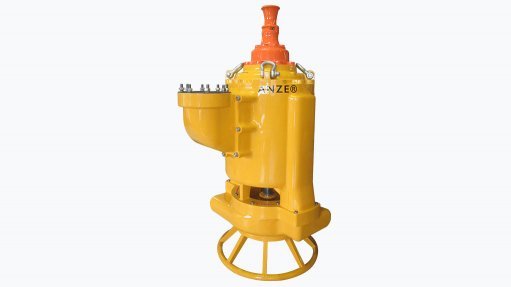
Goodwin Submersible Pumps Africa is sole distributors for Goodwin electrically driven, submersible, abrasion resistance slurry pumps.
VISIT SHOWROOM
SABAT Batteries is a renowned brand in the battery industry, manufacturing a wide range of batteries at its state-of-the-art production facility in...
VISIT SHOWROOM
Announcements
What's On
Subscribe to improve your user experience...
Option 1 (equivalent of R125 a month):
Receive a weekly copy of Creamer Media's Engineering News & Mining Weekly magazine
(print copy for those in South Africa and e-magazine for those outside of South Africa)
Receive daily email newsletters
Access to full search results
Access archive of magazine back copies
Access to Projects in Progress
Access to ONE Research Report of your choice in PDF format
Option 2 (equivalent of R375 a month):
All benefits from Option 1
PLUS
Access to Creamer Media's Research Channel Africa for ALL Research Reports, in PDF format, on various industrial and mining sectors
including Electricity; Water; Energy Transition; Hydrogen; Roads, Rail and Ports; Coal; Gold; Platinum; Battery Metals; etc.
Already a subscriber?
Forgotten your password?
Receive weekly copy of Creamer Media's Engineering News & Mining Weekly magazine (print copy for those in South Africa and e-magazine for those outside of South Africa)
➕
Recieve daily email newsletters
➕
Access to full search results
➕
Access archive of magazine back copies
➕
Access to Projects in Progress
➕
Access to ONE Research Report of your choice in PDF format
RESEARCH CHANNEL AFRICA
R4500 (equivalent of R375 a month)
SUBSCRIBEAll benefits from Option 1
➕
Access to Creamer Media's Research Channel Africa for ALL Research Reports on various industrial and mining sectors, in PDF format, including on:
Electricity
➕
Water
➕
Energy Transition
➕
Hydrogen
➕
Roads, Rail and Ports
➕
Coal
➕
Gold
➕
Platinum
➕
Battery Metals
➕
etc.
Receive all benefits from Option 1 or Option 2 delivered to numerous people at your company
➕
Multiple User names and Passwords for simultaneous log-ins
➕
Intranet integration access to all in your organisation