Africa must power its way up the value chain






Africa’s energy agenda needs a more ambitious measure of success than simply generating more electricity and connecting more households. The real test should be whether the continent can use energy to move beyond the export of raw materials towards higher-value industrial activities, more diversified economies and stronger participation in global value chains.
This distinction is particularly important at a time when demand for minerals used in electricity networks, renewable-energy systems, batteries and electric vehicles (EVs) is creating opportunities for African countries to strengthen their position in the global economy. As the International Energy Agency’s ‘Stepping Up the Value Chain in Africa’ report, published in 2025, highlights, the opportunities include expanding beyond mineral extraction into beneficiation and clean-energy technology manufacture.
The report also highlights the skewed distribution of the economic benefits of clean-energy technology production, with emerging markets and developing economies outside China accounting for less than 5% of the total value. Africa’s challenge is to capture a greater share of the value by moving beyond predominantly being a supplier of the raw minerals on which other economies have built their industrial capabilities.
Copper, an essential input into electricity grids, renewable-energy infrastructure and EVs, with 9.2% of the world’s proven and probable reserves held by African countries, illustrates this potential. Mining copper ore indeed generates value, but further opportunities lie in processing and refining it, fabricating electrical conductors and manufacturing selected components where the requisite skills and technology are available and demand is sufficient to support commercially viable production.
Zambia, which is Africa’s leading producer and recorded output of 890 345.8 t in 2025, illustrates both the opportunity and the obstacles. In 2023, the country generated 60% of its export revenue from the metal, according to the International Institute for Sustainable Development (IISD), which argues in an April 2026 report that deeper participation in copper processing and manufacturing could strengthen domestic economic linkages and reduce the vulnerability associated with the country’s heavy reliance on mining.
The IISD is very clear about the requisite conditions for this transformation: there must be reliable, affordable electricity for copper value addition, alongside investment in generation, industrial infrastructure, transport corridors and trade facilitation.
Policymakers should also recognise that reliable electricity is not merely a utility-sector concern. For industrial investors, consideration goes well beyond the electricity bill, with supply interruptions, high costs and inadequate network capacity affecting production schedules and the viability of energy-intensive operations, thereby influencing investment decisions.
In this regard, the World Bank’s 2026 ‘Zambia Economic Update’ identifies the continuation of ongoing power-sector reforms as central to supporting private investment, manufacturing growth and the country’s broader development ambitions. It also highlights the importance of a financially sustainable electricity sector, diversified generation, regulatory certainty and better system performance.
The same considerations apply to other African governments seeking to attract investors eyeing process-plant, component manufacturing and other industrial opportunities, who must consider whether electricity can be delivered at the required scale, reliability and cost.
To be clear, the argument is not that every mineral should be processed domestically or that every stage of a global value chain can be replicated within one country. Such an approach could impose substantial costs without producing competitive industries. Instead, the objective should be to identify activities in which African countries have credible advantages, build on existing capabilities and create conditions for enterprises to be competitive regionally and internationally.
African countries also need to think regionally and invest strategically. This is precisely the rationale behind the proposed value chain involving Zambia and the Democratic Republic of Congo (DRC). Both countries possess significant mineral reserves, but neither has all the minerals, industrial capacity and sufficiently large market to support a competitive battery industry on its own.
An October 2026 IISD assessment of the special economic zones designated for the initiative – in Ndola, on the Zambian Copperbelt, and at Musompo, near the DRC town of Kolwezi – identifies unreliable electricity, logistics bottlenecks, skills shortages and regulatory coordination as potential challenges to investment readiness. The report therefore recommends infrastructure upgrades, expanded training, more predictable regulation and stronger regional cooperation.
This points to a practical approach to industrialisation where, after identifying commercially credible opportunities, governments establish the requisite energy and transport infrastructure to support such opportunities and coordinate investment and policy across borders where regional scale improves competitiveness.
For electricity planning, this means looking beyond installed generation capacity to transmission networks, distribution infrastructure, storage (where appropriate) and cross-border connections. All these elements influence whether electricity reaches productive users reliably and at a competitive cost.
In the final analysis, African governments need not choose between expanding electricity access and powering industrialisation; both are essential. And neither should industrial policy become a pretext for protecting inefficient enterprises indefinitely or imposing domestic processing requirements regardless of economic realities. The priority should be to align energy investment with realistic opportunities for productive economic activities.
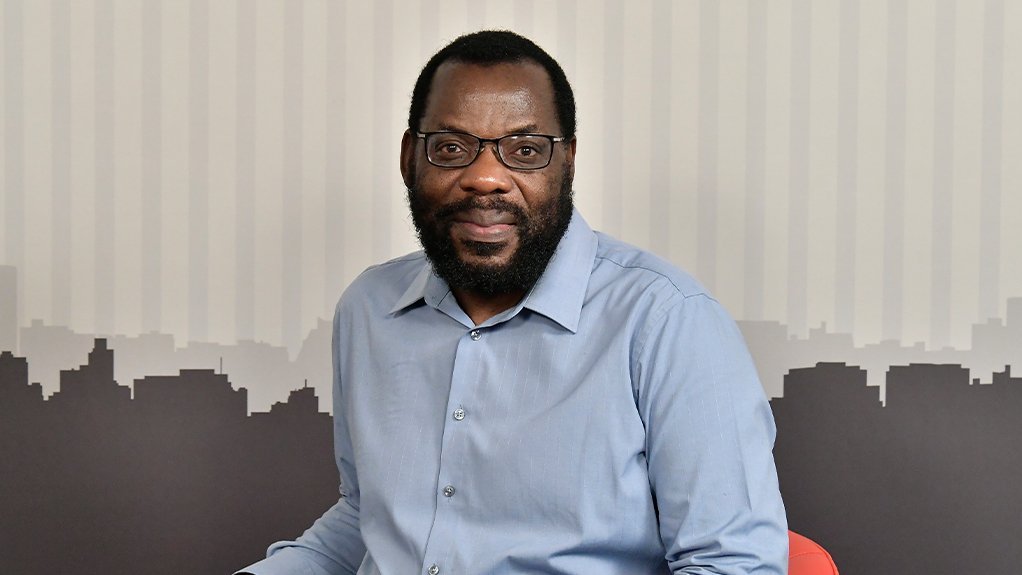
Dr Zhuwakinyu, who holds a PhD in communications (media studies) from the University of South Africa, is Creamer Media’s magazine managing editor - martinz@engineeringnews.co.za
Article Enquiry
Email Article
Save Article
Feedback
To advertise email advertising@creamermedia.co.za or click here
Research Reports
Projects

Latest Multimedia


Latest News


Showroom
For over 30 years, Werner South Africa Pumps & Equipment (PTY) LTD has been designing, manufacturing, supplying and maintaining specialist...
VISIT SHOWROOM


Announcements
What's On
Subscribe to improve your user experience...
Option 1 (equivalent of R125 a month):
Receive a weekly copy of Creamer Media's Engineering News & Mining Weekly magazine
(print copy for those in South Africa and e-magazine for those outside of South Africa)
Receive daily email newsletters
Access to full search results
Access archive of magazine back copies
Access to Projects in Progress
Access to ONE Research Report of your choice in PDF format
Option 2 (equivalent of R375 a month):
All benefits from Option 1
PLUS
Access to Creamer Media's Research Channel Africa for ALL Research Reports, in PDF format, on various industrial and mining sectors
including Electricity; Water; Energy Transition; Hydrogen; Roads, Rail and Ports; Coal; Gold; Platinum; Battery Metals; etc.
Already a subscriber?
Forgotten your password?
Receive weekly copy of Creamer Media's Engineering News & Mining Weekly magazine (print copy for those in South Africa and e-magazine for those outside of South Africa)
➕
Recieve daily email newsletters
➕
Access to full search results
➕
Access archive of magazine back copies
➕
Access to Projects in Progress
➕
Access to ONE Research Report of your choice in PDF format
RESEARCH CHANNEL AFRICA
R4500 (equivalent of R375 a month)
SUBSCRIBEAll benefits from Option 1
➕
Access to Creamer Media's Research Channel Africa for ALL Research Reports on various industrial and mining sectors, in PDF format, including on:
Electricity
➕
Water
➕
Energy Transition
➕
Hydrogen
➕
Roads, Rail and Ports
➕
Coal
➕
Gold
➕
Platinum
➕
Battery Metals
➕
etc.
Receive all benefits from Option 1 or Option 2 delivered to numerous people at your company
➕
Multiple User names and Passwords for simultaneous log-ins
➕
Intranet integration access to all in your organisation