Zimbabwe seeks deeper mineral value addition

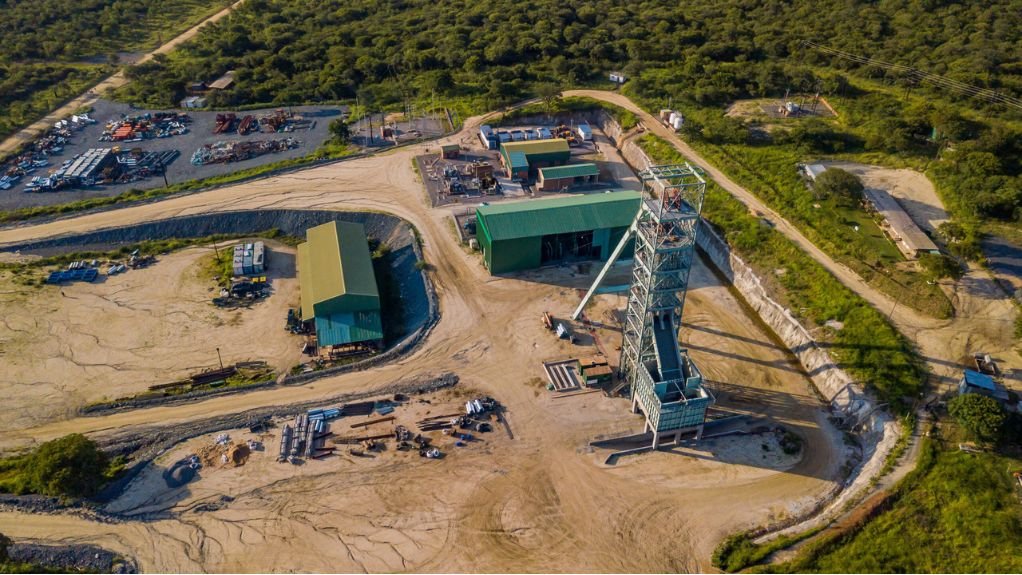
INVESTMENT OPPORTUNITIES Zimbabwean companies should have greater participation in the mining economy


Zimbabwe needs to attract investment into processing, refining and minerals-based manufacturing to retain more value from its mineral resources, reports investment promotion entity Zimbabwe Investment and Development Agency (ZIDA) CEO Tafadzwa Chinamo.
He says that there are investment opportunities for minerals concentrators, refineries, smelters and chemical-processing facilities across the country’s diverse mineral resource base, which includes lithium, gold, platinum group metals (PGMs), chrome, nickel, diamonds and coal. These opportunities extend to the manufacture of intermediate and finished products.
“An extraction-based industry tends to attract capital focused on acquiring mineral rights, developing mines and exporting commodities. A beneficiation-led industry, by contrast, can attract industrial manufacturers, chemical companies, engineering firms, technology providers, logistics operators, energy developers and specialised financial institutions,” states Chinamo.
Processing facilities can also encourage longer-term investment because they require substantial fixed capital, specialised skills, supply agreements and integration into global production networks, he says.
Local supplier development will also be important to retaining greater value from mineral resources.
In lithium, Chinamo says investment opportunities are shifting from mineral concentrate production towards chemical conversion and, over time, higher-value products further down the beneficiation chain linked to the battery metals value chain.
“The government has indicated that this transition will be phased, progressing towards lithium sulphate, lithium carbonate and ultimately greater participation in battery-related manufacturing,” he says.
PGMs, chrome and other base metals also offer Zimbabwean producers new opportunities for refining, smelting and downstream manufacturing, while gold presents the country’s miners and beneficiators with opportunities in refining and associated services.
However, Chinamo stresses that minerals beneficiation should not be limited to big processing plants, as processing facilities of diverse scale collectively create downstream demand for engineering, exploration services, geological services, drilling, fabrication, chemicals, laboratories, environmental services, technology, logistics, maintenance, and equipment supply and maintenance – all factors that could help grow Zimbabwe’s industrial base.
Digitalisation of mining operations also offers further opportunities for investors through data analytics, automation, remote monitoring, resource modelling and energy-management systems, he notes.
Renewable power and storage solutions, water-management infrastructure and circular-economy solutions, such as tailings retreatment and waste recovery, also present new investment opportunities and areas bearing growth potential, says Chinamo.
However, he says Zimbabwe’s ability to attract investment into these areas will depend on the competitiveness of the overall investment environment, explaining that investors will locate processing capacity where the overall economics of production are sustainable.
“This requires predictable policy, efficient investment facilitation, reliable and competitively priced energy, adequate water infrastructure, efficient transport and logistics, appropriate skills, access to technology and a predictable regulatory environment,” notes Chinamo.
Investment opportunities, he advises, should also be packaged around complete value chains rather than individual mines.
“An investor considering a refinery, for example, needs confidence in long-term feedstock availability, supporting infrastructure, market access and the regulatory environment,” says Chinamo.
Some processing facilities require substantial volumes of feedstock to operate economically, he says, adding that this can present opportunities for aggregation models, shared processing infrastructure and industrial clusters serving multiple mining operations.
To assist investors through the investment lifecycle and connect viable opportunities with domestic and international capital, Chinamo says ZIDA works across government departments.
Foreign investment can help close these gaps through joint ventures, supplier development programmes, technology partnerships, training and the integration of Zimbabwean companies into international supply chains, he says.
Zimbabwean companies should also have greater participation in the mining economy, adds Chinamo.
The transition from mineral extraction and concentration towards greater processing, refining and manufacturing should, however, be commercially grounded and progressive, as different minerals have different value chains, technologies, capital requirements and market dynamics.
“The objective should therefore be to move as far up each value chain as is economically and technically sustainable,” he says.
For lithium, this means progressing from extraction and concentration towards chemical conversion and, ultimately, greater participation in battery-related manufacturing.
Article Enquiry
Email Article
Save Article
Feedback
To advertise email advertising@creamermedia.co.za or click here
Projects
Latest Multimedia
Latest News
Showroom
For over 30 years, Werner South Africa Pumps & Equipment (PTY) LTD has been designing, manufacturing, supplying and maintaining specialist...
VISIT SHOWROOM
Established in 1933, EKATO is the world leader in agitation technology, supplying agitators for processes and applications such as chemicals and...
VISIT SHOWROOM

Press Office
Announcements
What's On
Subscribe to improve your user experience...
Option 1 (equivalent of R125 a month):
Receive a weekly copy of Creamer Media's Engineering News & Mining Weekly magazine
(print copy for those in South Africa and e-magazine for those outside of South Africa)
Receive daily email newsletters
Access to full search results
Access archive of magazine back copies
Access to Projects in Progress
Access to ONE Research Report of your choice in PDF format
Option 2 (equivalent of R375 a month):
All benefits from Option 1
PLUS
Access to Creamer Media's Research Channel Africa for ALL Research Reports, in PDF format, on various industrial and mining sectors
including Electricity; Water; Energy Transition; Hydrogen; Roads, Rail and Ports; Coal; Gold; Platinum; Battery Metals; etc.
Already a subscriber?
Forgotten your password?
Receive weekly copy of Creamer Media's Engineering News & Mining Weekly magazine (print copy for those in South Africa and e-magazine for those outside of South Africa)
➕
Recieve daily email newsletters
➕
Access to full search results
➕
Access archive of magazine back copies
➕
Access to Projects in Progress
➕
Access to ONE Research Report of your choice in PDF format
RESEARCH CHANNEL AFRICA
R4500 (equivalent of R375 a month)
SUBSCRIBEAll benefits from Option 1
➕
Access to Creamer Media's Research Channel Africa for ALL Research Reports on various industrial and mining sectors, in PDF format, including on:
Electricity
➕
Water
➕
Energy Transition
➕
Hydrogen
➕
Roads, Rail and Ports
➕
Coal
➕
Gold
➕
Platinum
➕
Battery Metals
➕
etc.
Receive all benefits from Option 1 or Option 2 delivered to numerous people at your company
➕
Multiple User names and Passwords for simultaneous log-ins
➕
Intranet integration access to all in your organisation