When maintenance-system compliance starts replacing plant reliability


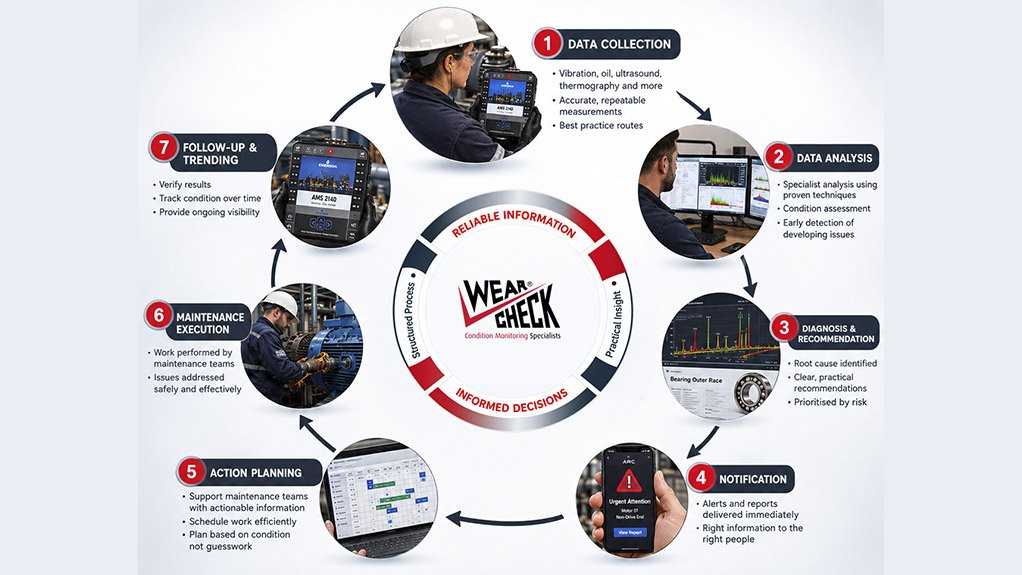



This article has been supplied.
Asset reliability and condition monitoring form a major part of WearCheck’s business. Through its Asset Reliability Care (ARC) division, WearCheck provides a broad range of specialist condition monitoring, diagnostic and asset reliability services across industries and throughout Africa. These capabilities include vibration analysis, thermography, online remote monitoring and diagnostics, alignment and balancing, motion amplification, operational deflection shape analysis, non-destructive testing and other specialised field services.
Together with WearCheck’s laboratory-based oil and fluid analysis capabilities, ARC forms part of an integrated reliability offering designed to help clients understand machinery condition, identify developing failure mechanisms and make better maintenance decisions.
In this article, WearCheck ARC division manager Annemie Willer argues that one of the greatest threats to effective maintenance is not a lack of technology, but the gradual replacement of technical judgement by maintenance-system compliance:
Working in a maintenance environment where the CMMS (Computerised Maintenance Management System) has become the ultimate authority sometimes makes me feel like an extra in one of The Matrix films.
Everyone is busy following the system. Tasks are created, moved, closed and measured. The system is treated as correct, even when the physical plant in front of us says otherwise.
The problem is that my version of The Matrix has no saviour. There is no “Neo” coming to see through the system, challenge its authority and return technical judgement to the people who understand the machines.
We fear that artificial intelligence may make decisions for us and allow machines to rule the way we work in the future. However, maintenance teams should perhaps look behind themselves instead, advises Willer. Long before AI became a serious topic of conversation, we had already handed authority to systems. Not because the software became intelligent, but because organisations stopped trusting their workforce to question it.
A CMMS can only generate and track what people structure and capture. It does not know whether a task is still relevant, whether the machine has changed, whether the allocated time is realistic or whether the work will prevent failure. Most implementations depend on fixed asset structures, planned durations and predefined workflows. The plant is dynamic. Its condition changes with load, production, maintenance quality and developing defects.
A static system is ruling a dynamic operation
Condition monitoring is often presented as something that will reduce downtime, extend equipment life and improve reliability. However, no sensor, oil sample, thermal image, vibration spectrum or report can do that. Only maintenance action can.
Condition monitoring tells us what is wrong, where it is wrong, why it is happening and, most importantly, when maintenance must intervene. It is not simply another task on the schedule. It should create a better schedule.
Every condition monitoring programme should begin with a scope defining the machines, technologies, frequencies and workload. The team should manage that scope and report compliance against it.
Routine condition monitoring work should not be divided into thousands of CMMS tasks merely so the system can account for every hour. Where a machine already has an inspection or preventive-maintenance job card, the condition monitoring requirement can be included as a clear tick box. The CMMS should mainly receive the corrective work generated from the findings.
Today’s condition monitoring data-acquisition equipment is fast. But what is the value of that speed if the team cannot reach the machines because the CMMS says the day is full? The schedule may allow four hours for an alignment. Waiting for production, permits, isolation and maintenance support turns it into seven. Work is postponed because the system still believes the original estimate.
When condition monitoring identifies a developing failure mechanism, the schedule must change. Preventive work may need to be brought forward, replaced, combined with the corrective action or removed. Instead, every existing task remains, and the recommendation is added on top. One machine eventually carries hundreds of checks and recurring job cards; many closed with only an explanation for why they were not completed. That alone should force a technical review of whether every task, frequency and technology remains justified.
Very few organisations maintain the maintenance schedule itself. They do not regularly ask whether a task still serves a purpose, whether its duration is realistic or whether the system still represents the physical plant.
The schedule grows, but it is rarely cleared
At WearCheck, we see the consequences in our own reports. For example, a developing failure mechanism is identified, and a corrective action is loaded. Month after month, the data shows the condition progressing. The recommendation remains open, is postponed or is closed with merely an administrative explanation.
Eventually, the warning period is gone. The failure mechanism has become an advanced defect, and failure may now be inevitable. Condition monitoring did not fail - the warning was there. The system simply recorded the months during which nobody took ownership.
The maintenance team’s KPIs make this worse. One of the most important questions in weekly maintenance meetings has become: “Did we close all the work orders in SAP this week?”
That measures administration, not reliability.
At WearCheck, we advise that the questions should rather be:
- Did we intervene in time?
- Was the recommended action correct?
- Did the machine condition improve?
- Did the defect return?
- Was the original diagnosis accurate?
Those questions measure the effectiveness of the maintenance system and the expertise of the condition monitoring team.
If the recommendation was wrong, the follow-up data should expose it. If the recommendation was correct but the work came too late, the organisation failed to respond. If the work order was closed but the machine condition did not improve, the maintenance intervention failed. That is real accountability.
When the team is over-reliant on the CMMS, a work order can be closed while the machine remains defective. The dashboard turns green, but the risk remains.
The foreman says the task was not on the system. The planner says no notification was raised. The engineer says the work was not approved. The condition monitoring team says the recommendation was issued.
Everybody followed the process, but nobody owned the machine
This is why “condition-based maintenance” and “predictive maintenance” have become convenient phrases in reports. They sound progressive, but are seldom implemented as an operating model.
Condition monitoring is not predictive maintenance when nobody acts on the prediction.
An organisation that genuinely wants condition-based maintenance must create capacity for the work it generates. It cannot retain every preventive task, add every new technology and expect the same people to absorb it. Dedicated plant personnel should focus on reliability-centred maintenance work, protected from routine and reactive demands. Somebody must steer that time.
That person may be the Reliability Engineer, Reliability Manager or another experienced technical owner. The title matters less than the competence, time and authority attached to the role. The person must have a strong maintenance background, understand condition monitoring and communicate continuously with the condition monitoring team. This is a full-time, highly skilled function that should be visible in the organisational structure.
Without authority, the Reliability Engineer or Reliability Manager is simply another role trapped inside the same system. After maintenance, condition monitoring must retest the machine. A closed work order does not prove that the defect was removed. If the condition has not improved, the team must determine why.
The real loop is: Detect. Diagnose. Act. Retest. Confirm.
SAP did not fail. IBM did not fail. The functionality of the system did not fail.
The organisation failed when it allowed the system to replace technical judgement, failed to maintain the maintenance strategy and failed to create ownership for the machine. There is no “chosen one” coming to rescue the plant.
The system did not take control from us. We gave it control when we stopped trusting experienced people to challenge it. We must stop managing the plant around the schedule and start managing the schedule around the plant.
The schedule must serve the plant. The plant must never be forced to serve the schedule.
Article Enquiry
Email Article
Save Article
Feedback
To advertise email advertising@creamermedia.co.za or click here

Projects

Latest Multimedia


Showroom
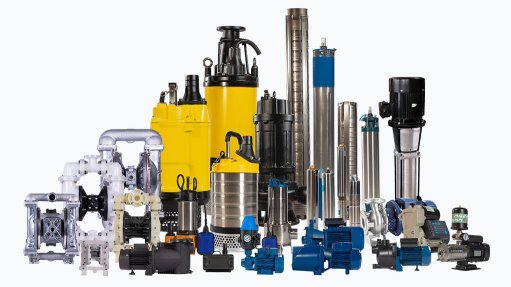
AxFlow AQS Liquid Transfer (Pty) Ltd is an Importer and Distributor of Pumps in Southern Africa
VISIT SHOWROOM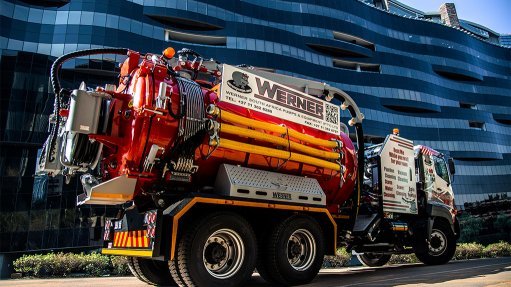
For over 30 years, Werner South Africa Pumps & Equipment (PTY) LTD has been designing, manufacturing, supplying and maintaining specialist...
VISIT SHOWROOM


Press Office
Announcements
What's On
Subscribe to improve your user experience...
Option 1 (equivalent of R125 a month):
Receive a weekly copy of Creamer Media's Engineering News & Mining Weekly magazine
(print copy for those in South Africa and e-magazine for those outside of South Africa)
Receive daily email newsletters
Access to full search results
Access archive of magazine back copies
Access to Projects in Progress
Access to ONE Research Report of your choice in PDF format
Option 2 (equivalent of R375 a month):
All benefits from Option 1
PLUS
Access to Creamer Media's Research Channel Africa for ALL Research Reports, in PDF format, on various industrial and mining sectors
including Electricity; Water; Energy Transition; Hydrogen; Roads, Rail and Ports; Coal; Gold; Platinum; Battery Metals; etc.
Already a subscriber?
Forgotten your password?
Receive weekly copy of Creamer Media's Engineering News & Mining Weekly magazine (print copy for those in South Africa and e-magazine for those outside of South Africa)
➕
Recieve daily email newsletters
➕
Access to full search results
➕
Access archive of magazine back copies
➕
Access to Projects in Progress
➕
Access to ONE Research Report of your choice in PDF format
RESEARCH CHANNEL AFRICA
R4500 (equivalent of R375 a month)
SUBSCRIBEAll benefits from Option 1
➕
Access to Creamer Media's Research Channel Africa for ALL Research Reports on various industrial and mining sectors, in PDF format, including on:
Electricity
➕
Water
➕
Energy Transition
➕
Hydrogen
➕
Roads, Rail and Ports
➕
Coal
➕
Gold
➕
Platinum
➕
Battery Metals
➕
etc.
Receive all benefits from Option 1 or Option 2 delivered to numerous people at your company
➕
Multiple User names and Passwords for simultaneous log-ins
➕
Intranet integration access to all in your organisation