West Africa’s gas future depends on production-ready infrastructure





This article has been supplied.
By: Iretomiwa Odusote - Regional Segment Leader - Energies & Chemicals at Schneider Electric West Africa
West Africa stands at an important moment in its energy journey. Across the region, governments and energy stakeholders increasingly view natural gas as a strategic enabler of industrialisation, power generation, export growth, and energy security.
Countries, such as Nigeria, continue to position liquefied natural gas (LNG) as a critical revenue driver, while pursuing domestic gas-to-power projects to support power generation and economic development. According to the latest World LNG Report 2026 by the International Gas Union (IGU), Nigeria is the world’s seventh largest exporter of LNG with a 3.4 percent share of global exports, consolidating its position as a key contributor to global energy security.
Elsewhere in the region, Senegal and Mauritania are also advancing major offshore gas developments, while Ghana continues to strengthen its gas-to-power initiatives to improve electricity reliability and support industrial growth.
Possessing abundant gas reserves alone is no longer enough. Operators are under increasing pressure to commercialise projects rapidly and generate returns on significant capital investments. Success will be measured by three key outcomes: speed to first gas, operational safety and reliability, and sustained production efficiency over the life of the asset.
The race to first gas
Gas projects are capital intensive by nature. Once projects receive final investment approval, operators face immediate pressure to begin production and commercialise output quickly.
This is particularly important because as global LNG markets become increasingly competitive. Operators are no longer competing solely with neighbouring producers; they are competing with projects across the United States, Qatar, Australia, East Africa and elsewhere for investment capital and long-term customers. The ability to deliver projects on schedule and begin production safely is becoming a genuine competitive advantage.
Reaching first gas, however, is only the beginning. Once production starts, operators face a different challenge: ensuring production remains safe, efficient, and commercially viable over the long term.
Visibility equals efficiency
Many facilities struggle with fragmented operational data, limited visibility across production processes, inefficient energy usage, and reactive maintenance practices. These issues often remain hidden until they begin affecting production, reliability, or profitability.
Operational excellence increasingly depends on providing decision-makers with accurate, real-time information across the entire production environment. When operators can monitor equipment health, energy consumption, production efficiency and process performance from a unified operational view, they are better positioned to identify bottlenecks early, optimise performance and minimise unplanned downtime.
This is where integrated technology and infrastructure strategies are becoming increasingly important. Historically, electrification systems, process automation, safety systems, and digital technologies have often been designed and delivered as separate workstreams by different vendors.
While technically functional, this fragmented approach can introduce integration challenges, increase project complexity and create operational inefficiencies long after construction has been completed
An integrated approach simplifies project execution for engineering, procurement, and construction (EPC) firms and asset owners alike. Instead of managing multiple disconnected vendors and technology environments, engineering teams benefit from improved coordination during project delivery, helping to accelerate deployment. Operators, in turn, inherit systems that are easier to maintain, optimise and expand throughout the asset lifecycle.
The next phase of West Africa’s gas story
West Africa’s gas opportunity is not defined solely by reserves or production volumes. The region has the resources, technical expertise and growing investment needed to become a globally competitive gas hub.
Realising that opportunity, however, will depend on execution. The next generation of successful gas projects will be distinguished not only by the size of their reserves, but by how quickly they achieve first gas, how consistently they operate, and how effectively they leverage integrated infrastructure and digital technologies to sustain production over decades.
Technology alone will not determine the future of West Africa's gas industry. But production-ready infrastructure, operational visibility and integrated execution will increasingly separate the projects that simply reach completion from those that deliver long-term commercial success.
As technology partners, companies such as Schneider Electric have an important role to play in enabling this transition; not merely by providing equipment, but by helping operators build infrastructure that is safer, more integrated, more resilient and ultimately better prepared for the demands of a rapidly evolving global energy landscape.
Article Enquiry
Email Article
Save Article
Feedback
To advertise email advertising@creamermedia.co.za or click here
Projects
Latest Multimedia
Latest News
Showroom
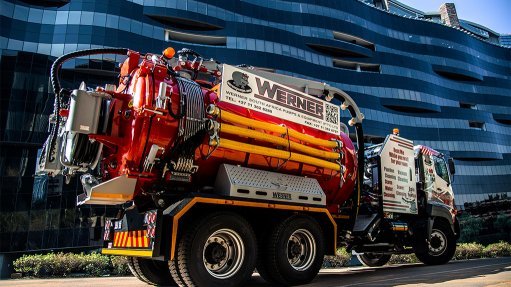
For over 30 years, Werner South Africa Pumps & Equipment (PTY) LTD has been designing, manufacturing, supplying and maintaining specialist...
VISIT SHOWROOM
Established in 1933, EKATO is the world leader in agitation technology, supplying agitators for processes and applications such as chemicals and...
VISIT SHOWROOM
Press Office
Announcements
What's On
Subscribe to improve your user experience...
Option 1 (equivalent of R125 a month):
Receive a weekly copy of Creamer Media's Engineering News & Mining Weekly magazine
(print copy for those in South Africa and e-magazine for those outside of South Africa)
Receive daily email newsletters
Access to full search results
Access archive of magazine back copies
Access to Projects in Progress
Access to ONE Research Report of your choice in PDF format
Option 2 (equivalent of R375 a month):
All benefits from Option 1
PLUS
Access to Creamer Media's Research Channel Africa for ALL Research Reports, in PDF format, on various industrial and mining sectors
including Electricity; Water; Energy Transition; Hydrogen; Roads, Rail and Ports; Coal; Gold; Platinum; Battery Metals; etc.
Already a subscriber?
Forgotten your password?
Receive weekly copy of Creamer Media's Engineering News & Mining Weekly magazine (print copy for those in South Africa and e-magazine for those outside of South Africa)
➕
Recieve daily email newsletters
➕
Access to full search results
➕
Access archive of magazine back copies
➕
Access to Projects in Progress
➕
Access to ONE Research Report of your choice in PDF format
RESEARCH CHANNEL AFRICA
R4500 (equivalent of R375 a month)
SUBSCRIBEAll benefits from Option 1
➕
Access to Creamer Media's Research Channel Africa for ALL Research Reports on various industrial and mining sectors, in PDF format, including on:
Electricity
➕
Water
➕
Energy Transition
➕
Hydrogen
➕
Roads, Rail and Ports
➕
Coal
➕
Gold
➕
Platinum
➕
Battery Metals
➕
etc.
Receive all benefits from Option 1 or Option 2 delivered to numerous people at your company
➕
Multiple User names and Passwords for simultaneous log-ins
➕
Intranet integration access to all in your organisation