VIS expands autonomous capabilities

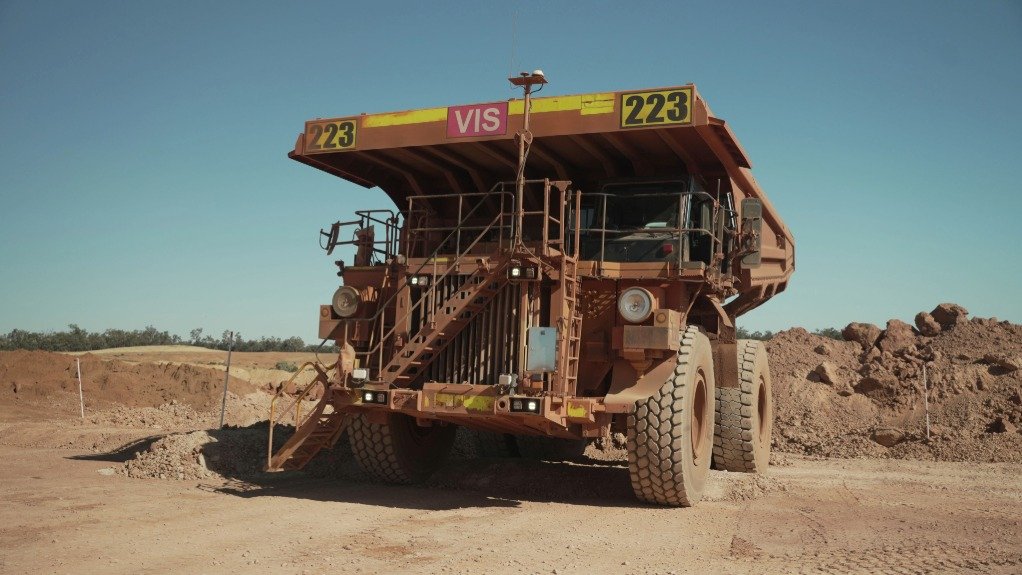
DELIVERING SAFETY The next-gen vehicle intervention system helps surface mining operations prevent collisions by automatically taking control of a machine in defined high-risk situations when safety thresholds are breached


Measurement technologies specialist Hexagon launched its next-generation vehicle intervention system (VIS) globally last month. The system is designed to help surface mining operations prevent collisions, extending the autonomous intervention capabilities of Hexagon’s established VIS platform across more critical mining scenarios.
“Surface mining operators continue to face complex safety challenges in dynamic environments where visibility, fatigue, environmental conditions and human factors can contribute to risk,” says Hexagon mining division president Dave Goddard.
As an earthmoving equipment safety round table (EMESRT) Level 9 VIS, Hexagon’s VIS platform can automatically take control of a machine in defined high-risk situations when safety thresholds are breached. This helps to prevent incidents, protect personnel and support operational continuity.
“When milliseconds matter, mines need technology that can act decisively. The next generation of VIS builds on years of operational experience and proven deployments to provide the highest level of intervention available, helping customers protect people, equipment and productivity,” he says.
The VIS launch follows the system’s completion of the University of Pretoria’s (UP’s) independent Technology Readiness Level 4 (TRL4) validation programme and is the first openpit Level 9 solution to achieve this milestone, he notes.
UP is the only recognised independent testing authority for TRL4 verification under industry employers organisation Minerals Council South Africa’s collision-prevention framework, says Hexagon mining division senior product manager Xiao Ru.
The TRL4 programme provides scientific, quantifiable and repeatable testing in controlled laboratory and proving-ground environments. It validates standalone functionality before a system can progress to integrated field deployment.
The TRL4 specification covered detection and tracking, warnings, control functions, logging, fail-to-safe functionality, self-diagnostics and compatibility with the International Organisation for Standardisation’s earth-moving machinery collision warning and avoidance requirements.
However, while the TRL4 is a critical stage gate, Ru says it is not equivalent to full site deployment or field validation.
Added Protection
VIS serves as an intervention layer above Hexagon’s Level 8 collision avoidance system (CAS).
While a CAS and a VIS can work together, their roles are defined for specific tasks, with CAS providing advisory warnings while VIS intervenes when a defined critical-risk condition is reached and the operator has not responded appropriately.
“The next-generation VIS is not replacing operators, but reducing reliance on split-second human reaction when a critical collision risk develops. Its role is the final layer of protection, acting when a Level 8 warning has not been addressed,” says Ru.
VIS autonomously intervenes to help prevent vehicle-to-vehicle, vehicle-to-person and vehicle-to-obstacle collisions. The system can automatically inhibit propulsion, apply retardation or braking, enforce safe following distances and manage overspeed conditions, including on ramps. It can also continuously monitor system health and bring a vehicle to a safe state if a critical system fault is detected.
Additionally, the VIS is original equipment manufacturer- (OEM-) agnostic, with no OEM lock-in, making it well suited to mixed fleets. It supports haul trucks, articulated dump trucks, wheel loaders and dozers across 60 vehicle models, including Caterpillar, Komatsu and Volvo, with additional vehicle types planned for future inclusion, such as Hitachi equipment.
Hexagon offers differentiated commercial and deployment options to suit operations of varying sizes, from big mining houses to smaller and contractor-run sites.
Ru explains that the system is highly configurable and scalable, enabling for it to be tailored to every operation’s fleet profile, risk requirements and implementation scope. This helps align the system’s capabilities and cost with the needs and budgets of different operators as opposed to applying a one-size-fits-all model.
Operator trust is at the core of any effective VIS, hence trust must be earned through effective change management.
“Operators remain at the centre of mining operations, and their experience, judgment and awareness remain critical. Adoption depends on collaboration [among] technology providers, mining companies and the people who use the systems,” adds Ru, further noting that feedback from operators, supervisors and safety teams helps to shape the evolution of the system.
Proven Record
VIS has been deployed in production environments since 2018 at mining operations across four continents, with customers such as Anglo American, Glencore, Exxaro, UMK, Rio Tinto and Vale.
“VIS is the evolution of a technology with a substantial operational history. The original system underwent more than 10 000 hours of testing in a working mine before its initial launch and has subsequently been deployed across more than 800 machines and 16 mines,” says Ru.
To support the next-generation VIS solution, Hexagon is expanding its regional teams in Africa. All teams have been trained on the system, with deployments underway across the continent, he adds.
Article Enquiry
Email Article
Save Article
Feedback
To advertise email advertising@creamermedia.co.za or click here
Research Reports


Projects

Latest Multimedia
Latest News

Showroom
Iritron delivers advanced automation, control, and optimisation solutions to the Mining, Minerals & Metals, Consumer Package Goods and...
VISIT SHOWROOM
EIMS is an independent specialised environmental consulting firm offering the full spectrum of environmental management services across all sectors...
VISIT SHOWROOM

Announcements
What's On
Subscribe to improve your user experience...
Option 1 (equivalent of R125 a month):
Receive a weekly copy of Creamer Media's Engineering News & Mining Weekly magazine
(print copy for those in South Africa and e-magazine for those outside of South Africa)
Receive daily email newsletters
Access to full search results
Access archive of magazine back copies
Access to Projects in Progress
Access to ONE Research Report of your choice in PDF format
Option 2 (equivalent of R375 a month):
All benefits from Option 1
PLUS
Access to Creamer Media's Research Channel Africa for ALL Research Reports, in PDF format, on various industrial and mining sectors
including Electricity; Water; Energy Transition; Hydrogen; Roads, Rail and Ports; Coal; Gold; Platinum; Battery Metals; etc.
Already a subscriber?
Forgotten your password?
Receive weekly copy of Creamer Media's Engineering News & Mining Weekly magazine (print copy for those in South Africa and e-magazine for those outside of South Africa)
➕
Recieve daily email newsletters
➕
Access to full search results
➕
Access archive of magazine back copies
➕
Access to Projects in Progress
➕
Access to ONE Research Report of your choice in PDF format
RESEARCH CHANNEL AFRICA
R4500 (equivalent of R375 a month)
SUBSCRIBEAll benefits from Option 1
➕
Access to Creamer Media's Research Channel Africa for ALL Research Reports on various industrial and mining sectors, in PDF format, including on:
Electricity
➕
Water
➕
Energy Transition
➕
Hydrogen
➕
Roads, Rail and Ports
➕
Coal
➕
Gold
➕
Platinum
➕
Battery Metals
➕
etc.
Receive all benefits from Option 1 or Option 2 delivered to numerous people at your company
➕
Multiple User names and Passwords for simultaneous log-ins
➕
Intranet integration access to all in your organisation