Uranium poised for long-term structural deficit as AI boom spurs unprecedented nuclear demand

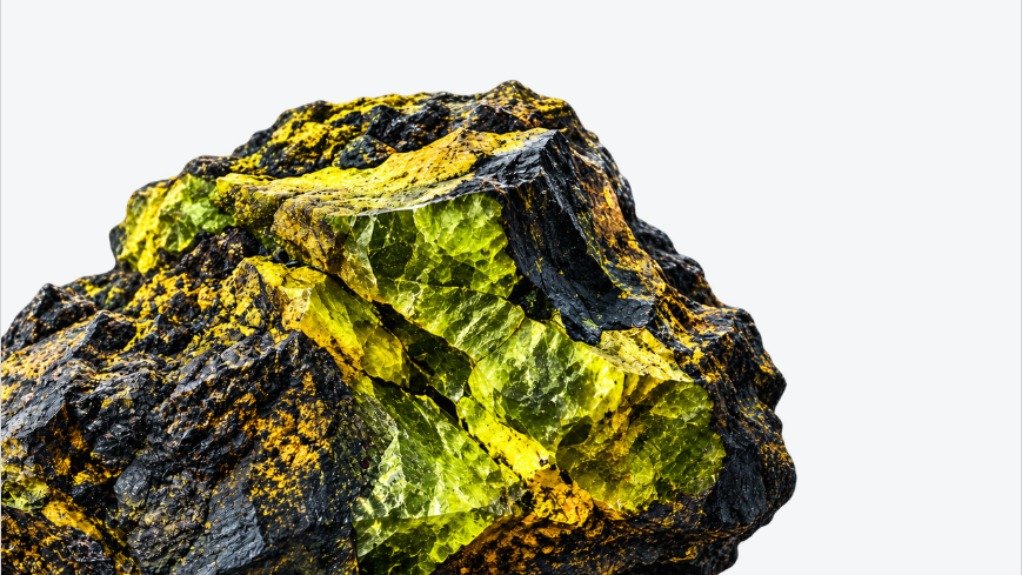



With nuclear reactor builds currently outpacing new uranium mine supply and the rapid growth of AI and data centres reinforcing the need for large-scale baseload power, uranium's investment case does not rest on sentiment, finds Canadian uranium explorer Purecore in an investor report.
Drawing on insights from International Energy Agency (IEA), International Atomic Energy Agency (IAEA), US Energy Information Administration (EIA), Sprott Asset Management and Cameco Corporation, Purecore highlights a timing imbalance between the rapid development of AI infrastructure and the longer development timelines associated with new uranium mines.
World Nuclear Association (WNA) says a primary uranium supply deficit of 335-million pounds by 2040 is possible, even if mine production more than triples from current levels.
One of the forces driving that demand is AI, with AI-related power demand in the US alone expected to approach 200 GW by 2033.
Purecore says technology companies Microsoft, Amazon, Google and Meta have each taken direct action to secure or support nuclear power as part of their long-term energy strategies.
IEA predicts that data centre electricity consumption could reach 950 TWh/y by 2030, with IAEA expecting new global nuclear power generation projects being installed through 2060.
Purecore cites Sprott's industry scenarios indicating cumulative uranium supply deficits of between 700-million pounds and 1.7-billion pounds of triuranium octoxide, or uranium yellowcake, through 2040.
EIA predicts 183-million pounds of unfilled uranium requirements for US utilities between 2026 and 2035.
According to IAEA, about 413 nuclear reactors were operating globally at the end of 2025, representing 377.1 GW of electrical generating capacity. Under the agency's high-growth scenario, global nuclear generating capacity could increase to 1 045 GW by 2050 and further to 1 284 GW by 2060, which would be more than three times the 2025 operating capacity.
WNA says global uranium production is currently concentrated in Kazakhstan, accounting for 40% of global uranium mine production. Kazatomprom, Kazakhstan's national uranium company and the world's largest uranium producer, believes its attributable production represented 20% of global primary uranium production in 2025. Overall, more than 70% of global uranium production is concentrated in four countries - Kazakhstan, Canada, Namibia and Australia.
"The world’s largest technology companies are increasingly looking toward nuclear energy as a source of reliable, around-the-clock power capable of supporting the scale and performance requirements of next-generation data centres.
"Understanding the relationship between nuclear expansion, uranium supply and long-term electricity demand is fundamental to understanding why Purecore is building its portfolio around uranium and other critical minerals," says Purecore president and CEO Peter Berdusco, adding that AI data centres can be built in three to five years, nuclear reactors in five to ten but greenfield uranium mines take ten to 15 years, with conventional exploration success rates remaining below 1%, marking the slowest part of the nuclear power growth cycle.
Purecore owns the Yurchison uranium property in Saskatchewan and the Bankier property in British Columbia, but continues to pursue an acquisition- and exploration-focused strategy targeting uranium and copper opportunities in prospective mining jurisdictions.
Berdusco says uranium's investment case does not rest on sentiment but on fundamentals and that Purecore's strategy is build around this structural shift. "We believe the companies positioned for the next era of energy will be those that recognise where long-term demand is heading and build meaningful exposure to the resources required to support it. The gap between uranium the world will need and what is currently being mined is real and not closing on its own," he adds.
In the US, federal targets call for quadrupling domestic nuclear capacity, which is being supported by $80-billion in reactor and fuel commitments. This includes a Cameco-Westinghouse initiative that will see ten new large reactors under construction by 2030.
Purecore further finds that numerous countries that previously stepped away from nuclear are reversing course, such as Italy - after a 35-year absence - and Japan.
ENRICHMENT CHALLENGE
Purecore points out that the uranium supply constraint extends beyond uranium mining to its conversion and enrichment, which are critical stages of the nuclear fuel cycle but face supply pressures of their own.
Separative work unit prices, which is the standard measure of enrichment costs, reached an all-time-high $190 per unit in 2026, up from just $56 per unit three years earlier.
Purecore explains that Russia is central to this challenge, with Russia having supplied about 27% of US enriched uranium consumption in 2023, leaving the Western nuclear fuel cycle largely exposed to Russian capacity.
US restrictions on Russian uranium imports, combined with Russian export restrictions, have since tightened access to that supply. The pressure could intensify as the US waiver permitting certain Russian uranium imports expires at the end of 2027. Replacing these volumes would require additional Western conversion and enrichment capacity - capacity that requires substantial investment and years to develop. The result, according to Berdusco, is another bottleneck between uranium coming out of the ground and nuclear fuel reaching a reactor.
TECHNOLOGY ADVANCEMENTS
Purecore highlights in its uranium investor report that with uranium exploration success rates below 1% and persistent inefficiencies across mineral processing, the uranium industry is increasingly applying modern data, AI and automation to challenges that have historically relied on conventional methods. The objective is not to replace geological expertise, but to improve how quickly and efficiently companies can identify, evaluate and potentially develop resources.
AI platforms, for one, can be applied to decades of geoscientific data and help refine prospectivity mapping, prioritise targets and improve drilling decisions. In turn, membrane and iron-exchange technologies offer potential alternatives to conventional solvent-extraction processes, with the aim of improving selectivity and efficiency in uranium recovery.
Purecore emphasises that machine-learning optimisation through platforms such as IngelliSense.io use predictive analytics to anticipate changes in recovery, reagent consumption and throughput ahead of conventional plant instrumentation, allowing operators to adjust processing conditions earlier.
Purecore says its objective is clear: to build meaningful exposure to the resources required for the next era of energy, advance high-quality Canadian opportunities and build long-term portfolio value as the world searches for secure sources of the materials needed to power its future.
Article Enquiry
Email Article
Save Article
Feedback
To advertise email advertising@creamermedia.co.za or click here
Research Reports

Projects
Latest Multimedia

Latest News


Showroom

Established on 1 March, 2000, by Barries Barnard, Advanced Fire Suppression Technologies (AFST) and the Advanced Group stands as Sub-Saharan...
VISIT SHOWROOM
CMTS is a leading, well-established EC&I contractor with 37+ years of mining and industrial experience. We execute full-scope EC&I projects with...
VISIT SHOWROOM
Press Office
Announcements
What's On
Subscribe to improve your user experience...
Option 1 (equivalent of R125 a month):
Receive a weekly copy of Creamer Media's Engineering News & Mining Weekly magazine
(print copy for those in South Africa and e-magazine for those outside of South Africa)
Receive daily email newsletters
Access to full search results
Access archive of magazine back copies
Access to Projects in Progress
Access to ONE Research Report of your choice in PDF format
Option 2 (equivalent of R375 a month):
All benefits from Option 1
PLUS
Access to Creamer Media's Research Channel Africa for ALL Research Reports, in PDF format, on various industrial and mining sectors
including Electricity; Water; Energy Transition; Hydrogen; Roads, Rail and Ports; Coal; Gold; Platinum; Battery Metals; etc.
Already a subscriber?
Forgotten your password?
Receive weekly copy of Creamer Media's Engineering News & Mining Weekly magazine (print copy for those in South Africa and e-magazine for those outside of South Africa)
➕
Recieve daily email newsletters
➕
Access to full search results
➕
Access archive of magazine back copies
➕
Access to Projects in Progress
➕
Access to ONE Research Report of your choice in PDF format
RESEARCH CHANNEL AFRICA
R4500 (equivalent of R375 a month)
SUBSCRIBEAll benefits from Option 1
➕
Access to Creamer Media's Research Channel Africa for ALL Research Reports on various industrial and mining sectors, in PDF format, including on:
Electricity
➕
Water
➕
Energy Transition
➕
Hydrogen
➕
Roads, Rail and Ports
➕
Coal
➕
Gold
➕
Platinum
➕
Battery Metals
➕
etc.
Receive all benefits from Option 1 or Option 2 delivered to numerous people at your company
➕
Multiple User names and Passwords for simultaneous log-ins
➕
Intranet integration access to all in your organisation