Upward Spiral 1471 introduces large-scale belt filtration at ERPM to reduce water loss and reliance on conventional tailings storage


This article has been supplied.
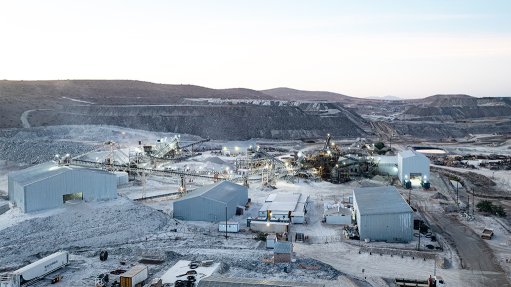
East Rand-based, privately owned mining house Upward Spiral 1471 has introduced new belt filter technology at its ERPM operation in Benoni, a move expected to lower operational costs, improve efficiency and deliver significant environmental benefits.
The filtration system is designed for mineral processing applications and eliminates the need to pump contaminated water from its mining operations to tailings dams offsite.
While the technology itself is not new, applying it in gold processing is highly innovative.
“Traditionally, filtration of mineral slurries happens on a laboratory scale,” says Thabang Masuku Metallurgical Manager at Upward Spiral 1471. “On a large industrial scale, however, gold plants typically don’t use belt filters. Instead, they rely on what’s called a tailings storage facility. This is effectively a large dam where waste material is pumped, allowing solids to settle while water is recovered and pumped back to the plant.”
This approach requires significant infrastructure, ongoing pumping, and large areas of land. It also presents environmental risks, including potential ground contamination and water loss through evaporation. The belt filtration system works by pulling slurry directly onto the belt filter inside the plant. Vacuum suction removes the water almost immediately, producing a filtered cake. That water is stored in concrete dams at ERPM and can instantly be reused in the process, rather than being pumped long distances and recovered later.
Positive environmental impact
The environmental benefits are significant. As the entire process takes place within the plant, there is minimal ground interaction and a substantially reduced risk of environmental contamination.
Unlike traditional tailings facilities, which require extensive lining, ongoing management, and long-term rehabilitation, this approach eliminates the need for large external storage infrastructure and the associated environmental risks.
“With this system, the only material that leaves the plant is the filtered cake. The water is continuously reused. There is no need for large dams, no risk of seepage into the soil, and no evaporation losses,” says Masuku, adding that the filtered cake itself can be sent for further
reprocessing, or it can be neutralised to remove any residual chemicals and then used responsibly to rehabilitate mined-out areas.
New technology will drive operational efficiency
While the belt filter is environmentally friendly, it is also more efficient, and far more cost-effective.
“From an operational perspective, you save time and energy because everything happens in one closed circuit. You don’t need to pump material long distances, you don’t need heavy machinery to build and maintain tailings dams, and you reduce overall water and power consumption. Although we are still finalising the detailed cost analysis, we expect this system to represent a significant reduction in operating expenses compared to conventional methods,” Says Masuku.
Upward Spiral 1471 is the first gold plant in its region to implement belt filtration at this scale.
“Other operations may use smaller filter press systems, which work on a similar principle, but those are not suitable for large volumes. The belt filter is designed specifically for high-throughput industrial applications like ours,” says Masuku.
The company expects to recover around 40 percent of the total processed water immediately through the filter. In traditional tailings dams, a significant amount of water is lost to evaporation.
“Because the filtration takes place indoors, we can even cover the system to further reduce any losses. Essentially, it allows us to operate in a near-closed water circuit, which is a major advantage in water-scarce environments,” Masuku concludes.
Article Enquiry
Email Article
Save Article
Feedback
To advertise email advertising@creamermedia.co.za or click here


Projects
Latest Multimedia

Latest News
Showroom
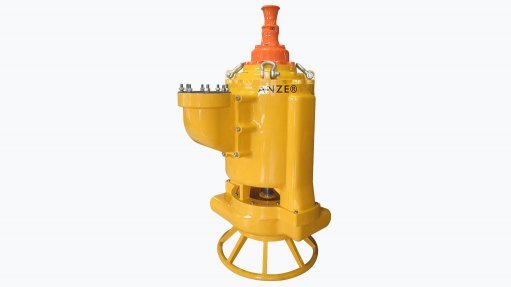
Goodwin Submersible Pumps Africa is sole distributors for Goodwin electrically driven, submersible, abrasion resistance slurry pumps.
VISIT SHOWROOM
Occupational health services, mobile clinics, wellness campaigns, aviation.
VISIT SHOWROOM

Announcements
What's On
Subscribe to improve your user experience...
Option 1 (equivalent of R125 a month):
Receive a weekly copy of Creamer Media's Engineering News & Mining Weekly magazine
(print copy for those in South Africa and e-magazine for those outside of South Africa)
Receive daily email newsletters
Access to full search results
Access archive of magazine back copies
Access to Projects in Progress
Access to ONE Research Report of your choice in PDF format
Option 2 (equivalent of R375 a month):
All benefits from Option 1
PLUS
Access to Creamer Media's Research Channel Africa for ALL Research Reports, in PDF format, on various industrial and mining sectors
including Electricity; Water; Energy Transition; Hydrogen; Roads, Rail and Ports; Coal; Gold; Platinum; Battery Metals; etc.
Already a subscriber?
Forgotten your password?
Receive weekly copy of Creamer Media's Engineering News & Mining Weekly magazine (print copy for those in South Africa and e-magazine for those outside of South Africa)
➕
Recieve daily email newsletters
➕
Access to full search results
➕
Access archive of magazine back copies
➕
Access to Projects in Progress
➕
Access to ONE Research Report of your choice in PDF format
RESEARCH CHANNEL AFRICA
R4500 (equivalent of R375 a month)
SUBSCRIBEAll benefits from Option 1
➕
Access to Creamer Media's Research Channel Africa for ALL Research Reports on various industrial and mining sectors, in PDF format, including on:
Electricity
➕
Water
➕
Energy Transition
➕
Hydrogen
➕
Roads, Rail and Ports
➕
Coal
➕
Gold
➕
Platinum
➕
Battery Metals
➕
etc.
Receive all benefits from Option 1 or Option 2 delivered to numerous people at your company
➕
Multiple User names and Passwords for simultaneous log-ins
➕
Intranet integration access to all in your organisation