Two new projects win Sibanye-Stillwater thumbs up

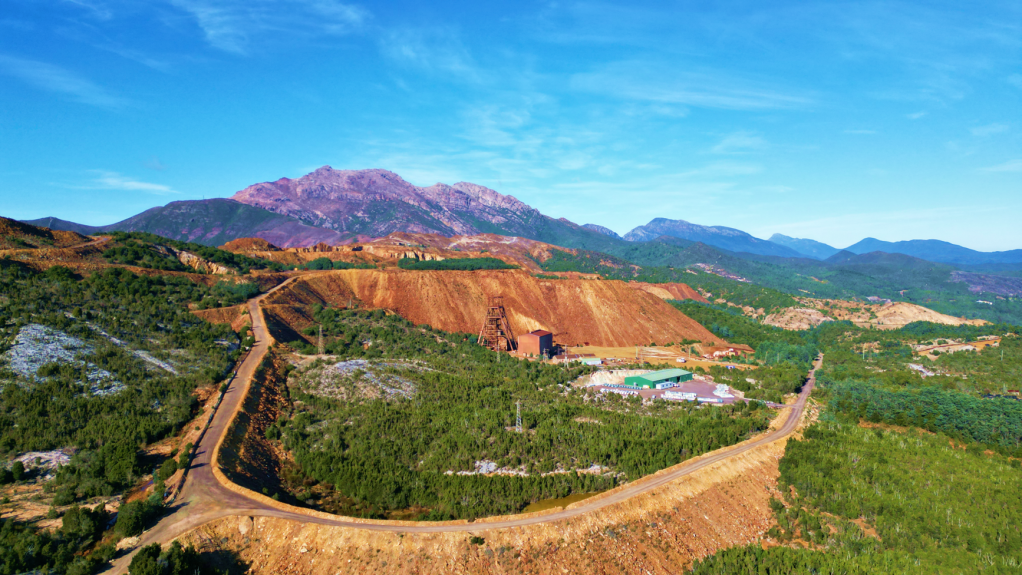
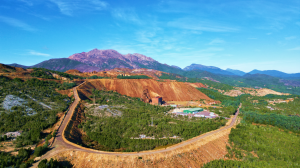
Mount Lyell copper/gold/silver project in Tasmania.
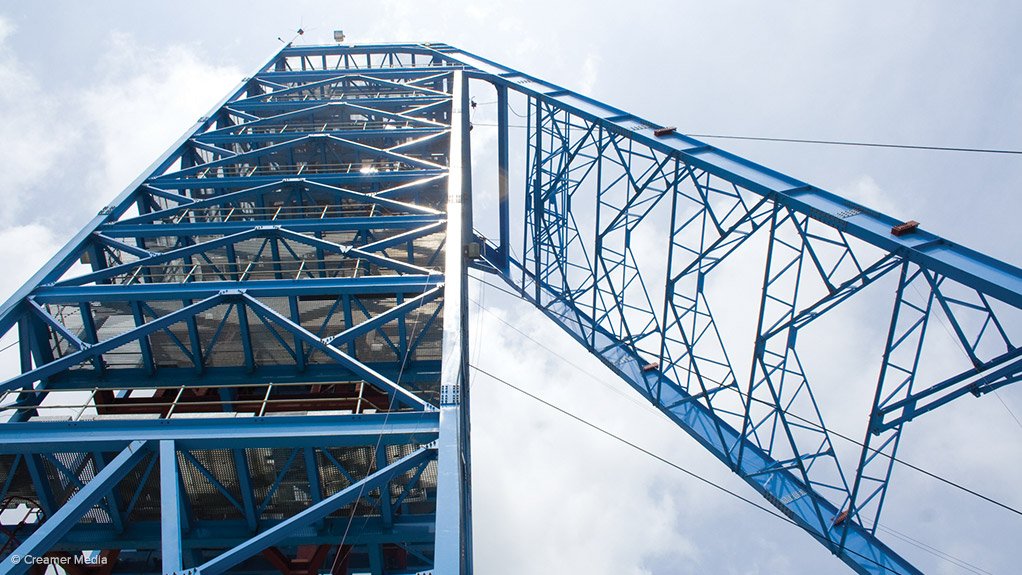
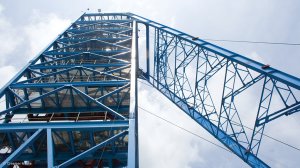
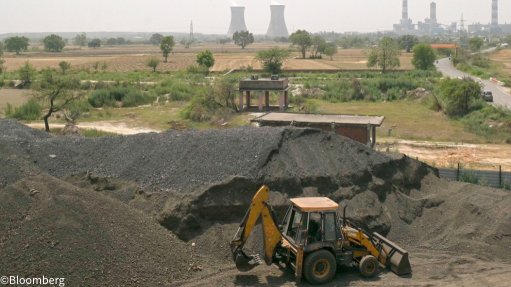
Burnstone project's vertical shaft already there for use.
Photo by Creamer Media
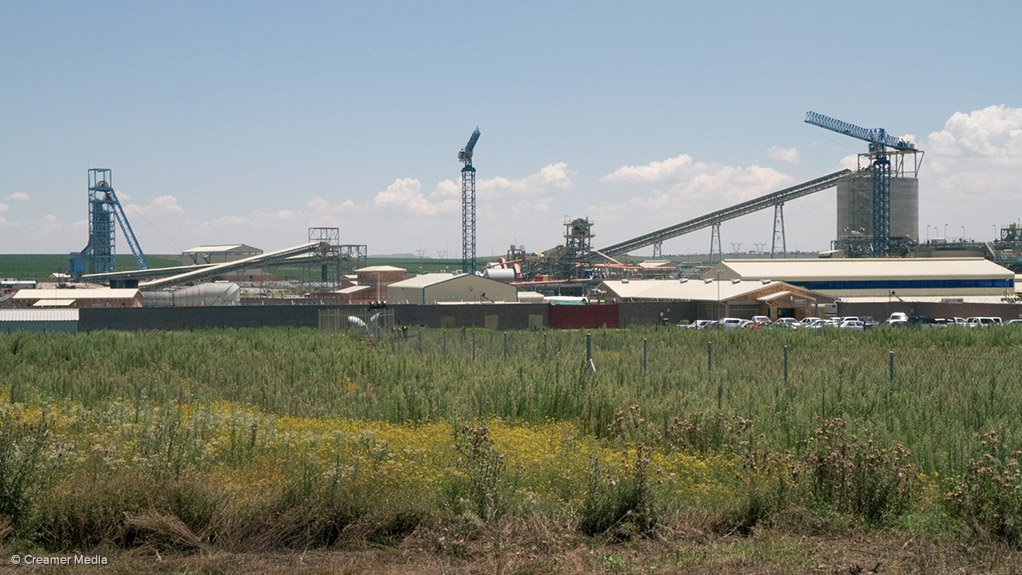
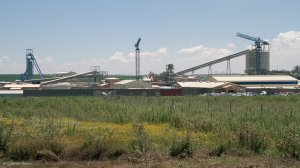
Burnstone.
Photo by Creamer Media
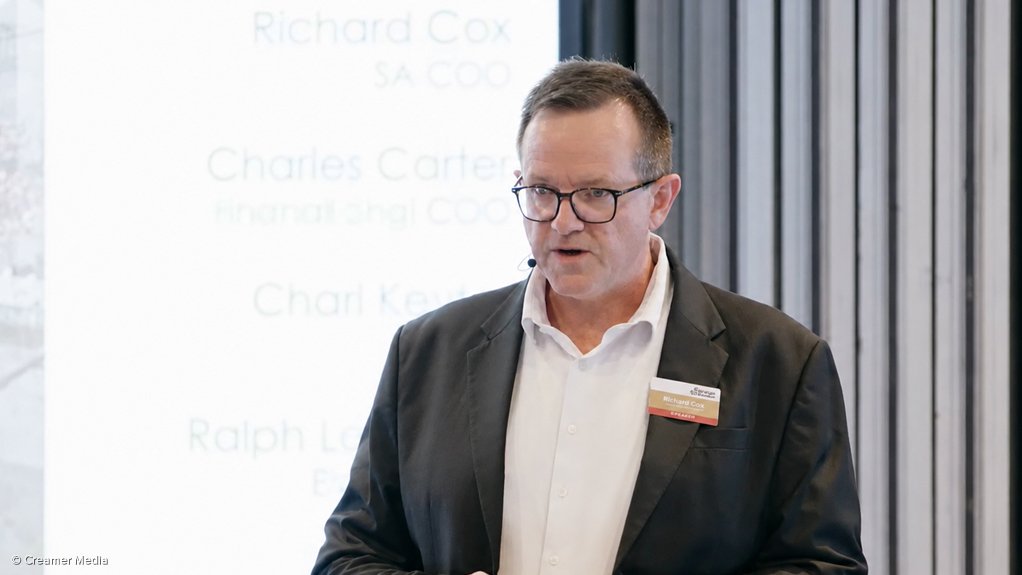
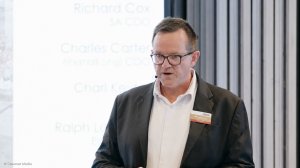
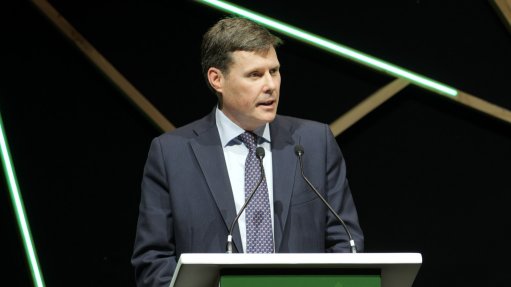
Sibanye-Stillwater COO Richard Cox.
Photo by Creamer Media


JOHANNESBURG (miningweekly.com) – Burnstone gold project in South Africa and Mount Lyell copper/gold/silver project in Tasmania, both considerably infrastructured with near-term revival outlooks, have been approved by Johannesburg Stock Exchange-listed Sibanye-Stillwater.
Burnstone, located near the town of Balfour in South Africa’s Mpumalanga province, is a project of about 130 000 oz of gold a year at steady state, with a 25-year life in relatively shallow reef in the Witwatersrand basin’s South Rand Goldfield.
Mt Lyell, near Tasmania’s Queenstown, comes with established operating insight and an early 2029 production target.
Burnstone’s vertical shaft, decline, and surface infrastructure is supported by a trackless mobile machinery (TMM) fleet so that mining can kick-off quickly when it begins next year.
“We’re not buying a greenfield premium. This is reserve replacement and a shallower, lower risk ounce to offset depletion from our deep conventional mines,” COO South Africa operations Richard Cox outlined during Sibanye-Stillwater’s presentation of super-duper, dividend-yielding half-year results covered by Mining Weekly.
For 2026, Burnstone has a capital allocation of R98-million and Mt Lyell $7.5-million.
“We don’t have to go out and join expensive M&A sales processes. We have a portfolio of assets that we can develop and that's our focus. Very exciting pipeline of projects coming through. The first six months have helped Sibanye progress its strategy a lot further than I imagined we would 12 months ago when we put that together,” an upbeat Sibanye-Stillwater CEO Dr Richard Stewart highlighted.
Burnstone and Mount Lyell were described by Sibanye-Stillwater head of projects Ralph Lombard as demonstrating the strength, depth, and quality of the company's project pipeline, "as well as the disciplined approach we're taking to capital allocation".
When in steady state, Burnstone will have created about 2 500 jobs and Mount Lyell about 300 jobs.
Burnstone has a net present value (NPV) of R19.2-billion with an internal rate of return (IRR) of 36%, while Mt Lyell has a post-tax NPV of $550-million and an IRR of 20%.
So, what makes Burnstone attractive?
"Burnstone sits with a substantial amount of infrastructure already developed. Most important is our vertical shaft and our decline shaft are in place. Over and above that is we have our TMM fleet available,” Lombard responded.
“We’ll build up to 2029 and create a stockpile for our processing facility to start in the first quarter of 2029 and after that, we’ll have continuous operations, steadily building up to steady state.
“At this stage, we are targeting 2.7-million ounces, which form part of our reserve. Successful execution of Burnstone will open up the additional 8.9-million ounces in future. When we talk about a 25-year life, that's the 2.7-million ounces," Lombard explained.
And what makes Mt Lyell attractive?
“Mt Lyell, like Burnstone, also has a substantial amount of infrastructure. It's a copper/gold mine in Tasmania. It's around the town of Queenstown, the top north-eastern portion.
“The orebodies we will target are Prince Lyell, Western Tharsis, Cape Horn, and Copper Chert. Those are the orebodies we are currently targeting as part of the Mount Lyell project.
“On the south-western side, is a fully permitted tailing storage facility. Like Burnstone, again, the infrastructure already in place reduces the capital bill which we need to pay for Mt Lyell,” said Lombard.
This year’s $7.5-million will be allocated to project setup, recruitment commencement, and mobilisation.
Total project capital to get to production is around $340-million. At today's spot prices, NPV is above one-billion dollars, and IRR in the region of 28%.
The picture of Mt Lyell showed disturbed ground around the vertical shaft and hoist room in the centre where the future processing facility will be located.
“We’ll start with the decline operations, and then in about three years' time, bring in the vertical shaft, which will allow hoisting to a concentrator next to the hoisting area.
“We spent a lot of time over the last three years to do the feasibility, and a lot of it was focused on engineering out the safety-related issues, which were identified with the previous owner when the mine was stopped in 2014,” Lombard reported.
Regarding the different orebodies, instead of focusing just on Prince Lyell, ultimately Western Tharsis, Cape Horn, and Copper Chert are also there to be mined, which allows for the creation of multiple relatively shallow extraction points ahead of going deeper.
The liabilities that Sibanye-Stillwater will be obliged to manage at Mt Lyell are all obligations arising post 1999. Anything prior to that will be carried by the Tasmanian government.
At this stage, its footprint is basically all on disturbed areas and the mine will be energised by hydropower.
Expected mine production at steady-state is 26 000 t of copper, 16 000 oz of gold and 116 000 oz of silver at an expected all-in sustaining cost (AISC) of $2.56/lb and, like Burnstone, the initial capital will carry the largest bill.
Mt Lyell’s decline is already connected to where the mining workings will happen. The operation has ventilation infrastructure. The available water pumping system is important as this part of Tasmania has the highest rainfall, and there are also established materials handling and logistics areas.
The biggest focus will be to get the concentrator built, so that extraction of 54.6-million tons of reserve and 78.8-million tons of resource can proceed, which excludes work currently being done on future exploration.
SOUTH AFRICA OPERATIONS
The South African operations converted stable delivery into real leverage with platinum group metal (PGM) and gold generating the bulk of group cash at AISC margins of 44% and 32% respectively.
“We're not standing still in the portfolio. On PGMs, we’re putting capital into shallow, infrastructure-backed extensions that hold a 1.5-million-ounce underground production profile, and in gold we’re producing more surface ounces,” said Cox.
Chrome remains a material stream at R1.1-billion of operating profit. Volumes were down but chrome should contribute more as the upper group two (UG2) feed is prioritised.
The brownfield programme is shifting the mix towards UG2, the chrome-bearing reef, so chrome is part of the same quality of ounce planned.
The brownfield project pipeline is sequenced, with Siphumelele and Thembelani in execution. Being studied are East 4, Kopaneng, East 3, Bathopele, as well as the smelter.
“All this without an acquisition premium, we're moving towards lower risk, it's shallow, and more importantly, it's actually on our footprint,” Cox noted.
Gold production was a 2%-lower 294 000 oz with underground mining’s output 9% down. Surface mining was 13% higher, and is now 36% of the mix – a structural shift.
Kloof was rebased, Kloof 7 closed. Beatrix lost high-grade access after seismic damage to footwall infrastructure and plant recoveries at Beatrix are improving.
The Kloof operation still has optionality. Remaining reserves are under assessment. Nothing is committed.
Driefontein was roughly flat year-on-year. Cooke was up 11% on third-party material, and DRDGOLD produced 2.5 t of gold, up 10% on yield.
“The future we’re all aiming at is a shallower, lower-risk, higher-margin gold portfolio,” Cox highlighted.
DRIEFONTEIN SAFETY
“If there’s one measure to tell you how well your business is doing, it's safety. Our Driefontein operations went one year fatality free,” said Stewart.
“The reason I raise that is because Driefontein’s the second deepest mine in the world, slightly shorter than Mponeng, which means it's got intense seismicity, it's got intense heat, it's got intense water.
“We put 7 000 people underground through more than 50-year-old infrastructure every day. Arguably, on an inherent risk basis, Driefontein’s probably the most dangerous mine in the world, if you want to look at inherent risk. But we've got the controls, we've got the methods, and we've got the people to prevent fatalities in that environment. If we can do it at Driefontein, we can do it anywhere else in our business,” Stewart opined.
Article Enquiry
Email Article
Save Article
Feedback
To advertise email advertising@creamermedia.co.za or click here
Research Reports
Latest Multimedia
Latest News

Showroom
We partner growth of our select clients through our comprehensive and competitive integrated international logistics, trade finance and information...
VISIT SHOWROOM
Press Office
Announcements
What's On
Subscribe to improve your user experience...
Option 1 (equivalent of R125 a month):
Receive a weekly copy of Creamer Media's Engineering News & Mining Weekly magazine
(print copy for those in South Africa and e-magazine for those outside of South Africa)
Receive daily email newsletters
Access to full search results
Access archive of magazine back copies
Access to Projects in Progress
Access to ONE Research Report of your choice in PDF format
Option 2 (equivalent of R375 a month):
All benefits from Option 1
PLUS
Access to Creamer Media's Research Channel Africa for ALL Research Reports, in PDF format, on various industrial and mining sectors
including Electricity; Water; Energy Transition; Hydrogen; Roads, Rail and Ports; Coal; Gold; Platinum; Battery Metals; etc.
Already a subscriber?
Forgotten your password?
Receive weekly copy of Creamer Media's Engineering News & Mining Weekly magazine (print copy for those in South Africa and e-magazine for those outside of South Africa)
➕
Recieve daily email newsletters
➕
Access to full search results
➕
Access archive of magazine back copies
➕
Access to Projects in Progress
➕
Access to ONE Research Report of your choice in PDF format
RESEARCH CHANNEL AFRICA
R4500 (equivalent of R375 a month)
SUBSCRIBEAll benefits from Option 1
➕
Access to Creamer Media's Research Channel Africa for ALL Research Reports on various industrial and mining sectors, in PDF format, including on:
Electricity
➕
Water
➕
Energy Transition
➕
Hydrogen
➕
Roads, Rail and Ports
➕
Coal
➕
Gold
➕
Platinum
➕
Battery Metals
➕
etc.
Receive all benefits from Option 1 or Option 2 delivered to numerous people at your company
➕
Multiple User names and Passwords for simultaneous log-ins
➕
Intranet integration access to all in your organisation