Treatment recovers water for municipal use

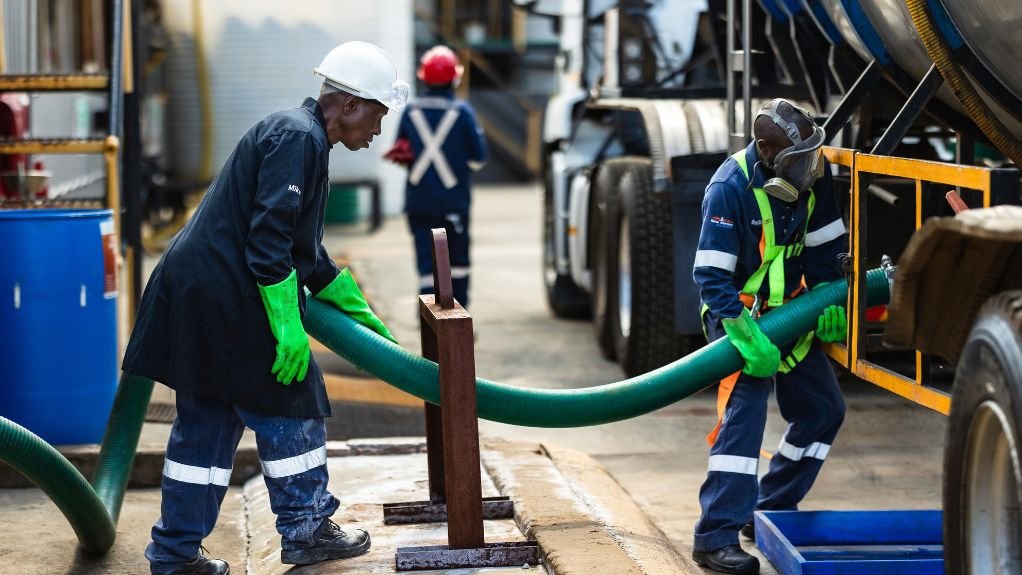
SAMPLE ANALYSIS Before a waste stream is registered and accepted at the facility, a sample is analysed by its in-house research and development laboratory


Of 6 000 t a month of hazardous liquid effluent being treated by Gauteng-based mining and hazardous waste treatment company Upward Spiral 1471, about 80% of the water is recovered and returned to the City of Ekurhuleni for further treatment and use, MD Jackie Pahad says.
The company operates from the East Rand and treats effluent from industrial processes across the mining, refining, petrochemicals, textile and chemicals manufacturing sectors.
Pahad says the treatment process is tailored to every waste stream since the characteristics of the effluent differ.
“Before a waste stream is registered and accepted at the facility, a sample is analysed by our in-house research and development laboratory. The sample is also sent to a specialised laboratory for waste characterisation and a full inductively coupled plasma scan to determine the major contaminants.”
The results inform the development of a specific process flow, which is validated through pilot-scale testing.
The main treatment stages include characterisation, identification, association and classification, followed by the selection of chemical or mechanical treatment methods for individual elements, selective precipitation, pH adjustment, clarification of the industrial waste after treatment, odour control and a final polishing stage.
Water recovery rates vary, based on the characteristics of every waste stream, while pretreatment and testing determine which by-products can be recovered and beneficiated.
The facility has recovered and concentrated trace metals from mining and refining effluent, including base and precious metals at concentrations below 10 parts per million in solution, upgrading them to more than 500 g/t.
“The recovered materials have been tested for market suitability and supplied to accredited local and international refining houses,” Pahad adds.
Other beneficiated products include sodium sulphate, which can be returned to the market for reuse, while some by-products are repurposed at the plant as supplementary treatment reagents.
All water recovered at the facility is returned to the City of Ekurhuleni at no cost, she notes.
Volumes also vary according to monthly intake, with peak recovery equivalent to about 300 households each receiving a minimum of 10 000 ℓ of water.
Water Recovery Capacity
The facility aims to increase its water recovery capacity, although this depends on greater adoption of zero liquid discharge (ZLD) and landfill-avoidance practices by industries generating effluent.
“The company’s ZLD-to-landfill technology treats hazardous liquid waste so that it can be safely discharged to sewers or reused in industrial processes, in line with municipal discharge regulations,” she says.
Key challenges facing water and waste management include the pollution of water sources supplying municipal treatment plants, groundwater contamination from landfill seepage, compromised dam-lining integrity and acid mine drainage (AMD).
She adds that municipal treatment plants are primarily designed to treat industrial, sewage and domestic water, and may not be equipped to manage increasingly contaminated effluent resulting from poor waste management and land disposal.
Water-recovery and ZLD technologies can help to address these challenges.
The facility is exploring opportunities to expand its treatment capabilities in the petrochemicals sector, which Pahad describes as a significant generator of industrial effluent.
It is also developing additional solutions for AMD to continuously pump and treat AMD from Johannesburg’s historic mine shafts.
Further, the facility is developing treatment solutions for landfill leachate to recover and reprocess contaminated liquid from landfills.
Article Enquiry
Email Article
Save Article
Feedback
To advertise email advertising@creamermedia.co.za or click here

Projects
Latest Multimedia

Latest News
Showroom
We at Hawk High Pressure Pumps specialise in industrial pumps and pumping systems. Our high pressure washing equipment is locally manufactured and...
VISIT SHOWROOM
SafeQuip is a leading distributor and manufacturer of fire safety solutions, offering a comprehensive range of products designed to meet all...
VISIT SHOWROOM
Press Office
Announcements
What's On
Subscribe to improve your user experience...
Option 1 (equivalent of R125 a month):
Receive a weekly copy of Creamer Media's Engineering News & Mining Weekly magazine
(print copy for those in South Africa and e-magazine for those outside of South Africa)
Receive daily email newsletters
Access to full search results
Access archive of magazine back copies
Access to Projects in Progress
Access to ONE Research Report of your choice in PDF format
Option 2 (equivalent of R375 a month):
All benefits from Option 1
PLUS
Access to Creamer Media's Research Channel Africa for ALL Research Reports, in PDF format, on various industrial and mining sectors
including Electricity; Water; Energy Transition; Hydrogen; Roads, Rail and Ports; Coal; Gold; Platinum; Battery Metals; etc.
Already a subscriber?
Forgotten your password?
Receive weekly copy of Creamer Media's Engineering News & Mining Weekly magazine (print copy for those in South Africa and e-magazine for those outside of South Africa)
➕
Recieve daily email newsletters
➕
Access to full search results
➕
Access archive of magazine back copies
➕
Access to Projects in Progress
➕
Access to ONE Research Report of your choice in PDF format
RESEARCH CHANNEL AFRICA
R4500 (equivalent of R375 a month)
SUBSCRIBEAll benefits from Option 1
➕
Access to Creamer Media's Research Channel Africa for ALL Research Reports on various industrial and mining sectors, in PDF format, including on:
Electricity
➕
Water
➕
Energy Transition
➕
Hydrogen
➕
Roads, Rail and Ports
➕
Coal
➕
Gold
➕
Platinum
➕
Battery Metals
➕
etc.
Receive all benefits from Option 1 or Option 2 delivered to numerous people at your company
➕
Multiple User names and Passwords for simultaneous log-ins
➕
Intranet integration access to all in your organisation