Transnet outlines ‘transact for value’ model for private sector participation transactions

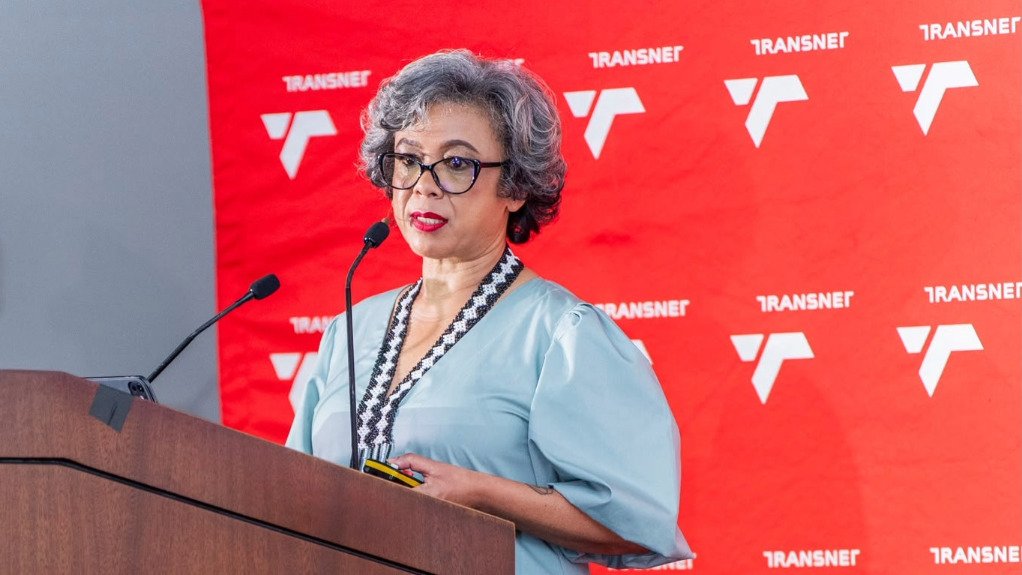
Transnet CEO Michelle Phillips speaking at the group's results presentation in Sandton


Transnet CEO Michelle Phillips says the sale of a 49.99% interest in its largest container terminal last year to International Container Terminal Services had set the tone for the way in which the State-owned group would approach other private sector participation (PSP) transactions across its rail, ports, and pipelines businesses.
Having faced two years of legal delay, the sale of the stake in the Durban Container Terminal Pier 2, now trading as the Durban Gateway Terminal, generated a profit on disposal for Transnet of R12.5-billion.
The one-off windfall emerged as a major contributor to Transnet swinging into a R4.6-billion profit in the year to March 31, 2026, after the group reported a R1.9-billion loss in the prior year.
Phillips said the Durban Gateway Terminal transaction demonstrated the group’s ability to “transact for value” when pursuing PSPs, which she said were now integral to its current strategy and in line with government’s policy of encouraging greater competition in markets hitherto monopolised by Transnet.
She acknowledged, however, that some transactions, including a plan to concession the lossmaking container rail corridor between Durban and Johannesburg, could involve unlocking strategic benefits rather than commercial proceeds.
“We bleed on that line. So, if it's possible that someone else can run that line, and it further reduces the cost that we expend on it, then that would also be of value for us,” she said.
Transnet expected to initiate a request for qualification process for the so-called Container Corridor PSP before the end of the year.
However, it indicated that it was aware that it might be difficult for private concessionaires to put forward a profitable business case in the absence of some form of support from the public sector or the fiscus.
Likewise, Transnet’s plan to dispose of a number of properties was largely motivated by a desire to reduce the ongoing costs associated with operating and maintaining these properties rather than making significant profits on the sales.
Nevertheless, the group is still aiming to realise some R1-billion from such disposals in the coming financial year and recently invited requests for proposals (RFPs) for 15 noncore properties, including the Carlton Centre, golf courses in Bloemfontein and Ekurhuleni and a mall in KwaZulu-Natal.
THREE PSP WAVES
Phillips used the group’s results presentation to outline what she described as a sequenced PSP portfolio, comprising of three “waves”.
The completed Durban Gateway Terminal transaction was listed as part of the first wave, along with three other PSPs that had been released into the market or would be released imminently, namely:
- the Richards Bay Dry Bulk Terminal, the submission deadline for which was recently extended;
- the Ngqura Manganese Export Terminal, the RFP documentation for which is due to be released in September; and
- the process initiated to secure a partner for a LeaseCo entity, which will lease rail rolling stock to train operating companies in South Africa and the region.
Also included in ‘Wave 1’ was the Container Corridor PSP and the Fibreoptic PSP, where pre-procurement structuring was still under way.
In ‘Wave 2’, Transnet intended pursuing private partners for its rail fuelling facilities, yards and depots, its agriculture and multipurpose terminals, and for gas and jet-fuel pipelines and storage infrastructure.
It was also assessing strategic collaborations under ‘Wave 3’ for its iron-ore and coal corridors.
Phillips said the implementation of these PSP transactions was likely to have an impact on the way Transnet was structured in future, as it would have a number of entities that it no longer managed directly.
“We will also need to manage a venture portfolio, and we believe that as we manage those venture portfolios, we will manage them for profit,” she said.
VOLUMES FALL SHORT
The integration of PSPs into the group’s strategy would be pursued in parallel to ongoing initiatives aimed at increasing Transnet’s own rail and port volumes.
While rail volumes increased by 4.9% to 167-million tons in 2026, they fell short of the 180-million-ton target; the level also set for achieving financial breakeven in the absence of profits arising from the disposal of assets.
That target itself also fell well short of the 250-million-ton goal for yearly rail volumes set by government for 2030, which would have to be met through both Transnet Freight Rail and private Train Operating Companies (TOCs).
Eleven private TOCs had signed rail access agreements and some were expected to begin operating in 2027, but maintenance backlogs on the mainline network and a lack of rolling stock were seen as key constraints to meeting the 2030 target.
Phillips said that National Treasury's approval of R14.8-billion in grant funding through the Budget Facility for Infrastructure (BFI) would help support infrastructure development and improve network performance.
However, she urged Finance Minister Enoch Godongwana to soften his so-called “tough love” stance when it came to Transnet, which she argued was no longer a delinquent entity having subjected itself to “rehab”.
Transnet would not seek a bail-out and was confident that the prevailing National Treasury guarantees were sufficient to see it through the coming five years.
However, Phillips appealed for an acceleration in the release of the BFI funding already approved, alongside additional approvals.
She also appealed for some leniency in relation to the conditions being imposed on it, which she said were time-consuming and expensive to meet, but did not offer specifics.
The BFI funding would also assist it in reducing its reliance on borrowings as it implemented a planned R129.1-billion capital expenditure programme over the coming five years.
Transnet expected to invest at a yearly rate of about R25-billion over the period, with the bulk of the capital (R116-billion) to be invested in sustaining capital.
In 2026, the group spent R23-billion on capital projects.
Article Enquiry
Email Article
Save Article
Feedback
To advertise email advertising@creamermedia.co.za or click here
Research Reports
Projects
Latest Multimedia
Latest News
Showroom
Axiom Hydraulics is a trusted leader in South Africa’s hydraulic industry, delivering world-class components, systems, and engineering expertise...
VISIT SHOWROOM
AirNox (Pty) Ltd is a level 1 BBBEE manufacturer of complete AdBlue® solutions for operators of SCR diesel engines and AUS40 across South Africa...
VISIT SHOWROOM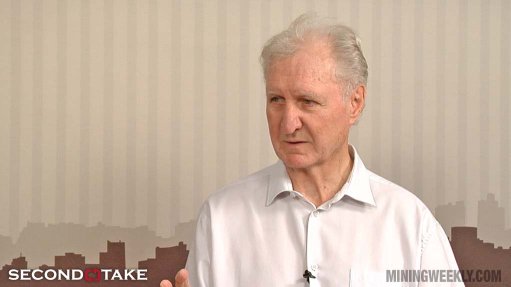
Press Office
Announcements
What's On
Subscribe to improve your user experience...
Option 1 (equivalent of R125 a month):
Receive a weekly copy of Creamer Media's Engineering News & Mining Weekly magazine
(print copy for those in South Africa and e-magazine for those outside of South Africa)
Receive daily email newsletters
Access to full search results
Access archive of magazine back copies
Access to Projects in Progress
Access to ONE Research Report of your choice in PDF format
Option 2 (equivalent of R375 a month):
All benefits from Option 1
PLUS
Access to Creamer Media's Research Channel Africa for ALL Research Reports, in PDF format, on various industrial and mining sectors
including Electricity; Water; Energy Transition; Hydrogen; Roads, Rail and Ports; Coal; Gold; Platinum; Battery Metals; etc.
Already a subscriber?
Forgotten your password?
Receive weekly copy of Creamer Media's Engineering News & Mining Weekly magazine (print copy for those in South Africa and e-magazine for those outside of South Africa)
➕
Recieve daily email newsletters
➕
Access to full search results
➕
Access archive of magazine back copies
➕
Access to Projects in Progress
➕
Access to ONE Research Report of your choice in PDF format
RESEARCH CHANNEL AFRICA
R4500 (equivalent of R375 a month)
SUBSCRIBEAll benefits from Option 1
➕
Access to Creamer Media's Research Channel Africa for ALL Research Reports on various industrial and mining sectors, in PDF format, including on:
Electricity
➕
Water
➕
Energy Transition
➕
Hydrogen
➕
Roads, Rail and Ports
➕
Coal
➕
Gold
➕
Platinum
➕
Battery Metals
➕
etc.
Receive all benefits from Option 1 or Option 2 delivered to numerous people at your company
➕
Multiple User names and Passwords for simultaneous log-ins
➕
Intranet integration access to all in your organisation