The tonnes go missing between the shift and the report

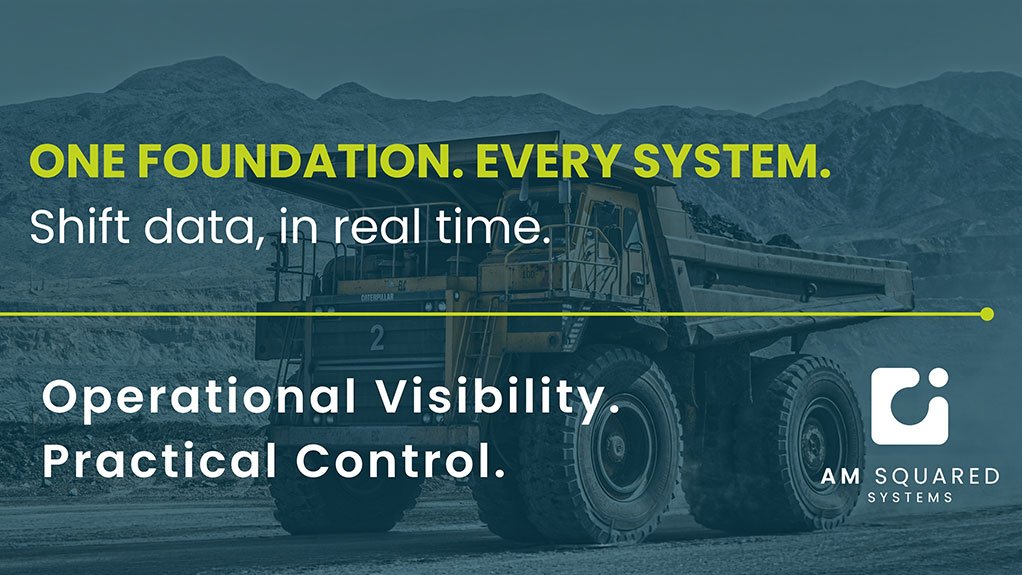



Your mine might know where it lost production. But does it know soon enough to do something about it?
A mine can have a productive shift on paper and still leave tonnes behind in the pit. A loader waiting for trucks, a growing queue at the crusher, a plant starved of feed individually; these interruptions may seem insignificant. Together, they can determine whether an operation achieves its daily production target.
The problem is not always that mine managers lack information. It is that critical information often arrives after the opportunity to act has passed.
By the time the production report explains where tonnes were lost, the shift is over. Equipment has moved, crews have changed, and the opportunity to recover that production may already be gone.
For mining operations under constant pressure to improve throughput, utilisation and cost per tonne, the difference between knowing what happened and knowing what is happening is becoming increasingly important.
Short interval control: the difference between reporting and responding
Short interval control (SIC) is not a new concept in mining. Its purpose is straightforward: measure actual performance against the production plan at regular intervals, identify deviations and take corrective action while there is still time to influence the outcome.
Yet many operations struggle to achieve this in practice.
Fleet management, dispatch, plant control, maintenance and grade control systems often operate independently. Each provides valuable information, but on different reporting cycles and with different definitions of operational performance.
A supervisor may know that trucks are queuing, while the production report shows declining tonnes moved and the plant control system indicates inconsistent feed. Connecting these observations into a reliable operational picture can take longer than the interval in which action was needed.
The result is an operation rich in data but constrained by how quickly that data becomes useful.
Short interval control loses much of its value when the information needed to make decisions arrives after the interval has passed.
Where the tonnes are lost
Production losses rarely stem from a single unplanned event. More often, they accumulate through smaller constraints that move across the operation throughout a shift.
A haul truck waits longer than planned at a loading point. A crusher queue builds during peak production. Equipment cycle times gradually increase. An unplanned stoppage interrupts plant feed, while upstream production continues without visibility of the downstream constraint.
Individually, these deviations may appear manageable. Repeated across multiple shifts, they can represent a meaningful production opportunity.
Consider a hypothetical operation moving 500 tonnes per hour. If earlier identification and intervention could recover just 30 minutes of productive time per shift, the theoretical opportunity would be 250 tonnes per shift, before considering downstream capacity, operational constraints or other limiting factors.
Across multiple shifts a day, small improvements can accumulate significantly.
The objective is not simply to produce a more accurate report of these losses. It is to identify avoidable delays early enough for supervisors to intervene, whether that means adjusting dispatch decisions, addressing equipment constraints or coordinating production with downstream capacity.
For an Operations Manager, that distinction matters. A report explains yesterday's performance. Effective operational visibility creates an opportunity to improve today's.
Connecting the operation without replacing what already works
AM SQUARED, a Johannesburg-headquartered mining technology and industrial data company, focuses on closing the information gap between operational systems and the decisions made on shift.
Through its MiX integration technologies and source-agnostic architecture, engineered primarily on Microsoft Azure, AM SQUARED connects information from existing fleet management, dispatch, plant, maintenance and other operational systems.
The objective is not to replace established systems or introduce technology for its own sake.
It is to bring critical operational information together, align it to a common timeline and make deviations visible to the people responsible for production performance.
A shift supervisor can continue working within familiar operational processes while gaining a more complete picture of cycle times, equipment utilisation, production against plan, plant feed and emerging constraints.
Where the necessary source data is available, integrated information can also support more effective analysis of recurring delays, equipment performance and production variability.
This approach protects existing technology investments while enabling mining operations to extract greater value from information they already collect.
A shift handover should not reset operational understanding
One of the most overlooked sources of operational inefficiency is the shift handover.
Critical information is often passed between crews through handwritten notes, spreadsheets, verbal updates and reports compiled after production activities have ended.
A recurring equipment delay may be mentioned without its full history. An emerging production constraint may not receive the same priority from the incoming supervisor. Actions initiated during one shift can lose momentum in the next.
When operational information is connected and consistently available, handover becomes a continuation of the production management process rather than a reconstruction of the previous shift.
Incoming crews can see outstanding constraints, understand deviations from plan and identify where corrective actions are still required.
This creates stronger operational continuity and clearer accountability across shifts.
"An operations manager does not need another report to read in the morning," says AM SQUARED CEO Johan de Villiers. "They need to see what the shift is doing while there is still a shift left in which to change it."
From operational visibility to measurable improvement
Technology alone does not improve production performance. Improvement happens when reliable information leads to better decisions, those decisions result in timely interventions, and the impact of those interventions can be measured.
That requires more than integrating systems.
Mining operations need clearly defined performance measures, an understanding of their operational constraints and practical processes for responding when production deviates from plan.
AM SQUARED combines industrial data integration with business improvement and consulting capabilities to help operations connect these elements.
The starting point is understanding how an operation currently measures performance, how quickly deviations become visible and whether supervisors have the information and authority needed to respond.
From there, opportunities can be identified to strengthen SIC, improve operational reporting, establish performance baselines and measure changes in production efficiency over time.
The aim is not simply greater visibility. It is measurable improvement in how the mine operates.
The question every mine manager should be asking
Mining operations have invested significantly in the systems that manage equipment, production, maintenance and processing. The challenge is increasingly less about collecting additional data and more about turning existing information into timely operational decisions.
When production falls behind plan, how long does it take to identify the deviation, understand the cause and take corrective action?
Ten minutes? An hour? Or only once the shift report is complete?
The answer may reveal an improvement opportunity hidden between systems, departments and reporting cycles.
AM SQUARED works with mining operations to assess these information gaps, connect existing technologies and strengthen the operational processes that turn visibility into action.
With experience delivering connected operations solutions for Tier 1 mining operators, AM SQUARED brings together mining knowledge, integration engineering and business improvement expertise to help customers unlock greater value from existing investments.
The next production meeting will still ask where the mine lost tonnes. The real opportunity is to make sure the answer was available while there was still time to recover them.
AM SQUARED is headquartered in Johannesburg, with international offices in the United Kingdom and New Zealand. The company specialises in mining technology, industrial data integration and operational business improvement.
Find out more at am2systems.com
Contact us: info@am2systems.com
Article Enquiry
Email Article
Save Article
Feedback
To advertise email advertising@creamermedia.co.za or click here
Research Reports


Projects

Latest Multimedia



Showroom
Occupational health services, mobile clinics, wellness campaigns, aviation.
VISIT SHOWROOM
Sika South Africa is a trusted partner for the nation’s infrastructure, commercial, residential, and industrial sectors.
VISIT SHOWROOM
Announcements
What's On
Subscribe to improve your user experience...
Option 1 (equivalent of R125 a month):
Receive a weekly copy of Creamer Media's Engineering News & Mining Weekly magazine
(print copy for those in South Africa and e-magazine for those outside of South Africa)
Receive daily email newsletters
Access to full search results
Access archive of magazine back copies
Access to Projects in Progress
Access to ONE Research Report of your choice in PDF format
Option 2 (equivalent of R375 a month):
All benefits from Option 1
PLUS
Access to Creamer Media's Research Channel Africa for ALL Research Reports, in PDF format, on various industrial and mining sectors
including Electricity; Water; Energy Transition; Hydrogen; Roads, Rail and Ports; Coal; Gold; Platinum; Battery Metals; etc.
Already a subscriber?
Forgotten your password?
Receive weekly copy of Creamer Media's Engineering News & Mining Weekly magazine (print copy for those in South Africa and e-magazine for those outside of South Africa)
➕
Recieve daily email newsletters
➕
Access to full search results
➕
Access archive of magazine back copies
➕
Access to Projects in Progress
➕
Access to ONE Research Report of your choice in PDF format
RESEARCH CHANNEL AFRICA
R4500 (equivalent of R375 a month)
SUBSCRIBEAll benefits from Option 1
➕
Access to Creamer Media's Research Channel Africa for ALL Research Reports on various industrial and mining sectors, in PDF format, including on:
Electricity
➕
Water
➕
Energy Transition
➕
Hydrogen
➕
Roads, Rail and Ports
➕
Coal
➕
Gold
➕
Platinum
➕
Battery Metals
➕
etc.
Receive all benefits from Option 1 or Option 2 delivered to numerous people at your company
➕
Multiple User names and Passwords for simultaneous log-ins
➕
Intranet integration access to all in your organisation