The fragile balancing act – DER growth vs grid stability

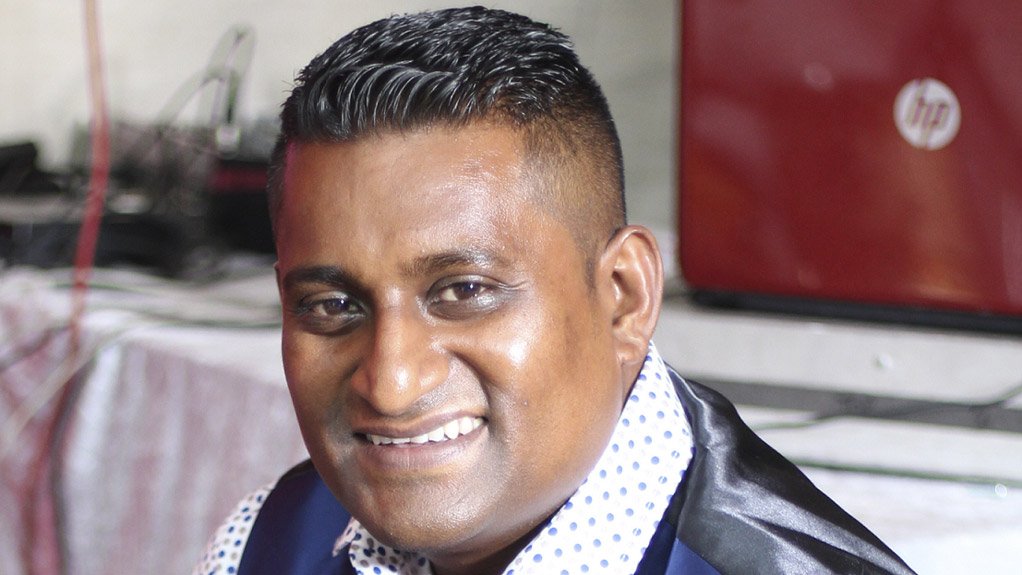



This article has been supplied.
By; Nishandra Bajinath - Digital Grid, Head of Sales in Sub-Saharan Africa at Schneider Electric
With the country’s energy posture becoming increasingly decentralised, driven by the advent of rooftop solar., EVs and energy storage resources (ESRs), utilities are facing a fundamental challenge – how do they connect more distributed energy resources (DERs )to the grid without compromising its stability?
As more customers become energy producers as well as consumers, the traditional approach to managing electricity networks is being tested to the nth degree. The reality is the grid was largely designed around a relatively predictable model of centralised generation flowing through transmission and distribution networks to customers.
Today, customers may consume electricity, generate it, store it and—where regulations and connection arrangements allow—export it back into the network resulting in power flowing bi-directionally, while the amount of generation connected at the edge of the network can change significantly from one customer to the next.
This introduces greater variability and more complex power flows at the grid edge. The opportunity is significant, but unlocking it requires utilities to understand not only where distributed resources are connected, but also how they affect the network under different operating conditions.
From connecting DERs to understanding their impact
One of the most important questions is how much additional generation, storage or flexible demand can be hosted in a given part of the network while ensuring utilities keep it safe and reliable?
A comprehensive system-level review on Energy Transition Resilience Gaps published in ScienceDirect outlines that current operational metrics are completely fragmented. Operators face massive "major event blind spots" because existing data tracking fails to properly integrate cyber-physical interdependencies and dynamic, localised grid realities.
And it is here where visibility becomes critical A traditional electricity network may have relatively stable physical infrastructure: high-voltage (HV) substations, medium-voltage (MV) and low-voltage networks, ring main units and other assets whose characteristics are well understood.
The DER landscape, by contrast, is highly dynamic. One household may have an 8-kW inverter, another a 5-kW system, while another may have additional batteries or a different combination of solar panels and storage.
At the commercial and industrial level, the diversity multiplies; factories may deploy large‑scale storage and shopping centres may integrate rooftop PV with demand response programs, and municipalities may be using microgrids.
If you multiply this across thousands of customers, utilities are suddenly dealing with a huge volume of assets and data.
A new operational environment.
Utilities therefore need intelligence that can help them understand the electrical characteristics of their networks, assess available hosting capacity and identify where additional DER connections could create constraints.
Schneider Electric’s EcoStruxure Distributed Energy Resource Management System (DERMS), for example, combines DER monitoring, forecasting and control with capabilities such as hosting capacity analysis, grid constraint management and the use of DER flexibility to address network needs.
This allows utilities to become more proactive, understanding where DERs can be connected, what their impact could be and how their flexibility can be used to support the network.
DERMS should be understood as part of a wider Digital Grid environment. SCADA provides telemetry, alarms and authorised field control. EcoStruxure ADMS—or EcoStruxure Grid Operation for smaller and medium-sized utilities—provides the operational network model, distribution analysis, switching and outage-management environment. DERMS complements these systems with DER-specific visibility, forecasting, orchestration and constraint-aware dispatch.
Together, these capabilities can help operators understand where DER is connected, how it is expected to behave and where future conditions may create voltage, thermal or reverse-power-flow constraints.
Turning flexibility into a grid asset
The real opportunity lies in moving beyond simply monitoring DERs to actively using their flexibility to support the network.
Solar generation, batteries, EVs, microgrids and demand-response programmes can all become part of a more flexible electricity system. When coordinated effectively, these resources can help utilities respond to changing network conditions, manage constraints and maximise renewable generation. DERMS can aggregate these resources, evaluate their available flexibility and dispatch individual or grouped resources in response to local or wider system needs.
This does not mean that every rooftop installation, EV or battery is automatically controllable. Participation depends on communications, equipment capability, customer consent, connection agreements, aggregator arrangements and the applicable regulatory framework.
This is particularly important because high levels of renewable generation can introduce challenges such as reverse power flows, voltage issues and thermal constraints. Digital tools can provide utilities with greater situational awareness, helping them identify potential problems in real time as well as anticipate upcoming constraint violations.
Planning for a more distributed energy future
Traditionally, when network capacity becomes constrained, reinforcement may mean building or upgrading physical infrastructure. As DER penetration increases, however, utilities can also consider whether the flexibility available from distributed resources can help manage constraints before capital-intensive reinforcement becomes necessary.
Again, EcoStruxure DERMS supports this approach by enabling utilities to assess different grid reinforcement scenarios, including their technical and economic feasibility, while analysing different levels of DER adoption and their impact under varying load and weather conditions.
The greatest value will come from connecting planning and operations: accurate GIS and network models, SCADA and metering data, DER forecasts, ADMS-based grid awareness, outage-management processes, and DERMS-based flexibility orchestration.
That is how power utilities can move from simply accommodating DER to actively integrating them into a safer, more flexible and renewable-ready electricity system.
Article Enquiry
Email Article
Save Article
Feedback
To advertise email advertising@creamermedia.co.za or click here
Research Reports

Projects
Latest Multimedia
Latest News
Showroom

CMTS is a leading, well-established EC&I contractor with 37+ years of mining and industrial experience. We execute full-scope EC&I projects with...
VISIT SHOWROOM
TEBA is a trusted workforce solutions partner to the mining and industrial sectors, providing end-to-end SLP compliant recruitment, candidate...
VISIT SHOWROOM
Announcements
What's On
Subscribe to improve your user experience...
Option 1 (equivalent of R125 a month):
Receive a weekly copy of Creamer Media's Engineering News & Mining Weekly magazine
(print copy for those in South Africa and e-magazine for those outside of South Africa)
Receive daily email newsletters
Access to full search results
Access archive of magazine back copies
Access to Projects in Progress
Access to ONE Research Report of your choice in PDF format
Option 2 (equivalent of R375 a month):
All benefits from Option 1
PLUS
Access to Creamer Media's Research Channel Africa for ALL Research Reports, in PDF format, on various industrial and mining sectors
including Electricity; Water; Energy Transition; Hydrogen; Roads, Rail and Ports; Coal; Gold; Platinum; Battery Metals; etc.
Already a subscriber?
Forgotten your password?
Receive weekly copy of Creamer Media's Engineering News & Mining Weekly magazine (print copy for those in South Africa and e-magazine for those outside of South Africa)
➕
Recieve daily email newsletters
➕
Access to full search results
➕
Access archive of magazine back copies
➕
Access to Projects in Progress
➕
Access to ONE Research Report of your choice in PDF format
RESEARCH CHANNEL AFRICA
R4500 (equivalent of R375 a month)
SUBSCRIBEAll benefits from Option 1
➕
Access to Creamer Media's Research Channel Africa for ALL Research Reports on various industrial and mining sectors, in PDF format, including on:
Electricity
➕
Water
➕
Energy Transition
➕
Hydrogen
➕
Roads, Rail and Ports
➕
Coal
➕
Gold
➕
Platinum
➕
Battery Metals
➕
etc.
Receive all benefits from Option 1 or Option 2 delivered to numerous people at your company
➕
Multiple User names and Passwords for simultaneous log-ins
➕
Intranet integration access to all in your organisation