Subianto's radical commodity export plan for Indonesia faces dueling visions

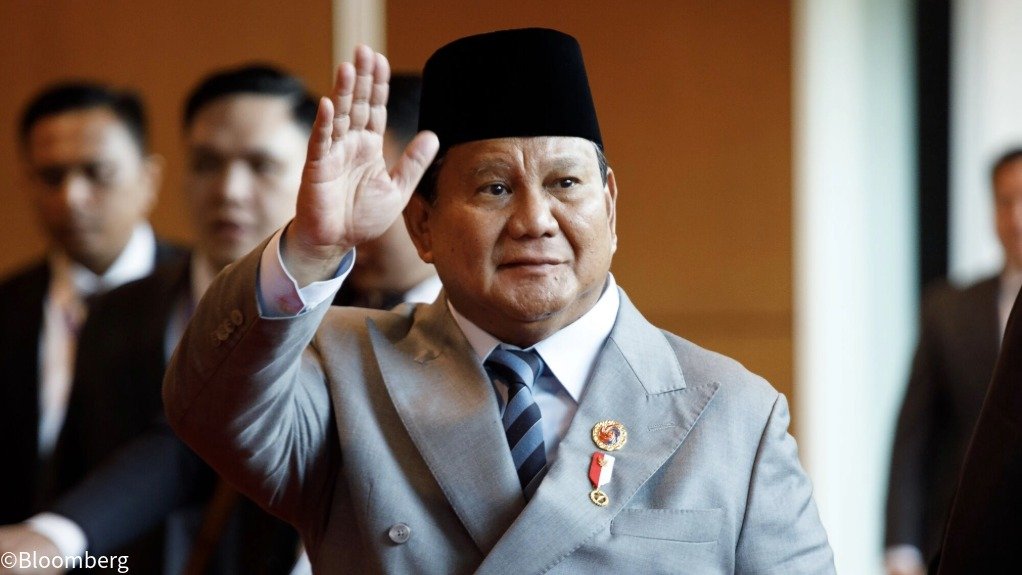


More than two months after President Prabowo Subianto unveiled plans to take control of Indonesia’s top commodity exports, the agency charged with carrying out the proposal is caught between competing visions of its role in the economy’s most vital export industry.
The President shocked producers and traders in May by announcing he would centralize trade in key raw materials as part of an effort to increase transparency and crack down on tax evasion. To turn that blueprint into reality, he set up a State-owned entity, Danantara Sumberdaya Indonesia (DSI), under the country’s similarly named sovereign wealth fund.
But as DSI races to set up structures and staffing, a fundamental issue remains unresolved: Should the agency prepare to take on a narrow price-monitoring role, or should it instead become the state trading powerhouse the president envisions? That decision could determine the future of Indonesia’s commodities industry and rattle global trade in its top exports, including palm oil and thermal coal.
Subianto recently said he hoped DSI would be operating as a one-stop shop for natural resource exports by September. That stands in contrast to statements from some Danantara officials, who have laid out its mission as ensuring exports are sold at fair prices, rather than trading directly.
The debate has continued behind closed doors, people familiar with the matter say, with some executives wary that Prabowo’s all-encompassing vision could threaten an economy under pressure, as well as their own careers. Shipments are largely carrying on as normal for now, but the next steps could upend those flows and influence the president’s relationship with Danantara.
“The uncertainty, rather than the regulatory change itself, is probably the greatest concern,” said Baldev Bhinder, MD at Singapore-based specialist commodities law firm Blackstone and Gold. “Commodity markets can adapt, but a prolonged lack of clarity on the precise powers and role of the agency means operational friction, buyer hesitancy and possibly a slowdown on new deals.”
Subianto’s ambition is to make the State the sole exporter of the country’s vast natural resource wealth, acting as a commercial intermediary between Indonesia’s producers and overseas buyers. That’s a role currently filled by an array of private commodity traders each with their own expertise, specialties and client base.
Tasking Danantara with the issue mimics a strategy used before: When faced with problems, Subianto often turns to the sovereign wealth fund — which he created last year — to find solutions, sidestepping Indonesia’s sprawling bureaucracy. But the rift that’s forming as DSI ramps up shows how Subianto’s radical views on Indonesia’s economy are unnerving even those at his most favored institution.
Senior figures behind the project envisage it as a monitoring agency, which would collect data on exports and ensure they’re being booked at their true value, the people said, asking not to be named as the discussions are private. That would be in keeping with the entity’s original task: curbing a practice known as under-invoicing, in which producers shift profits to lower tax jurisdictions offshore by declaring exports to be worth less than their true value.
Danantara COO Dony Oskaria said in June that the plan was not for the agency to seize control of exports or act as a middleman reselling commodities, but rather prevent transfer pricing and ensure strategic goods are traded at fair market prices. The fund’s chief executive, Rosan Roeslani, said in July that while DSI would become Indonesia’s sole sales agent, exporters would still be able to execute shipments, transact with overseas buyers and maintain long-term contracts.
Some within the sovereign wealth fund disagree on the scale of the problem that prompted the creation of DSI. Estimates produced by Danantara show revenue losses to under-invoicing were far smaller than the as much as $150-billion annually Subianto has claimed the country was losing to the practice, according to the people familiar with the matter.
In contrast, the prospect of a monopoly on the buying and selling of Indonesia’s commodities is seen as being massively disruptive to existing businesses that form the bedrock of the economy and a deterrent to investment in the sector. Subianto’s fiscal expansion, aggressive governance and haphazard policy execution have already put him at odds with foreign investors and battered the rupiah.
Enthusiasm for a full-scale trading business is low within Danantara, including with DSI’s CEO Luke Mahony, according to people who have spoken to him in recent months. The Australian, a former executive at PT Vale Indonesia, joined the sovereign wealth fund last year and was unaware of the scale of Subianto’s plans before he took the helm, the people said.
In a statement, Mahony said Subianto’s objective is to strengthen the governance of Indonesia’s strategic commodity exports and the agency is intended to complement the existing ecosystem.
DSI’s “current focus remains on institution building, recruitment, digital capability development, operational readiness, and stakeholder engagement,” Mahony said. “Market principles remain fundamental, with commercial negotiations, contractual arrangements, and pricing continuing to be determined by market participants.”
The Government Communication Agency referred queries to Danantara.
Even so, recent statements from Subianto show little inclination to compromise on his vision.
“We face a massive problem, with a vital issue,” the president said in a July address to the cabinet. “If we let this happen, if the leaking of hundreds of billions of dollars of Indonesia’s wealth is allowed to continue, we can imagine what our nation will look like.”
Bringing on top talent will be central to that goal. Danantara has sought to hire from large commodity traders to run three divisions, specializing in nickel, coal and palm oil — the trio of goods the policy initially will focus on, the people said. The products together account for more than $65-billion in annual exports, sourced from a patchwork of miners, plantations and smelters across the archipelago.
Danantara is exploring opportunities for DSI on the London Metal Exchange, with the city’s commodity trading talent a key draw, according to Chief Investment Officer Pandu Sjahrir.
But the personal jeopardy involved in working for DSI has impacted its ability to bring people on. At least two traders working at major international commodity firms recently turned down senior positions, saying the salaries offered failed to compensate for the risks involved, according to people familiar with their discussions. Both feared eventual prosecution if their trading led to losses for the state, despite additional protections offered to Danantara directors.
Part of that is due to Indonesian law, which exposes employees at State-owned enterprises to criminal prosecution for causing losses to state finances, even unintentionally. Those regulations have led to the jailing of a number of high-level executives over the years, and the risks are heightened in an inherently volatile business like commodity trading.
“There will be many factors that make foreigners worried to accept these kind of jobs,” said Siwage Negara, a research fellow at the ISEAS-Yusof Ishak Institute in Singapore. “They know how difficult it is working with the Indonesian bureaucracy.”
While the agency is already collecting price data, the caliber of DSI’s prospective hires indicates plans to go beyond export monitoring — in line with Prabowo’s vision. A job description for a business head role seen by Bloomberg details the need to be able to build a fully-fledged trading business, from signing off-take agreements with producers to acquiring external customers.
That’s also outlined by law. The government regulation underpinning the agency says that after December 31, covered commodities may only be exported by a designated state body, which will have the authority to set sale prices and margins.
“This isn’t a monitoring role, it’s a commercial one,” said Khairunnisa A. Damayanti, an analyst for Southeast Asia-focused risk assessment and strategic advisory firm Cascade Asia.
Article Enquiry
Email Article
Save Article
Feedback
To advertise email advertising@creamermedia.co.za or click here
Latest Multimedia
Latest News
Showroom

Virtual Gas Network supplies compressed natural gas via a virtual gas distribution network.
VISIT SHOWROOM

Announcements
What's On
Subscribe to improve your user experience...
Option 1 (equivalent of R125 a month):
Receive a weekly copy of Creamer Media's Engineering News & Mining Weekly magazine
(print copy for those in South Africa and e-magazine for those outside of South Africa)
Receive daily email newsletters
Access to full search results
Access archive of magazine back copies
Access to Projects in Progress
Access to ONE Research Report of your choice in PDF format
Option 2 (equivalent of R375 a month):
All benefits from Option 1
PLUS
Access to Creamer Media's Research Channel Africa for ALL Research Reports, in PDF format, on various industrial and mining sectors
including Electricity; Water; Energy Transition; Hydrogen; Roads, Rail and Ports; Coal; Gold; Platinum; Battery Metals; etc.
Already a subscriber?
Forgotten your password?
Receive weekly copy of Creamer Media's Engineering News & Mining Weekly magazine (print copy for those in South Africa and e-magazine for those outside of South Africa)
➕
Recieve daily email newsletters
➕
Access to full search results
➕
Access archive of magazine back copies
➕
Access to Projects in Progress
➕
Access to ONE Research Report of your choice in PDF format
RESEARCH CHANNEL AFRICA
R4500 (equivalent of R375 a month)
SUBSCRIBEAll benefits from Option 1
➕
Access to Creamer Media's Research Channel Africa for ALL Research Reports on various industrial and mining sectors, in PDF format, including on:
Electricity
➕
Water
➕
Energy Transition
➕
Hydrogen
➕
Roads, Rail and Ports
➕
Coal
➕
Gold
➕
Platinum
➕
Battery Metals
➕
etc.
Receive all benefits from Option 1 or Option 2 delivered to numerous people at your company
➕
Multiple User names and Passwords for simultaneous log-ins
➕
Intranet integration access to all in your organisation