Green iron-ore is a great South African export opportunity, Joburg Indaba hears

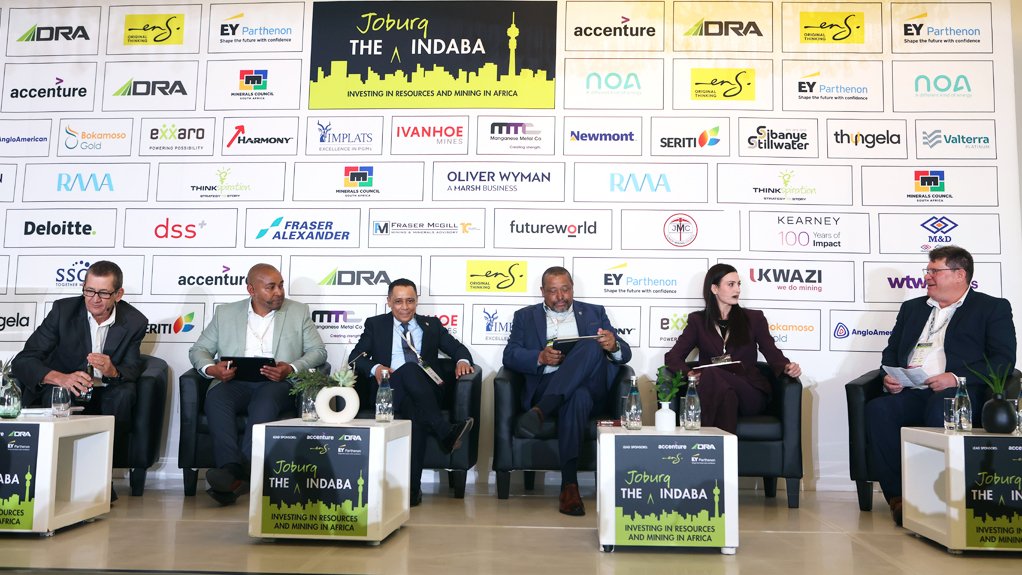
Joburg Indaba panel discussion covered by Mining Weekly's Martin Creamer. Video: Darlene Creamer.
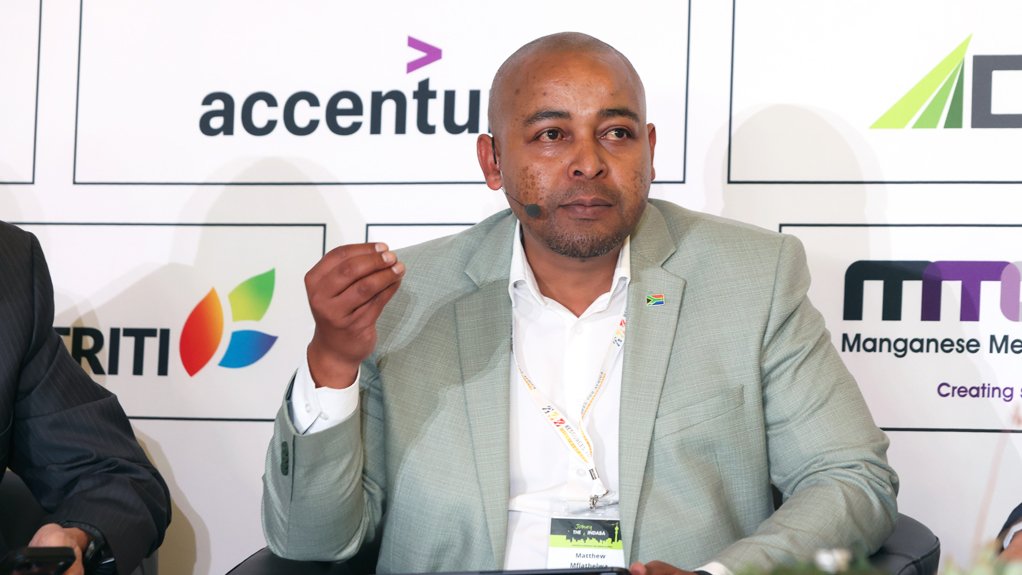
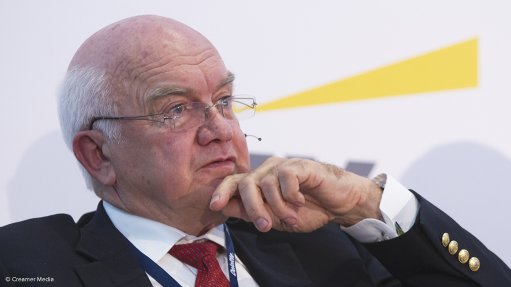
Eskom GM strategy Matthew Mflathelwa.
Joburg Indaba panel discussion.
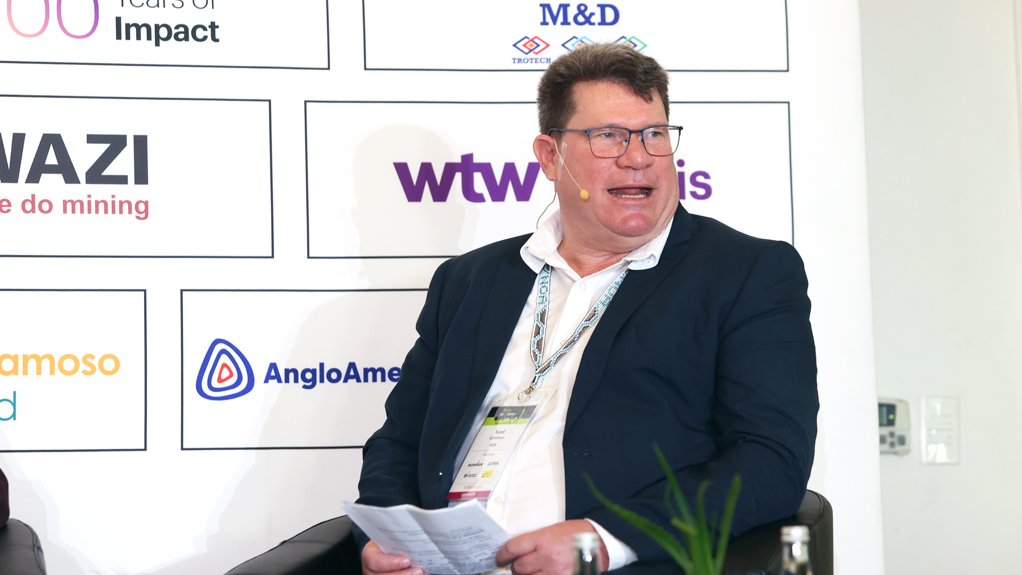
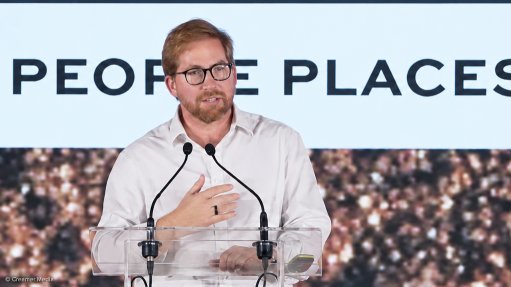
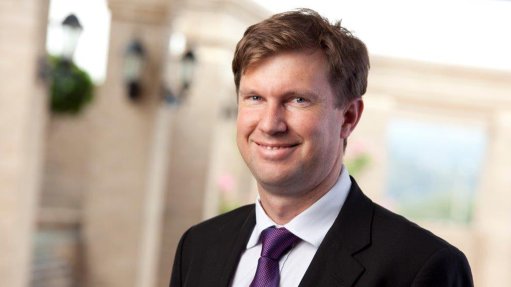
NOA Group CEO Karel Cornelissen.
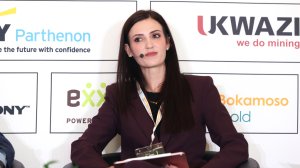
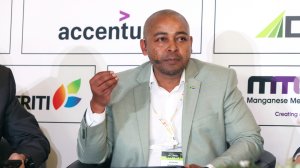
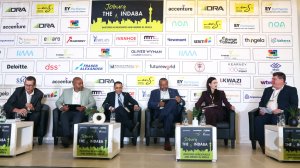
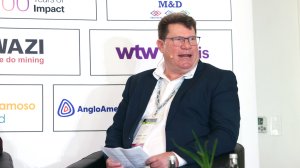


JOHANNESBURG (miningweekly.com) – Making green iron-ore for exportation is a great opportunity, South Africa’s Joburg Indaba heard on Thursday, October 8, when Kearney South Africa energy partner Frances Phillips drew attention to South Africa’s renewable-energy, iron-ore and platinum group metals (PGM) endowments in urging that South Africa’s green hydrogen thoughts extend beyond green hydrogen molecules alone.
In response to a question during a panel discussion chaired by NOA Group CEO Karel Cornelissen, Phillips said: “There's opportunity for us to bring the renewable energy that can make green hydrogen together with some of the mineral deposits that we have.”
Critical elements would, however, include having the renewable energy, and rail and port infrastructure in place to facilitate export.
“But, absolutely, there’s an opportunity around how we take the renewable energy, make green hydrogen, but maybe not to export green hydrogen, and then use that to add value benefits on local grounds before we export it to other countries. A big opportunity there,” Phillips pointed out in the panel discussion in which Seriti Resources CEO Mike Teke, National Transmission Company South Africa CEO Monde Bala, and Eskom GM strategy Matthew Mflathelwa also took part and which was covered by Mining Weekly. (Also watch attached Creamer Media video.)
“We all know that we are endowed with renewable energy, a critical element of making green hydrogen. But unfortunately, I think we've not managed to get the bankability across the value chain, and I think there's a number of reasons for that – demand, infrastructure, ports, reliability of electricity. There's many factors that have unfortunately contributed to this, but it doesn't mean that there isn't still opportunity, and maybe I must declare my bias: I was a metallurgist and a steelmaker before I became an energy strategist.”
Viewed as a second opportunity by Phillips is PGM- and green hydrogen-linked component manufacturing.
In opening the discussion on the subject of South Africa’s renewable energy generation advance, Cornelissen drew attention to well north of R100-billion rands being committed in the last 12 months to build additional generation capacity “for this country that we love so much, and this is not a one-off commitment. I believe we're going to do this every year for the next 20 to 25 years.
“It's estimated that this is going to be a R3-trillion energy transition, and I think if we play our cards right, this could be the stimulus that our South African economy needs for explosive growth,” Cornelissen added.
The day’s three themes were the just transition, ensuring that South Africa gets maximum benefit out of this transition, and the energy trilemma, which put in simple words, he said, related to “how does one balance reliability, affordability, and the desire for a clean future”.
Meanwhile, South Africa's electricity generation hub was described by Bala as moving from Mpumalanga to the Northern Cape, where the national electricity grid was weakest.
Mflathelwa drew attention to the newly launched Eskom Green having an ambition to generate 32 GW of renewable energy by 2040, helped on by putting 2 GW into the market this year and 6 GW by 2030.
And Kearney spoke of the prioritisation of energy storage to alleviate stability challenges, as well as the introduction of gas. At the centre would be the grid being able to get power from where it is produced to where it is needed and remaining stable through every different technology mix into the future.
Cornelissen: How do we make sure that this is a just transition?
Teke: It's interesting for us to look at the crisis we faced with loadshedding in 2023, when we had something like 6 900 hours lost because of loadshedding. We took advantage of the fact that we are a coal miner. We have land, we have water, we have quite a number of resources around our mines. We invested in Seriti Green, and that's proper transition, where we're building the wind turbines where you are seeing the transition in action… and where people are recognising that the energy is generated differently and that the types of jobs that are coming out of there are different. You take the communities along in terms of their development, in terms of their future, in terms of working with stakeholders like municipalities, different government agencies. When we were building Seriti Green, the water that we used, mixing the concrete and all those things, came from New Denmark Colliery, so the transition is happening in reality, when you stand there and you’re at the wind farm generating 155 MW of phase one. Across the road is the Tutuka power station, a coal-fired power station. On the right, if you stand the other way, is Secunda, Sasol’s coal-to-liquids plant, and that's where the transition is happening in reality. But don't leave these communities behind.
Bala highlighted investment in the infrastructure as being key currently. “We’re looking at growing the grid to our neighbours to grow our interconnectors, managing the flexibility in the system. We are bringing in new technologies. We are bringing synchronous condensers to help stabilise the grid, so from a grid investment point of view, there's huge opportunities. But obviously, we need to ensure that at the back of that is growing demand, so that we can then push through some of the investments that are required.”
Regarding Eskom's future in an open electricity market, Mflathelwa emphasised the importance of different ingredients being required to operate a stable grid, one of them being dispatchable capacity, where Eskom has distinctive strength.
He expressed confidence that Eskom would be able to compete effectively in an environment in which all participants had the same obligations as Eskom.
“What we’re thinking about now is how do we start tailoring our products and services to focus on specific market segments to stimulate industrialisation and to provide the kind of profile that some of the customers need.
“So, we're quite deliberate in choosing where we play. We realise that we need to make space for others. Others can do certain things better than us, but there's a lot of strength that we possess that we are playing to now going forward, so I'm quite confident we're going to win,” said Mflathelwa.
South Africa’s existing 33 000 km transmission grid is scheduled to have 14 500 km more in the next ten years under the Transmission Development Plan (TDP).
Bala views the TDP as the fastest way to realise South Africa’s decarbonisation ambition “because when we execute the TDP, we should be able to connect some 56 GW of largely renewable new generation, which then introduces into the mix an element that we’ve never had in the past.
“In doing so, it will be a very missed opportunity if we don’t localise as much as possible and utilise the expansion of the grid to reindustrialise the country. As the grid traverses the communities, we need to make sure that we take those communities along. We need to make sure that the houses these large transmission lines pass are given access to electricity.
“Part of making sure that the entire ecosystem works is to make sure that we take those people along with us. As it passes those communities, we need to make sure that we get as much of the skills to execute the TDP from those same communities.
“We need to run bursary programmes because, as a construction project, it's going to have a start and end date. However, transmission lines are there for 50, 60, 70 years, so that then gives longevity in terms of the resources required to operate and maintain those lines beyond just the construction phase, and those can only come through the communities,” Bala explained.
Cornelissen: The mining community in general is doing a phenomenal job to help drive the betterment of communities in which they operate. But what would be the big opportunities for the mining community to make a contribution into this transitioning?
Phillips: There will be a contribution from those mining companies that have become self-generators of electricity or have stimulated the power generation economy. But that's not where it should end. They're not just consumers or generators of energy and I think skills development is definitely one of the things that mines can do to help drive the economy further. The mining sector is known for their skills development. But we need to help to ensure that some of those skills that are transferable into the energy sector are also developed to help with this critical capability shortage that we have – the maintenance, the construction, who knows that better than the mining sector, so definitely a big opportunity. The other big one is in procurement. You've mentioned all the transmission lines that we need to secure and procure, but as we are putting up new solar plants, wind farms, there's a demand aggregation that we can leverage to help drive commercialisation and industrialisation. Here the mines, together with what the energy sector is doing, has a big potential to drive that localisation. Then, as we look at decommissioning power stations, maybe some coal mines, there's a whole new sector that is requiring a capability, and that is around decommissioning, rehabilitation, and conversion into something that's new. Komati is an example, but there's a lot of mines that have really good experience in rehabilitation of old mining sites. So how do we transfer that also into the energy sector? I actually think there are a lot of synergies if the mining sector and the energy sector take hands.
Cornelissen: How do we make sure that we give black-owned companies an opportunity to not only be a supplier to the energy transition, but also to become part of the new economy that we're going to build over the next 20 to 25 years?
Teke: The most important thing is there are opportunities in energy today, and I'll give you an example. I'm looking at three areas. I'm looking at the area of data, as an example. The story of data centres is going to be a big story globally. The second one for me is energy itself, and I'm saying we're building these wind turbines. The third one for me is water. I see the land that we rehabilitate, and after rehabilitation, and I'm saying what next? Same applies with water. We build water treatment plants. What is next? For me, there are opportunities for black investors and white investors, but for blacks in particular, because the population of this country is 77% black. I believe there are opportunities in the areas that I've mentioned. But mining itself and energy itself is offering amazing opportunities. There are risks, but there's an opportunity to take a risk as well.
Article Enquiry
Email Article
Save Article
Feedback
To advertise email advertising@creamermedia.co.za or click here
Projects
Latest Multimedia
Showroom

Your global lifecycle technology & service partner for materials & minerals processing equipment for coal, iron ore, copper, manganese & other...
VISIT SHOWROOM
ALBIS FLANGES — founded in 1965 — is a petro-chemical approved manufacturer of flanges and fittings in most grades of steel, listed with Sasol,...
VISIT SHOWROOM
Press Office
Announcements
What's On
Subscribe to improve your user experience...
Option 1 (equivalent of R125 a month):
Receive a weekly copy of Creamer Media's Engineering News & Mining Weekly magazine
(print copy for those in South Africa and e-magazine for those outside of South Africa)
Receive daily email newsletters
Access to full search results
Access archive of magazine back copies
Access to Projects in Progress
Access to ONE Research Report of your choice in PDF format
Option 2 (equivalent of R375 a month):
All benefits from Option 1
PLUS
Access to Creamer Media's Research Channel Africa for ALL Research Reports, in PDF format, on various industrial and mining sectors
including Electricity; Water; Energy Transition; Hydrogen; Roads, Rail and Ports; Coal; Gold; Platinum; Battery Metals; etc.
Already a subscriber?
Forgotten your password?
Receive weekly copy of Creamer Media's Engineering News & Mining Weekly magazine (print copy for those in South Africa and e-magazine for those outside of South Africa)
➕
Recieve daily email newsletters
➕
Access to full search results
➕
Access archive of magazine back copies
➕
Access to Projects in Progress
➕
Access to ONE Research Report of your choice in PDF format
RESEARCH CHANNEL AFRICA
R4500 (equivalent of R375 a month)
SUBSCRIBEAll benefits from Option 1
➕
Access to Creamer Media's Research Channel Africa for ALL Research Reports on various industrial and mining sectors, in PDF format, including on:
Electricity
➕
Water
➕
Energy Transition
➕
Hydrogen
➕
Roads, Rail and Ports
➕
Coal
➕
Gold
➕
Platinum
➕
Battery Metals
➕
etc.
Receive all benefits from Option 1 or Option 2 delivered to numerous people at your company
➕
Multiple User names and Passwords for simultaneous log-ins
➕
Intranet integration access to all in your organisation