South Africa urged to take action as 300 industrial buyers face gas cliff

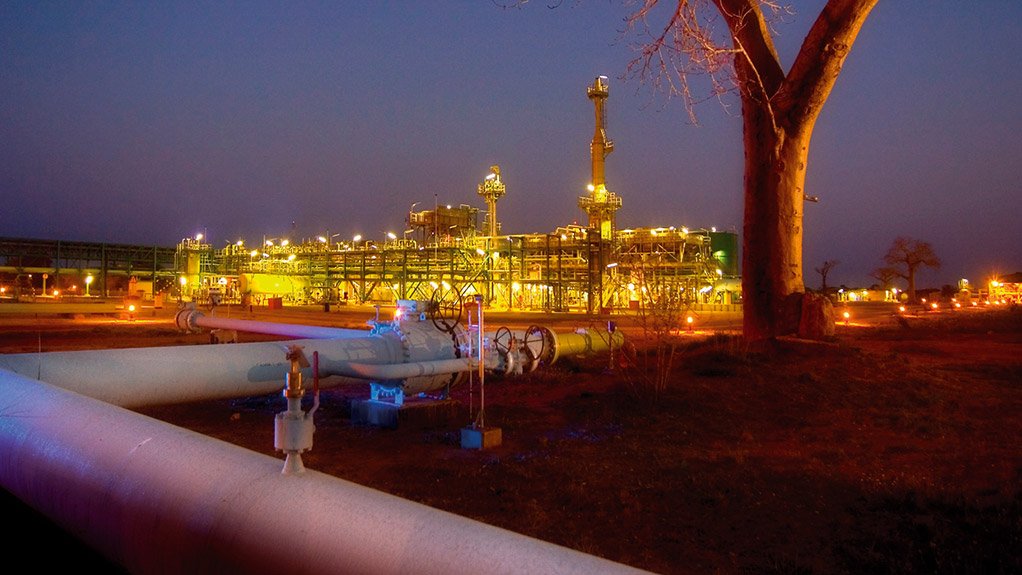


Industrial Gas Users Association-South Africa (IGUA-SA) executive officer Jaco Human is warning that the country is already stepping off a “gas cliff” – precipitated by waning supply from Mozambique’s Pande and Temane fields later this decade and exacerbated by delays in implementing the policy and infrastructure measures needed to facilitate alternative sources of supply by the mid-2030s.
During a discussion this week on the natural gas landscape in South Africa, hosted by the African Energy Leadership Centre and IGUA-SA, Human argued that this was largely a result of inaction, a lack of coordination and a lack of engagement between the State and the private sector.
“We're trying to deal with a very critical issue by actually tackling an electricity issue today, and that, of course, is the indirect manner of dealing with a problem. You have to deal with this head on from an upstream, midstream and downstream perspective,” he said.
“We don't see any of these liquefied natural gas (LNG) terminals – Inhassoro, Matola or ZET – actually being ready by the middle of June 2030.
“It seems impossible, at this point, from a practical and bankability perspective and a construction perspective. We see the right moves, but it is clear that we are now on the gas cliff. The question is not if the gas cliff is going to arise; the question now that industry is faced with is how do we navigate this gas cliff?," he added.
Human explained that there is a potential east coast and west coast play for South Africa, whereby the one on the East Coast speaks to energy security, while West Coast speaks to unlocking economic growth.
“The one is more immediate where we're looking to secure gas energy through LNG infrastructure and import developments on the East Coast, and of course looking to unlock longer-term . . . economic growth potential for South Africa through gas from the West Coast,” he said, adding that LNG is envisaged to be imported through Mozambique and Richard’s Bay.
Human emphasised the need for firmer timelines.
He also highlighted the importance of leveraging the West Coast Orange Basin potential.
Human called for the alignment of demand and infrastructure and for judicial reform to fast-track energy infrastructure projects in South Africa.
“Collaboration between the State and the private sector is now more critical than ever now that we know that we are in the gas cliff space, we've missed the boat.”
Additionally, Wits Business School (WBS) head and director Professor Maurice Radebe noted that, while natural gas currently accounts for about 3% of the country's primary energy mix, it feeds vital manufacturing industries such as chemicals, glass, steel, automotive, food processing that account for about 8% of the national GDP.
Radebe noted that Sasol had warned that the pipeline supplies to third-party industrial users would be phased out by 2028 as the Mozambican field output declined, reserving remaining volumes for its own Secunda operations.
This leaves over 300 industrial buyers in Gauteng and Mpumalanga facing a severe supply deficit.
“We can’t waste any further time,” he warned.
Radebe highlighted other key challenges facing the sector, such as pipeline and distribution bottlenecks, pricing and disparity, as well as legal and environmental hurdles.
On the other hand, while the sector was currently navigating these challenges, WBS interim head and director Professor Logan Rangasamy expressed that there were signs of development, such as the gas-to-power procurement programme having drawn four bids offering about 2 800 MW against a target of 2 000 MW.
He also noted that the sector was now awaiting the announcement of preferred bidders, which would help provide the certainty that LNG infrastructure needed.
Moreover, he pointed out that legislation to modernise the Gas Act was before Parliament and infrastructure conversations on LNG import terminals and on repurposing existing pipelines were progressing.
“But we must be candid: legislation alone will not build the infrastructure and bids alone will not deliver the results we so desperately seek. What matters now more than at any previous time is coordination, clear decisions and bankable frameworks,” he said.
Rangasamy also noted that Mozambique had the potential to become a significant player over the next decade, following the restart of its LNG project. He added that there were also developments in the pipeline in Tanzania, Nigeria, Senegal, Angola and Namibia.
“The strategic question now for Southern Africa, particularly given our energy need, is how much of this can support regional growth by supporting regional energy security, industrial competitiveness and shared prosperity – and this, I believe, is where South Africa can play a leading role,” Rangasamy said.
He added that the country had the industrial base, the financial markets, the pipeline networks, the engineering skill and, in some respects, the regulatory institutions.
Rangasamy noted, however, that a key challenge remained balancing gas development against climate commitments and affordability.
“It has to complement our growing renewable sector, not compete with it and the benefits must reach ordinary South Africans and Africans, not only the sector's investors,” he said.
MIDSTREAM SUPPLY
Meanwhile, panellists during the webinar examined the challenges, opportunities and solutions for the midstream oil and gas sector and how midstream developments could support industrial production, investment and jobs in South Africa.
Speaking on the ZET – a joint venture between Vopak Terminal Durban and Transnet Pipelines – Vopak South Africa president Oliver Naidu explained that the ZET was awaiting the announcement of the preferred bidder from the Independent Power Producer (IPP) Office as the project’s initial trigger.
Following this, the ZET would then make a front-end engineering design decision, planned for November, followed by environmental-impact assessment finalisation and the engineering, procurement and construction strategy.
“If all goes well, we can plan a [final investment decision] towards the early part or middle of 2028 and we have our Phase 1 that will take two years,” said Naidu, noting that the goal for Phase 1 was to enter commercial operation in 2030.
Additionally, State-owned Transnet Pipelines business development head Kresen Naicker noted that there was an opportunity to repurpose existing infrastructure from the Lilly pipeline.
Naicker described the Lilly pipeline and ZET as an integrated supply chain.
“We have to make better use of this infrastructure to ensure a reliable and competitive service,” he expressed.
Naicker said Stage 1 of Lilly’s development was already creating a significant opportunity to increase capacity.
He said Transnet Pipelines aimed to increase its capacity from 23 PJ to 60 PJ. This was largely owing to the intake pressure coming in from ZET.
He said this would be followed by bottlenecking upgrades that could progressively unlock additional capacity as the market required and as customers or respondents were prepared to commit to it.
“We want to grow capacity as we get firm commitments, of course, to support reliable gas at a cost that market can afford.”
He reiterated the importance of regional collaboration to exploit infrastructure synergies.
“We need binding commitments and regulatory alignment to unlock the execution towards commercial operation date of mid-2030,” said Naicker.
Article Enquiry
Email Article
Save Article
Feedback
To advertise email advertising@creamermedia.co.za or click here
Projects

Latest Multimedia
Latest News
Showroom
Virtual Gas Network supplies compressed natural gas via a virtual gas distribution network.
VISIT SHOWROOM
Columbus Stainless, based in Middelburg, Mpumalanga, is Africa’s only producer of stainless steel flat products. In addition, Columbus is the only...
VISIT SHOWROOM

Press Office
Announcements
What's On
Subscribe to improve your user experience...
Option 1 (equivalent of R125 a month):
Receive a weekly copy of Creamer Media's Engineering News & Mining Weekly magazine
(print copy for those in South Africa and e-magazine for those outside of South Africa)
Receive daily email newsletters
Access to full search results
Access archive of magazine back copies
Access to Projects in Progress
Access to ONE Research Report of your choice in PDF format
Option 2 (equivalent of R375 a month):
All benefits from Option 1
PLUS
Access to Creamer Media's Research Channel Africa for ALL Research Reports, in PDF format, on various industrial and mining sectors
including Electricity; Water; Energy Transition; Hydrogen; Roads, Rail and Ports; Coal; Gold; Platinum; Battery Metals; etc.
Already a subscriber?
Forgotten your password?
Receive weekly copy of Creamer Media's Engineering News & Mining Weekly magazine (print copy for those in South Africa and e-magazine for those outside of South Africa)
➕
Recieve daily email newsletters
➕
Access to full search results
➕
Access archive of magazine back copies
➕
Access to Projects in Progress
➕
Access to ONE Research Report of your choice in PDF format
RESEARCH CHANNEL AFRICA
R4500 (equivalent of R375 a month)
SUBSCRIBEAll benefits from Option 1
➕
Access to Creamer Media's Research Channel Africa for ALL Research Reports on various industrial and mining sectors, in PDF format, including on:
Electricity
➕
Water
➕
Energy Transition
➕
Hydrogen
➕
Roads, Rail and Ports
➕
Coal
➕
Gold
➕
Platinum
➕
Battery Metals
➕
etc.
Receive all benefits from Option 1 or Option 2 delivered to numerous people at your company
➕
Multiple User names and Passwords for simultaneous log-ins
➕
Intranet integration access to all in your organisation