S Africa’s road safety crisis cannot be engineered into compliance


In July this year, the revised National Road Safety Strategy (NRSS) was introduced, placing renewed emphasis on a goal that has proved “stubbornly difficult” to achieve: significantly reducing road fatalities by 2030, notes professional services firm Makhaotse, Narasimulu and Associates (MNA) associate and Geometric Design and Stormwater Design discipline lead Poovendran Chetty.
He notes that strategy’s renewed focus on accountability, enforcement, education, maintenance and technology is important. “But, from an engineering perspective, safer roads cannot be created through engineering alone.”
Road safety is a systems outcome and while engineering forms an important part of that system, so does road maintenance, law enforcement, education, road-user behaviour, funding decisions and broader transport network management. The NRSS presents an opportunity to rethink how all of these elements work together.
Engineering for Error, Not Behaviour
The NRSS’s focus on safer road-user behaviour is particularly important. Chetty points out that engineering can make roads more forgiving of human error, but there is a limit to what infrastructure can reasonably accommodate.
“A driver making an unintended error is fundamentally different from a driver deliberately speeding, ignoring traffic regulations or operating an unroadworthy vehicle. These behaviours require different interventions, and not all road-safety risks can or should be addressed through infrastructure design.”
He suggests that this is why education and enforcement must work alongside engineering, as this reduces both the likelihood and severity of crashes. “The role of enforcement is to address behaviour that deliberately disregards the rules, as the physical environment can only take us so far.”
Meanwhile, the role of the consulting engineer is to understand the risks at a particular location, interpret the evidence and explain why a particular intervention is warranted. “Sometimes the safest engineering solution is also the most conservative one, but that decision must be supported by evidence and a clear understanding of the consequences,” Chetty adds.
Technology could also play a role, with Chetty citing the NRSS’s focus on AI-enabled violation processing as an example, adding that it could strengthen enforcement and reduce some of the human intervention involved in processing violations. He stresses that, if it is implemented effectively, technology has the potential to improve accountability while reducing opportunities for inconsistent enforcement.
He notes that the objective is to create a system that is “forgiving of mistakes, supported by effective enforcement and education, while making dangerous behaviour increasingly difficult to ignore”, rather than one that assumes people will “behave perfectly”.
Not A Design Gap?
When considering established standards and design procedures such as road geometry, lane widths, curves, gradients, intersections and signage, safety in design has always been a part of the road engineering and design process; the challenge is that a road does not remain safe simply because it was designed safely, notes Chetty.
“Over time, road markings fade, signs disappear, guardrails are damaged, drainage deteriorates, and pavement conditions decline. Traffic volumes and surrounding land uses can also change significantly. This is why we believe maintenance needs to be viewed as a road safety intervention, rather than simply an infrastructure responsibility.”
He notes that a deteriorated road can actively create risk, with potholes possibly forcing motorists into oncoming traffic, or missing guardrails turning a loss-of-control incident into a serious crash. Poor signage can leave road users without critical warnings, while non-functioning traffic signals can create conflict at intersections.
In these instances, the engineering design could still be sound, but the road no longer operates as intended.
Consequently, South Africa’s Road Asset Management Systems (RAMS) are crucial. RAMS provides authorities with structured information about the condition of their road networks, deterioration trends and potential maintenance or rehabilitation requirements. Theoretically, these systems allow authorities to identify emerging risks and intervene before deterioration results in major failures.
“ [RAMS] allow our clients to move beyond simply responding to failures and instead make informed decisions about where maintenance and rehabilitation are most needed. Our recent ISO 55001:2024 certification further strengthens this capability by providing a structured asset management framework that connects engineering information with risk, planning, funding and long-term investment decisions,” MNA Associate and Transportation head Thesigan Govender explains.
MNA’s experience in RAMS includes supporting clients in assessing road networks, understanding asset condition and deterioration, and prioritising maintenance and rehabilitation interventions.
Govender says the combination of practical RAMS experience with ISO 55001:2024 provides a stronger basis for helping road authorities protect infrastructure over the long term.
“The value [lies in] being able to translate the information into defensible decisions about where limited funding should be directed, when intervention is required and how investment can protect the long-term performance of the network,” he explains.
He adds that, for road authorities facing competing demands and constrained budgets, this approach can support a shift from reactive maintenance towards more proactive, risk-based asset management.
However, the difficulty is translating information into funded programmes.
Govender notes that South African municipalities and road authorities face competing demands for limited budgets. “Road safety is critical, but so is water, sanitation, electricity and other basic services. The reality is that authorities are often forced to make difficult choices between competing risks, which makes risk-based prioritisation even more important.”
If condition monitoring identifies a developing problem, the objective should be to understand its risk and plan the intervention before it becomes an emergency. “The NRSS’s emphasis on accountability therefore needs to extend beyond enforcement, translating to accountability for acting on the evidence that our infrastructure systems already provide,” he concludes.
Article Enquiry
Email Article
Save Article
Feedback
To advertise email advertising@creamermedia.co.za or click here
Research Reports

Projects

Latest Multimedia


Latest News


Showroom
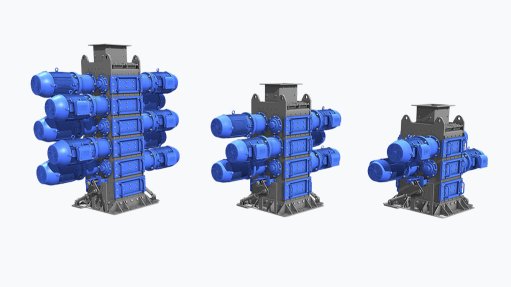
Energy and Densification Systems (EDS) has developed equipment for crushing, milling, blending and densifying products. Based on its globally...
VISIT SHOWROOM
Mitsubishi Chemical Advanced Materials South Africa (Pty) Ltd is a leading manufacturer of high-performance engineering plastics for the mining...
VISIT SHOWROOM


Announcements
What's On
Subscribe to improve your user experience...
Option 1 (equivalent of R125 a month):
Receive a weekly copy of Creamer Media's Engineering News & Mining Weekly magazine
(print copy for those in South Africa and e-magazine for those outside of South Africa)
Receive daily email newsletters
Access to full search results
Access archive of magazine back copies
Access to Projects in Progress
Access to ONE Research Report of your choice in PDF format
Option 2 (equivalent of R375 a month):
All benefits from Option 1
PLUS
Access to Creamer Media's Research Channel Africa for ALL Research Reports, in PDF format, on various industrial and mining sectors
including Electricity; Water; Energy Transition; Hydrogen; Roads, Rail and Ports; Coal; Gold; Platinum; Battery Metals; etc.
Already a subscriber?
Forgotten your password?
Receive weekly copy of Creamer Media's Engineering News & Mining Weekly magazine (print copy for those in South Africa and e-magazine for those outside of South Africa)
➕
Recieve daily email newsletters
➕
Access to full search results
➕
Access archive of magazine back copies
➕
Access to Projects in Progress
➕
Access to ONE Research Report of your choice in PDF format
RESEARCH CHANNEL AFRICA
R4500 (equivalent of R375 a month)
SUBSCRIBEAll benefits from Option 1
➕
Access to Creamer Media's Research Channel Africa for ALL Research Reports on various industrial and mining sectors, in PDF format, including on:
Electricity
➕
Water
➕
Energy Transition
➕
Hydrogen
➕
Roads, Rail and Ports
➕
Coal
➕
Gold
➕
Platinum
➕
Battery Metals
➕
etc.
Receive all benefits from Option 1 or Option 2 delivered to numerous people at your company
➕
Multiple User names and Passwords for simultaneous log-ins
➕
Intranet integration access to all in your organisation